Do This, Not That: 8 Simple Food Swaps for Healthier Eating
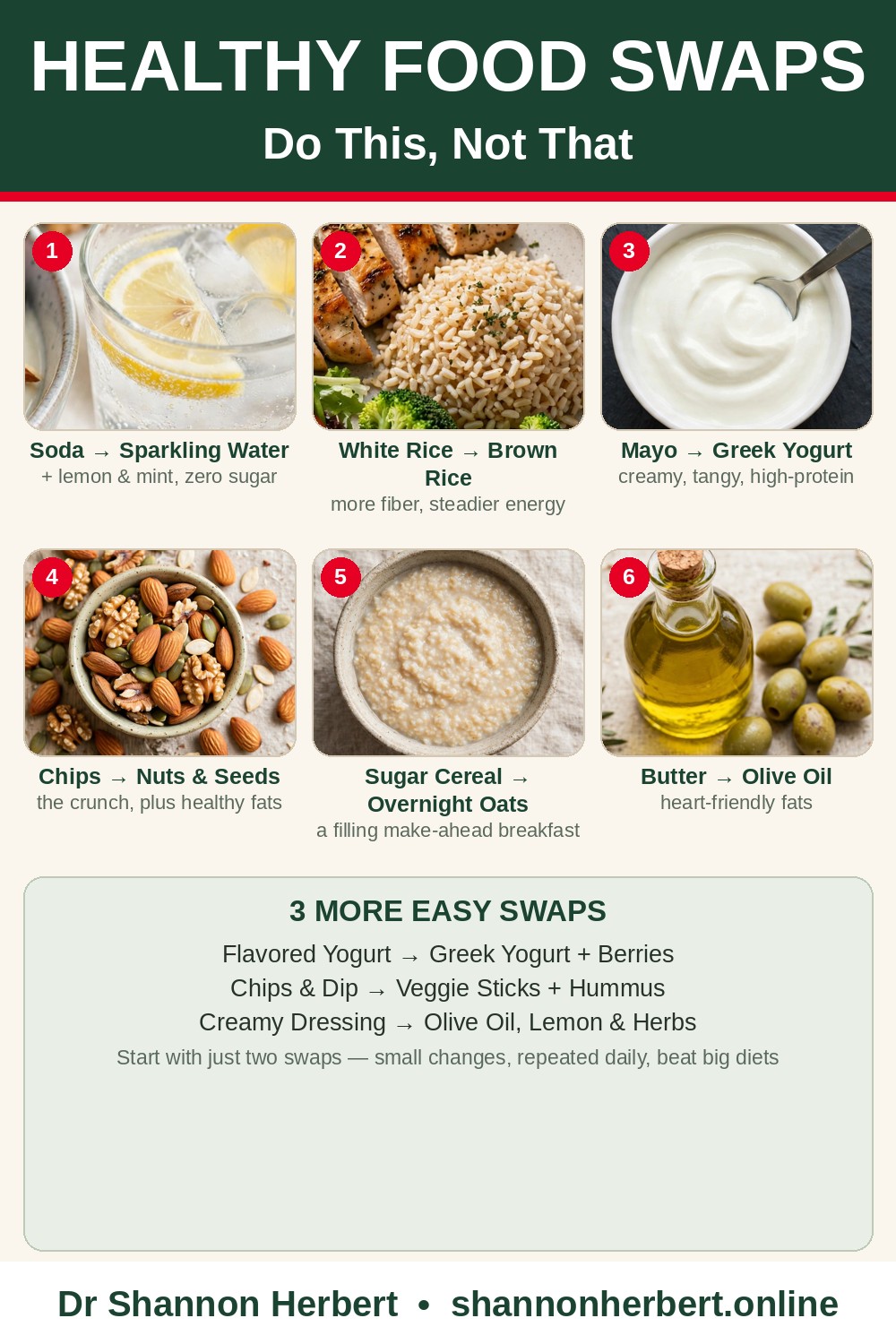
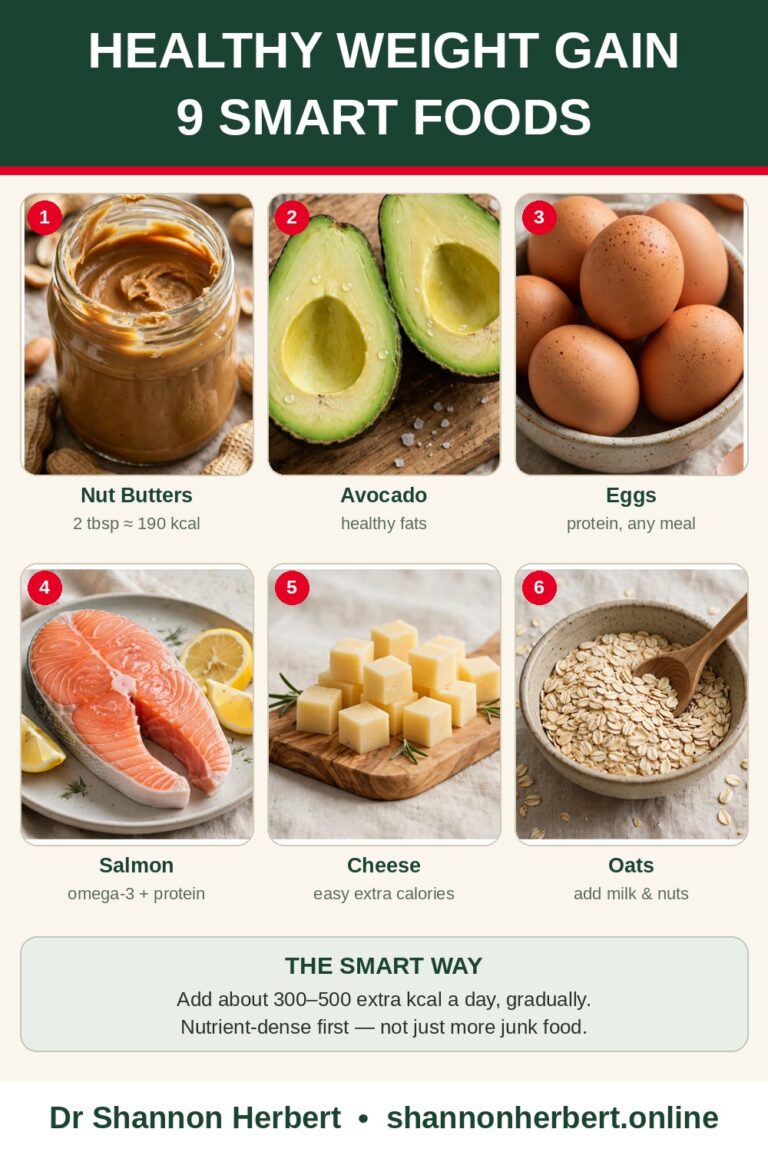
You do not need a new diet. Sometimes you just need a better version of what you already love. These 8 swaps keep the pleasure and quietly upgrade the nutrition — the exact approach behind our 7 Simple Nutrition Tips.
Why swaps, rather than rules? Because rules create forbidden foods, and forbidden foods have a way of becoming the only thing you think about. A swap works differently. It keeps the ritual — the fizzy drink with lunch, the crunchy snack at your desk, the sweet thing after dinner — and changes what is inside it. Your day feels the same. Your nutrition quietly improves. And because nothing feels banned, there is nothing to rebel against on a hard Friday.
Each swap below explains what changes nutritionally, how to make the new version genuinely enjoyable (not a sad substitute), and the pitfall that makes people abandon it. The savings quoted are honest, everyday numbers — not the inflated figures of diet marketing. A swap that saves 150 calories a day, repeated daily, matters more than a heroic cleanse that lasts four days. Do the arithmetic on a year and you will see why this unglamorous approach wins.
1. Soda → Sparkling Water With Lemon and Mint
Same fizz, same ritual, none of the sugar. A 12-ounce soda carries roughly 140–150 calories and about 39 grams of sugar — and, as we covered in our nutrition tips, liquid calories barely register as food. Sparkling water with lemon and mint gives you the cold, the bubbles, and the flavor cue your brain actually wants, for zero calories and zero sugar. After a week, most people stop missing the soda; what they were attached to was the ritual and the fizz, not the syrup.
Make it enjoyable: Serve it properly — over ice, in a real glass, with a wedge of lemon or lime and a sprig of mint or a few berries. The swap fails when the replacement is a lukewarm glass of plain water offered as a punishment. Flavored unsweetened sparkling waters work too; check the label for “unsweetened,” since some flavored waters are quietly sweetened.
Watch out for: Diet soda as the permanent answer. It removes the sugar, which is a real improvement, but keeps the intense sweetness habit at full strength. Many people find sparkling water an easier final destination, with diet soda as a stepping stone rather than the endpoint.
The math: One soda a day swapped out is roughly 1,000 calories a week — from a single change that, after the first days, most people do not even notice.
2. White Rice → Brown Rice or Half-and-Half
Start with half white, half brown if the texture is new to you. More fiber, steadier energy. A cup of cooked brown rice carries about 3.5 grams of fiber versus less than 1 gram in white rice, along with more magnesium and B vitamins. The practical difference you will feel is in the hours after the meal: brown rice digests more slowly, so the energy curve is flatter and the 3 PM slump is gentler.
Make it enjoyable: Cook brown rice properly and it is nutty and satisfying, not gummy penance. Rinse it, use a ratio of about 1 part rice to 1.75 parts water, simmer it covered for 40–45 minutes, then — this is the step everyone skips — let it rest off the heat for 10 minutes before fluffing. Season it: a bay leaf, a stock cube, or a squeeze of lime and chopped herbs at the end. The half-and-half approach (half white, half brown, cooked together with a little extra water) is the transition most households actually accept, and a 50% upgrade kept forever beats a 100% upgrade abandoned in a week.
Watch out for: Portion creep. Brown rice is better rice, but it is not lower-calorie rice — the two are nearly identical in calories per cup. The swap improves fiber and fullness; the portion still matters. About a fist-sized cooked portion is a good default for most plates.
Also try: Quinoa, barley, bulgur, or cauliflower rice blended half-and-half with regular rice for an even lighter base under curries and stir-fries.
3. Flavored Yogurt → Plain Greek Yogurt + Berries + Honey
Flavored yogurts can hide several teaspoons of sugar — a typical fruit-flavored cup contains 15–25 grams of sugar, much of it added, in a product marketed as a light choice. Build your own and control the sweetness: plain Greek yogurt, a handful of berries, and a drizzle of honey (one teaspoon, about 5 grams of sugar, is plenty when the berries are doing their job). You also gain protein — Greek yogurt has roughly double the protein of regular flavored yogurt — so the swap fills you up instead of setting up the next craving.
Make it enjoyable: Use frozen berries warmed for 30 seconds in the microwave; they release a jammy juice that sweetens the whole bowl. Add cinnamon or vanilla if you like, and a tablespoon of chopped nuts or oats when this is a meal rather than a snack. Layered in a glass as a parfait, it looks and feels like dessert — because built this way, it honestly is one.
Watch out for: Honey enthusiasm. Honey is sugar with a nicer story; a tablespoon carries about 17 grams of it. A teaspoon drizzled is a flavoring — a quarter-cup poured is a dessert sauce. (Honey fans: our Honey and Garlic Tonic is the Remedies version of this idea, and the Homemade Chest Rub article shows honey’s kitchen cousins at work in a different way.)