Do This, Not That: 8 Simple Food Swaps for Healthier Eating
7. Ice Cream Every Night → Greek Yogurt “Ice Cream”
Freeze blended Greek yogurt with berries and a little honey. The method: blend 2 cups of Greek yogurt with 2 cups of frozen berries and 1–2 tablespoons of honey, then either serve it immediately as a soft-serve texture or freeze it for 1–2 hours, stirring once, for a firmer scoop. Per serving you are looking at roughly 130–160 calories with 12–15 grams of protein, against 250–350 calories and very little protein for a typical bowl of premium ice cream — and the yogurt version is tart, fruity, and genuinely good, not a consolation prize.
Keep the real ice cream for occasions — it will taste better for being special. This is the philosophy of the whole article in one swap: the nightly default gets upgraded, the celebration food stays a celebration. Nothing is banned; the frequency and the default are what change.
Make it enjoyable: Frozen mango with lime, frozen banana with cocoa and peanut butter, or frozen cherries with a drop of vanilla all work with the same base. A tablespoon of chopped dark chocolate or nuts on top makes it feel finished. If the frozen texture goes too hard in your freezer, 10 minutes on the counter fixes it.
Watch out for: Assuming every “frozen yogurt” product matches this. Commercial frozen yogurts are frequently as sugary as ice cream. The swap described here is the homemade version built on plain Greek yogurt — that ingredient list is the entire point.
8. The 4 PM Biscuit → A Small Handful of Nuts and an Apple
Crunch, sweetness, fiber, and healthy fats. This is the swap that saves the most people from the snack drawer. The 4 PM biscuit (or cookie, or muffin) is rarely about hunger for a biscuit — it is about a dip in energy, a break from the desk, and a hand that wants something to do. An apple and a small handful of nuts (about 1 ounce / 28 g) answer all three: the apple brings crunch, sweetness, water, and about 4 grams of fiber; the nuts bring fat and protein that stretch the snack’s effect from twenty minutes to two hours.
Make it enjoyable: Keep the apple where you can see it and the nuts pre-portioned — small containers or bags of a handful each, because nuts are the easiest “healthy” food to overeat straight from a big bag. Walnuts, almonds, and mixed nuts all work; lightly salted is fine for most people. A cup of tea or coffee alongside completes the ritual the biscuit used to anchor.
Watch out for: The health-halo handful that becomes three handfuls. Three ounces of nuts is 500+ calories — more than the muffin you were avoiding. Portion once, in the morning, and the swap stays a swap.
Common Mistakes When Swapping
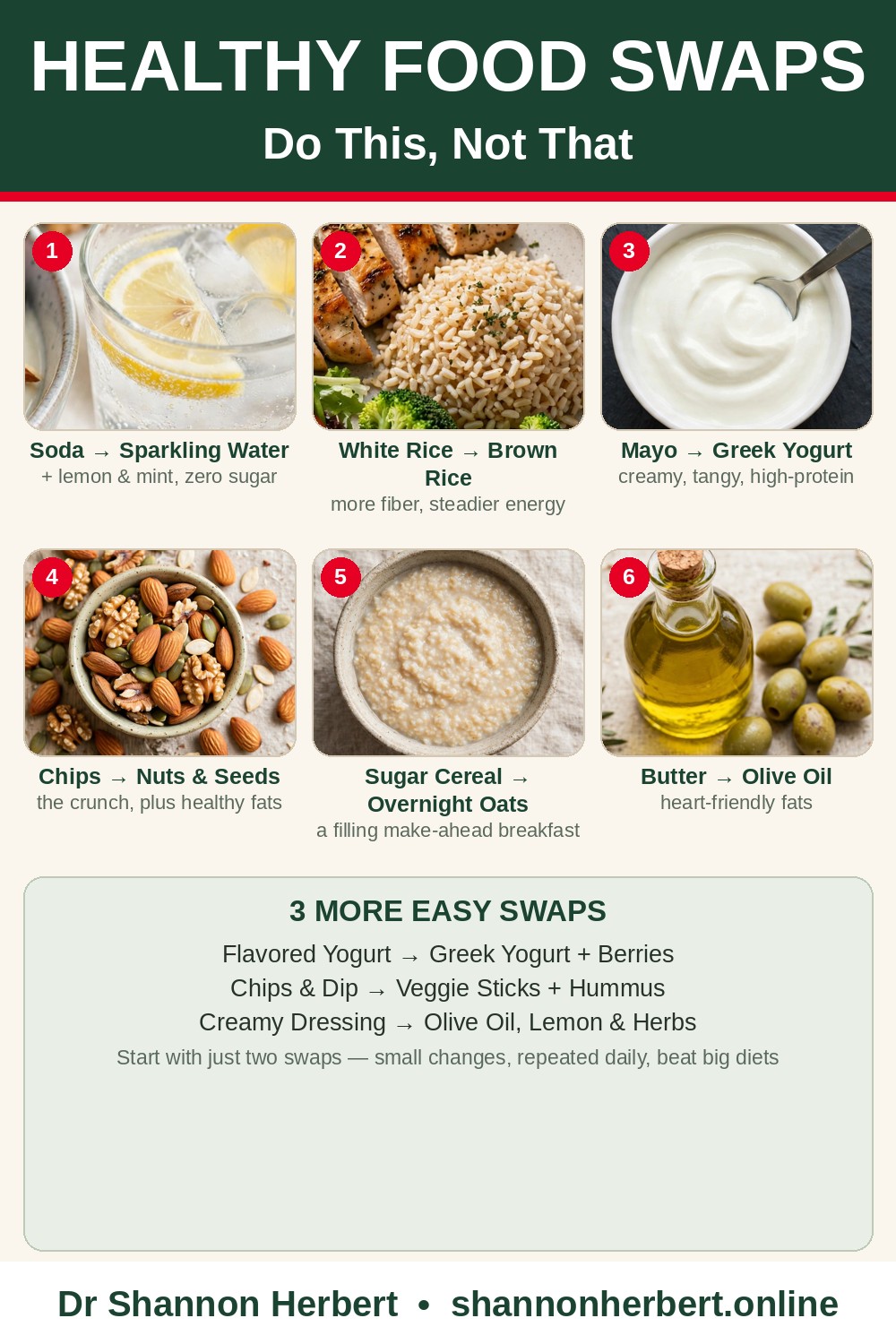
Swapping everything at once. Eight changes in one week is a diet in disguise, and it will collapse like one. Two swaps, held for two weeks, is the dosage that works.
Choosing swaps you secretly hate. If you have always disliked sparkling water, that swap will not survive. Pick the swaps that sound easy, even appealing — the list is a menu, not a sentence.
Keeping the old default in the house “for guests.” The food that is present gets eaten, by you, at your weakest moments. Make the new default the stocked default; buy the old one deliberately, on occasions, in small quantities.
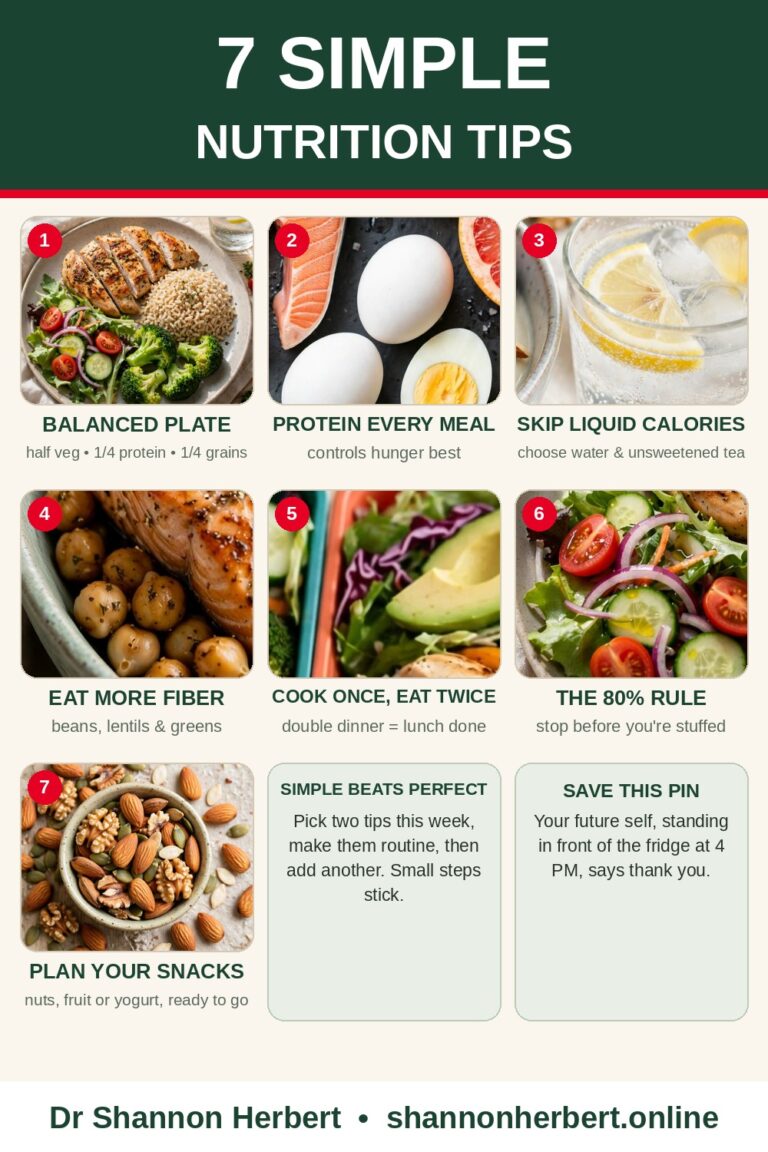
Expecting swaps to outrun everything else. Swaps are powerful because they compound, but they work inside a generally sensible pattern — the balanced plate and protein habits from our 7 Simple Nutrition Tips. A swap is a brick, not the building.
Start With Just Two
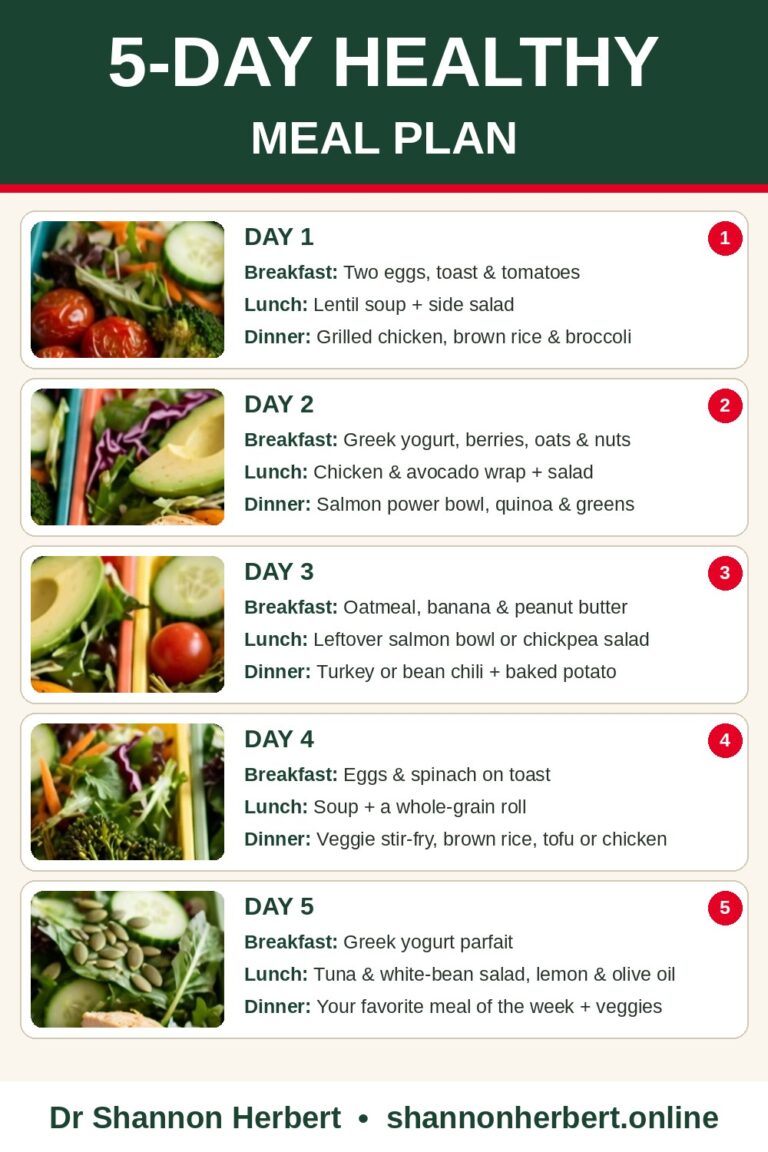
Pick the two swaps that hurt the least and run them for two weeks. Then add two more. Small swaps, repeated daily, beat big diets abandoned by Friday — and they fit perfectly into our Simple 5-Day Healthy Meal Plan. If the kitchen-remedy spirit appeals to you as much as the nutrition side, browse the traditions in 12 Old Remedies That Still Work Today next — the same philosophy runs through both: small, sensible, repeatable things, done on purpose.
A Note on Cost
A fair question about any list of swaps is whether the “better” version costs more. Some do, slightly: nuts cost more than biscuits, berries more than jam. But look at the whole list before concluding. Sparkling water is cheaper than soda. Oats are among the cheapest breakfasts in existence. Lentil-friendly swaps like hummus and vegetables are inexpensive, homemade dressing costs pennies per serving, and the Greek yogurt swap usually replaces a more expensive flavored product. For most households the eight swaps together come out roughly cost-neutral — and that is before counting the snack food that stops being bought because the 4 PM emergency stopped happening. Where a swap does cost more, buy the store brand, buy frozen (berries especially), and buy in bulk the items you have proven you will actually use.
Frequently Asked Questions
Do swaps really add up to anything?
Run the conservative math: three daily swaps saving an average of 120 calories each is about 360 calories a day — over 2,500 a week — achieved without a single forbidden food. Yes, they add up, precisely because they are sustainable.
What if my family refuses the new versions?
Use the half-and-half principle from the rice swap: blend old and new, shift the ratio over weeks, and keep one or two household favorites untouched. Revolutions fail at the dinner table; gradual upgrades rarely even get noticed.
Are these swaps suitable for kids?
The pattern — more whole foods, less liquid sugar, better defaults — suits families generally. Children should never be put on restrictive diets without medical guidance; these swaps are about food quality, not restriction.
What is the single best swap to start with?
The drink swap, for almost everyone. It requires no cooking, no new skills, and removes the least satisfying calories in the entire day.
This article is for general information only and is not medical advice.