12 Old Remedies That Still Work Today
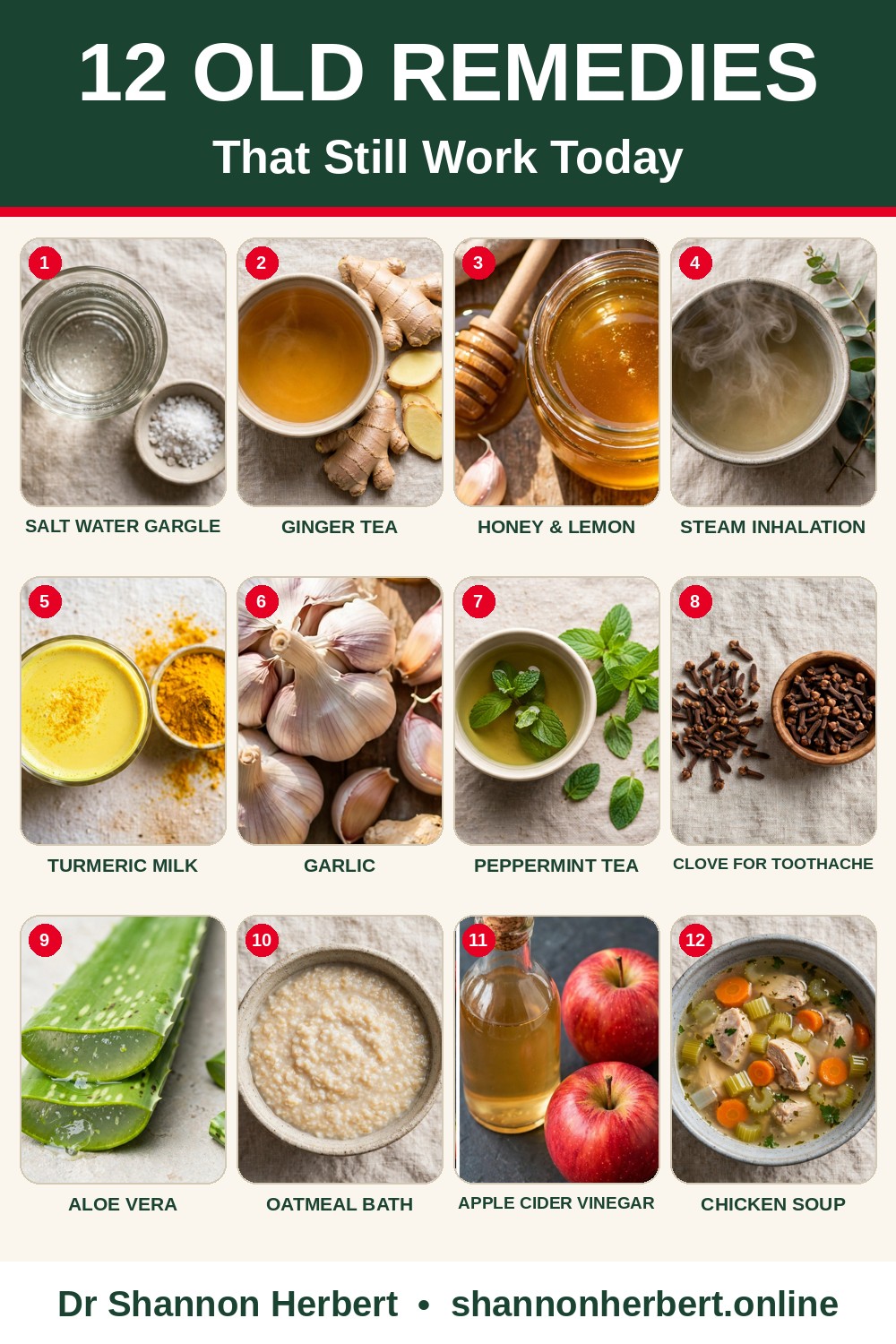
Long before pharmacies, kitchens were the first medicine cabinets. Some old remedies were pure superstition — but others have survived for generations because people kept seeing them help. Here are 12 of the classics that still earn their place today.
These are not miracle cures. They are simple, low-cost comforts for everyday, minor complaints: a tickly cough, a heavy stomach, a stuffy nose, itchy skin, or a tight, tired head. Used sensibly, for the right problem, and for a short time, many still make good sense.
Why Some Old Remedies Survived
Old remedies did not survive by accident. The ones that lasted usually had something real going for them, even if people long ago explained it differently.
Some work in simple, physical ways anyone can feel. Warmth relaxes. Steam adds moisture to dry airways. Honey coats. Salt water rinses. Cool aloe soothes hot skin.
Others survived because they were safe enough, cheap, and easy to repeat — made from oats, ginger, salt, or garlic in almost any home. If a remedy seemed to help and rarely caused trouble when used carefully, families passed it down.
Survival is not proof, though. A remedy can be popular for generations and still be exaggerated or wrong for a particular person. Use these traditions modestly: for minor discomfort, as comfort and support, and alongside modern medical care when it is needed.
How to Judge a Home Remedy Sensibly
Before you try any old remedy, run it through a quick check:
- Is the problem minor and familiar? A mild sore throat is very different from a throat so swollen you cannot swallow.
- Is it low-risk for you? Consider allergies, skin sensitivity, pregnancy, health conditions, and medicines you take. Natural ingredients can interact with medication.
- Are you using it in moderation? More is not always better, especially with essential oils or strong spices.
- Is it helping fairly soon? If nothing improves, or things get worse, stop and get advice.
- Does the claim sound too good to be true? If a pantry ingredient is promised to cure a serious disease, be skeptical.
1. Honey for a Tickly Cough
A spoonful of honey coats the throat and is a time-honored cough soother for adults and older children.
How to do it: Take 1 to 2 teaspoons slowly, letting it coat your throat. Or stir it into warm — not boiling — water or herbal tea with lemon. Repeat a few times a day as needed, especially before bed, when a tickly cough often feels worst.
Why people believe it helps: Honey is thick and smooth, so it physically coats irritated tissues at the back of the throat, which may calm the urge to cough for a while. Warm fluids are also comforting.
Practical tip: Plain honey is fine — no expensive specialty jar is required.
Caution: Never give honey to babies under 12 months old, because of the risk of infant botulism. Honey is also a sugar, so use it sparingly if you must watch your blood sugar. A cough lasting more than a week, or one with fever, chest pain, blood, or breathlessness, needs medical care.
2. Ginger Tea for an Upset Stomach
Fresh ginger simmered in water is the go-to folk remedy for nausea and heavy, bloated feelings after meals.
How to do it: Peel and slice or grate a 1-inch piece of fresh ginger. Simmer it in 2 cups of water for 10 to 15 minutes, strain, and add honey or lemon if you like. Sip it slowly while warm.
Why people believe it helps: Ginger has a long traditional history for queasy stomachs, and its warm, spicy flavor encourages slow sipping and rest. A warm drink after a heavy meal also helps many people feel less full.
Practical tip: Fresh ginger tastes brightest, but 1/2 teaspoon of ground ginger in hot water works in a pinch. Start mild — a strong brew can cause heartburn in some people.
Caution: If you take blood-thinning medication, are pregnant, or have ongoing stomach problems, check with your doctor before using strong ginger regularly. Persistent vomiting, severe pain, or inability to keep fluids down needs a doctor, not tea.
3. Salt Water Gargle for a Sore Throat
Half a teaspoon of salt in a glass of warm water — simple, cheap, and still recommended everywhere.
How to do it: Dissolve 1/2 teaspoon of table salt in a full glass of warm water. Gargle a mouthful for 20 to 30 seconds, then spit it out — do not swallow it. Repeat until the glass is finished, up to a few times a day.
Why people believe it helps: Warm salt water can rinse away mucus and irritants at the back of the throat, and the warmth itself is soothing. It is a rinse, not a treatment for infection, and that modest job is why it remains widely suggested.
Practical tip: Make it fresh each time, warm not hot. Children should only gargle if they are old enough to spit reliably.
Caution: See a doctor for a sore throat with a high fever, difficulty breathing or swallowing, a rash, or pain lasting more than a few days.
4. A Warm Compress for Ear Discomfort
Warmth against the ear can ease that dull, pressured feeling while you rest.
How to do it: Soak a clean cloth in warm water and wring it out, or use a warm water bottle wrapped in a thin towel. Test it on your inner wrist first — comfortably warm, never hot. Hold it gently against the outside of the ear for 10 to 15 minutes, and repeat as needed.
Why people believe it helps: Gentle warmth is relaxing and can make pressure around the ear feel less intense while you rest. It does not reach or treat anything deep inside the ear.
Practical tip: Never fall asleep on a heating pad, because of the risk of burns. Never put oil, garlic, or any object into the ear canal — that old habit can cause real harm.
Caution: Ear pain in a young child, or pain with fever, discharge, hearing loss, or dizziness, needs medical attention. Pain that does not ease within a day or two also needs a proper examination.