12 Old Remedies That Still Work Today
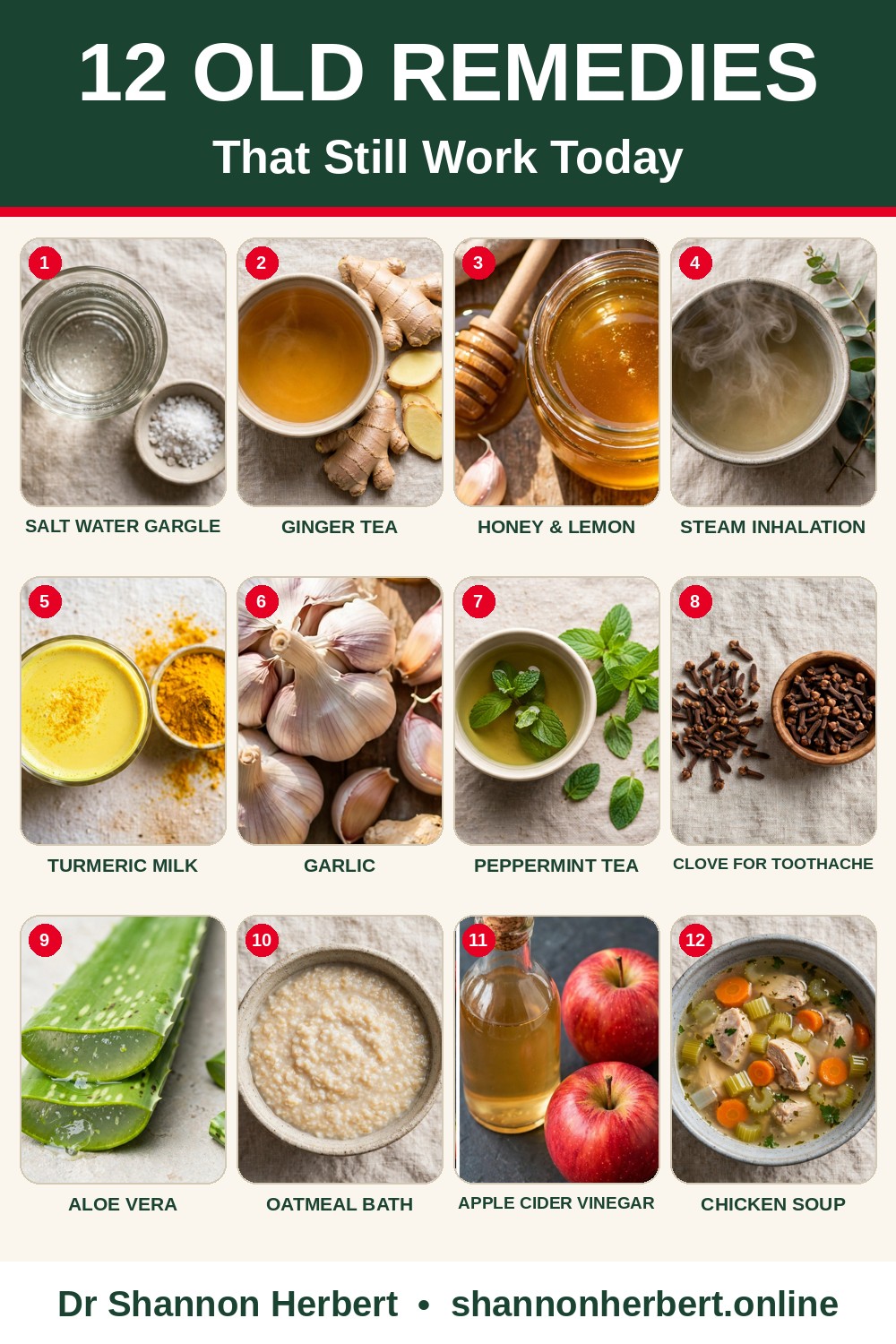
5. Peppermint for Head Tension
Peppermint tea, or a little diluted peppermint oil on the temples, is a classic for a tight, tired head.
How to do it, step by step:
- For tea: pour a cup of just-boiled water over 1 peppermint tea bag or a handful of fresh leaves. Cover, steep 5 to 10 minutes, and sip slowly in a quiet spot.
- For the temples: mix 1 drop of peppermint essential oil into a teaspoon of plain carrier oil, such as coconut or almond oil. Apply a tiny amount to your temples and neck, well away from your eyes.
- Rest for 15 to 20 minutes if you can. Dim light, a screen break, and a glass of water often help as much as anything.
Why people believe it helps: Peppermint contains menthol, which creates a cooling sensation on the skin. That cool, fresh feeling can be a welcome distraction from a tight, tense head, and many people find the scent clearing. A warm cup of tea also forces a pause — and tension often builds when we skip breaks, water, and food.
Practical tips: Check the basics first: Have you had enough water? Eaten recently? Been staring at a screen for hours? Peppermint works best as part of that reset, not instead of it.
Caution: Never apply undiluted essential oil to the skin, and keep peppermint oil away from the faces of babies and young children. Stop if it irritates your skin. A headache that is sudden and severe, follows a head injury, or comes with vision changes, weakness, confusion, or fever needs urgent care. Frequent headaches deserve a checkup too.
6. Oatmeal Baths for Itchy Skin
Finely ground oats in lukewarm bath water calm dry, itchy, irritated skin — a remedy grandmothers and dermatologists both mention.
How to do it, step by step:
- Grind plain, unflavored oats into a very fine powder — about 1 cup for a full bath. It should turn the water milky and silky.
- Fill the bath with lukewarm water, not hot. Hot water can make itching worse.
- Sprinkle the powder under the running tap, stir, and soak for 10 to 15 minutes.
- Pat dry gently and apply a plain, fragrance-free moisturizer while skin is still slightly damp.
Why people believe it helps: Finely ground oatmeal — often called colloidal oatmeal in skin products — forms a soft, protective film on the skin and holds moisture against it. For dry, tight, itchy skin, that gentle barrier and a lukewarm soak can bring real, if temporary, relief.
Practical tips: For a small itchy patch, skip the full bath: mix ground oats with a little water into a paste, apply for 10 minutes, and rinse. Use only plain oats, never flavored packets. The bath will be slippery, so take care getting in and out.
Caution: An oatmeal bath is for comfort, not for treating skin disease. See a doctor for a rash that spreads, blisters, weeps, looks infected, or does not improve, and get urgent help for any reaction affecting breathing or causing swelling of the lips or face.
7. Garlic in Everyday Cooking
Crushed into food daily, garlic has been a kitchen staple for general wellness for thousands of years. Try it the tasty way in our Honey and Garlic Tonic.
How to do it, step by step:
- Use garlic as food first, not as a supplement or a dare. Cook with it regularly in ordinary meals.
- Peel and crush or finely chop 1 or more cloves, then let them sit for about 10 minutes before cooking. Traditional cooks have long done this, and it is said to let garlic’s pungent compounds develop.
- Add it toward the end of cooking for stronger flavor, or earlier for a milder taste. Try it in soups, stir-fries, roasted vegetables, dressings, and sauces.
Why people believe it helps: Garlic has been valued in traditional cooking and folk practice across many cultures for general wellness, and it is still widely studied today. The honest claim is modest: a diet rich in flavorful, plant-based ingredients like garlic is a sensible pattern, and garlic makes healthy food taste good enough to eat often.
Practical tips: If raw garlic upsets your stomach, cooked garlic is usually gentler. Roasting whole heads makes it soft, sweet, and spreadable. Store garlic in a cool, dry, airy spot, not sealed in plastic.
Caution: Food amounts are fine for most people, but garlic can interact with blood-thinning medication and may not suit everyone before surgery. Ask your doctor before using garlic supplements or large medicinal amounts, and never use garlic in place of prescribed treatment.
8. Steam Inhalation for a Stuffy Nose
A bowl of hot water, a towel, and ten slow minutes — steam loosens congestion like few things can.
How to do it, step by step:
- Pour freshly boiled water carefully into a sturdy, heat-safe bowl on a stable table. Let it cool a minute so it is steaming, not violently boiling.
- Sit with your face a comfortable distance above the bowl — roughly 12 inches — and drape a towel over your head and the bowl to make a loose tent.
- Breathe slowly for 5 to 10 minutes, eyes closed, coming out for air whenever you need to.
- Blow your nose gently afterward and drink a glass of water.
Why people believe it helps: Warm, moist air can help loosen thick mucus and soothe dry, irritated nasal passages, making a blocked nose feel clearer for a while. It is comfort, not a cure for a cold. Most people use it in the evening, because easier breathing helps them settle for sleep.
Practical tips: Plain water is enough. A warm shower gives a similar steamy effect with less risk, and is safer for restless children.
Caution: Scalds are the main danger. Keep bowls of hot water well away from children, and never let a child do a towel-over-bowl steam. See a doctor for congestion with a high fever, facial pain, symptoms lasting more than 10 days, or any difficulty breathing. Babies with breathing difficulty need urgent care.