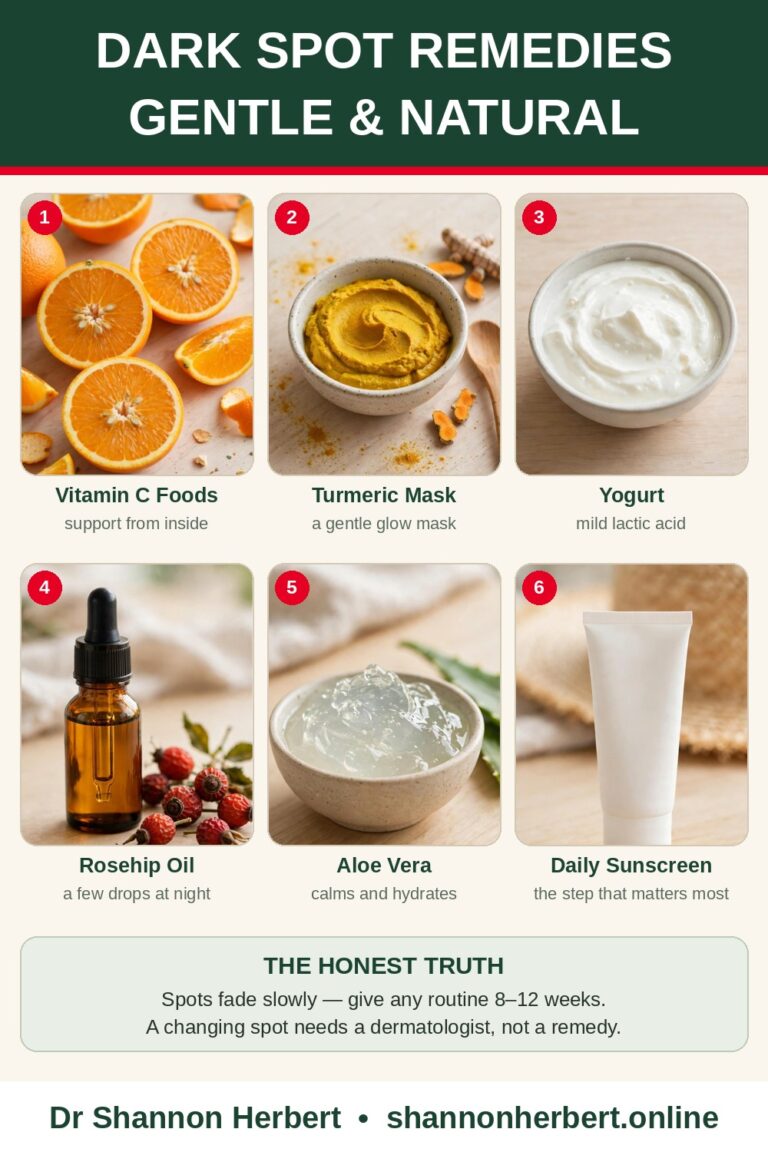
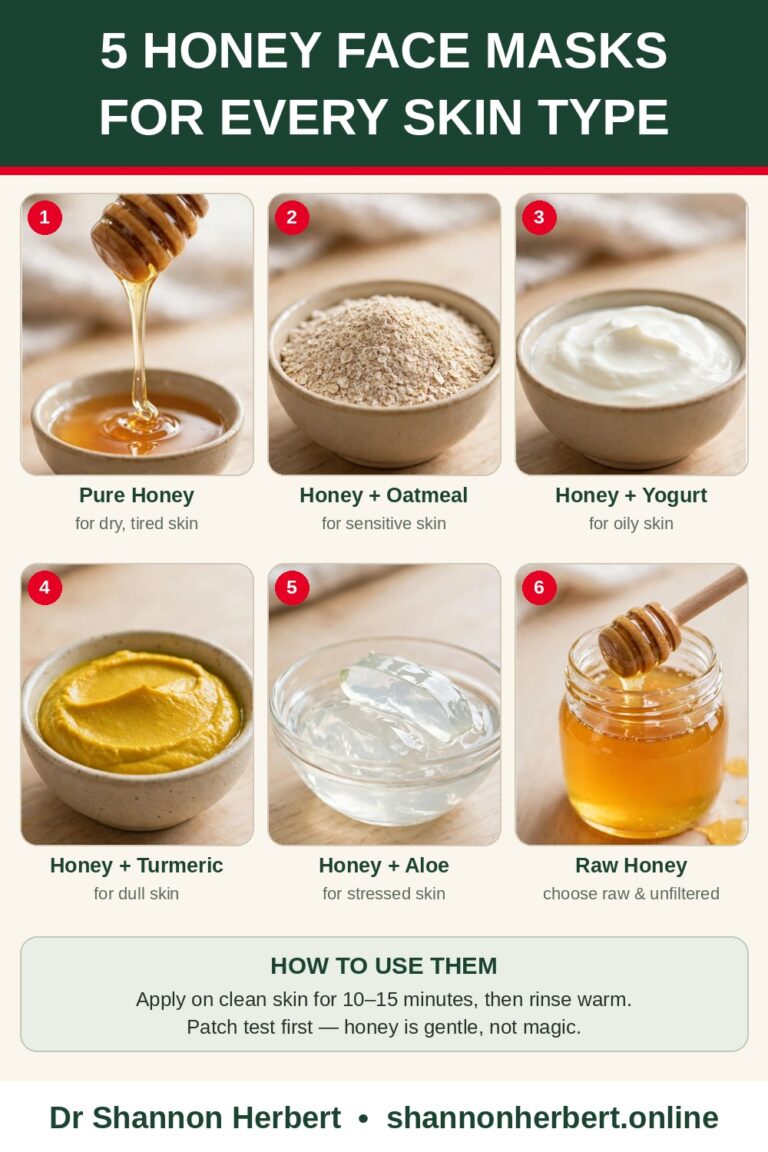
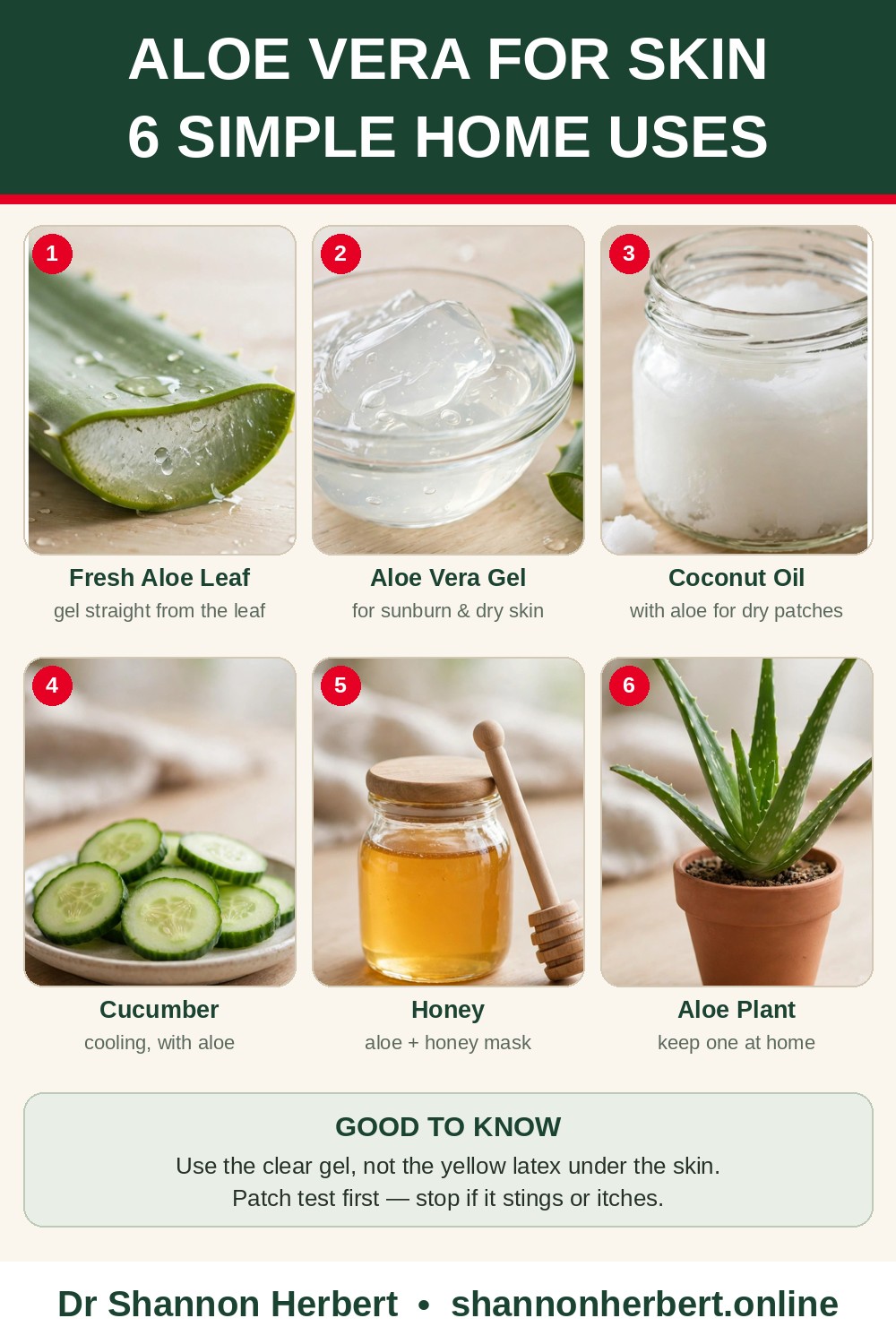
Aloe Vera for Skin: 6 Simple Home Uses
If there is one plant that has truly earned its place on the kitchen windowsill, it is aloe vera. Grandmothers kept a pot of it within arm’s reach of the stove, snapping off a thick leaf whenever someone caught the sun, grazed their hand on a hot pan, or came in with dry, tight skin after a day outdoors. Long before it appeared in fancy bottles, the fresh gel from an aloe leaf was the home remedy.
Today, aloe vera is in countless creams, gels, and after-sun lotions, which tells you something about how well it works as a soother. But you do not need a complicated product. The plain gel — from a leaf or from a good, simple store-bought bottle — is cooling, hydrating, gentle, and cheap. It will not perform miracles, and this article will not pretend otherwise. What it can do, used the right way, is calm minor sunburn, soften dry skin, take the sting out of shaving, and help with a handful of other everyday skin complaints.
Below you will find six simple home uses for aloe vera, each with clear step-by-step instructions, how often to use it, and the safety points that matter. If you enjoy this kind of practical remedy, you may also like our collection of natural remedies you can make at home, where aloe sits alongside other kitchen-cupboard staples.
What Aloe Vera Is, and Why the Gel Helps Skin
Aloe vera is a succulent — a desert plant with thick, fleshy, spear-shaped leaves designed to store water in dry conditions. Slice a leaf open and you will find the reason it works: a clear, slippery gel that is mostly water, held in a soft jelly of natural plant sugars called polysaccharides. The best known of these is acemannan, which researchers believe plays a part in aloe’s soothing and moisturizing effects. The gel also contains small amounts of vitamins, enzymes, and amino acids.
People have used this gel for a very long time. Ancient Egyptian texts described aloe as a plant of immortality, Greek and Roman healers used it on wounds, and it has been a staple of home medicine across Asia, Africa, and the Mediterranean for centuries. Modern research is more modest than the folklore, but it does support aloe’s traditional role: it is a good moisturizer, it cools and calms irritated skin, and it may help minor sunburn and superficial skin irritation heal a little more comfortably.
One distinction matters a great deal, and it is the key to using aloe safely at home. Inside the leaf there are two different substances:
- The clear gel in the center of the leaf. This is the part you want — gentle, cooling, and safe for most skin.
- The yellow latex (sometimes called aloe sap), a bitter yellow liquid that sits just under the green skin. This latex contains aloin, which can irritate skin and cause redness or an itchy rash in some people, especially in whole-leaf homemade preparations where it is not drained away.
That is why the preparation steps below include draining the leaf before you scoop out the gel. Skip that step and you may end up with exactly the irritation you were trying to soothe.
What You Will Need
- 1 mature aloe vera leaf from a healthy plant (a thick outer leaf works best), or a bottle of pure aloe vera gel — look for 99% gel with no added color, fragrance, or alcohol
- A sharp knife
- A spoon
- A glass or cup for draining the leaf
- A clean small bowl or jar with a lid
- A blender or fork (optional, for smoother gel)
- Cotton pads or clean fingertips for applying
- A few drops of your usual moisturizer or facial oil (for the dry-skin uses)
How to Prepare Fresh Aloe Gel, Step by Step
- Cut a thick outer leaf close to the base of the plant. Outer leaves are the most mature and contain the most gel.
- Stand the leaf upright in a glass, cut end down, for 10 to 15 minutes. You will see yellow liquid drip out — that is the irritating latex draining away. This step is simple and important.
- Rinse the leaf under cool water and pat it dry.
- Lay the leaf flat and slice off the spiky edges on both sides.
- Slide your knife just under the top layer of green skin and lift it away, the way you would fillet a fish. Then scoop out the clear gel with a spoon.
- If you like, blend the gel for a few seconds until smooth, or simply mash it with a fork. Spoon it into your clean jar.
- Store the jar in the refrigerator. Fresh gel keeps for about a week. For longer storage, freeze it in an ice cube tray and thaw one cube at a time.
Do a patch test first. Before using aloe anywhere important, dab a little gel on the inside of your forearm and wait 24 hours. If there is no redness, itching, or burning, you can go ahead. This is good advice for every remedy in our skin remedies roundup — gentle ingredients can still disagree with individual skin.