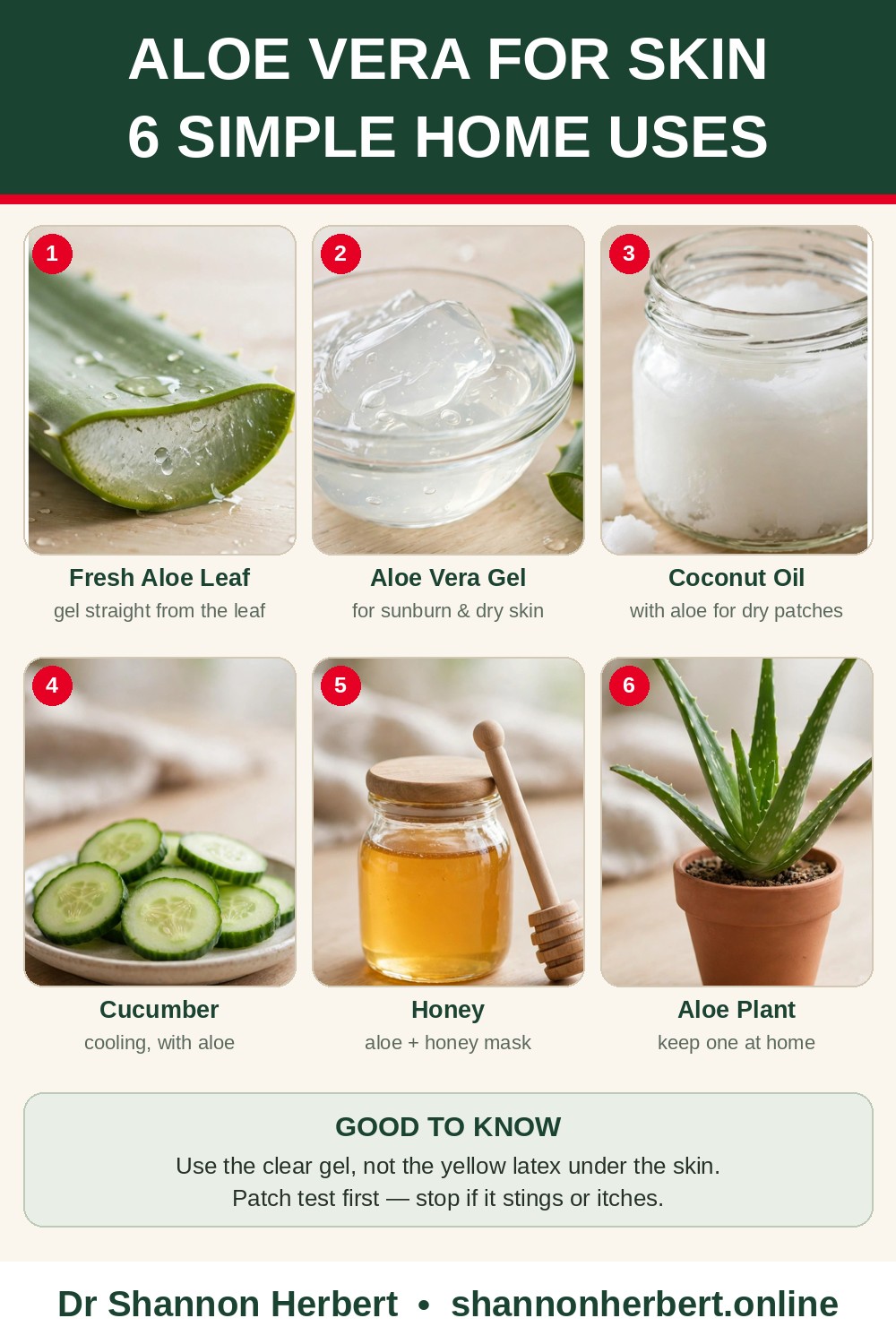
Aloe Vera for Skin: 6 Simple Home Uses
Use 5: A Scalp and Dandruff Rinse
A dry, itchy, flaky scalp is another place aloe earns its keep. The gel moisturizes the scalp skin, feels cooling on itch, and has mild properties that may help with the flaking some people get. It will not cure scalp conditions, but as a gentle pre-wash treatment it is well worth trying before you reach for stronger products.
How to do it:
- Part your hair in a few places and apply aloe gel directly to the scalp with your fingertips or a cotton pad.
- Massage it in gently for a minute or two.
- Leave it on for 20 to 30 minutes. (This is a good treatment to do while you are doing something else around the house.)
- Wash your hair as usual with your regular shampoo, rinsing well.
How often: Once or twice a week.
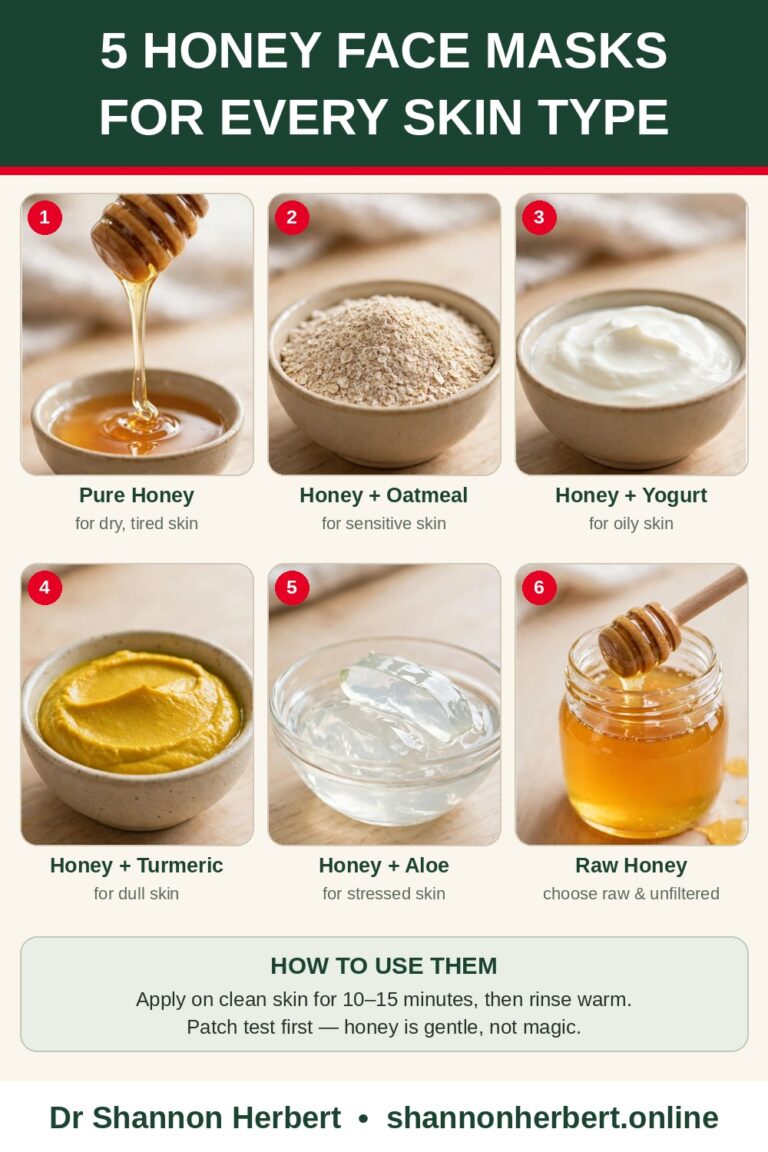
If flaking comes with thick crusts, bleeding, spreading redness, or hair loss, see a doctor — those are signs of conditions like psoriasis or infection that a gel cannot sort out. For the simple dry-and-flaky kind, though, aloe plus patience helps many people. You will find a similar gentle approach in our honey face masks, which use another single kitchen ingredient in a simple, repeatable way.
Use 6: An Overnight Treatment for Dry Patches
Stubborn dry patches — rough heels, scaly elbows, winter-knuckles — often respond better to a long, slow treatment than to a quick dab of cream. Overnight, under cover, aloe gel has hours to soften and hydrate.
How to do it:
- In the evening, wash the area and pat it dry. If heels are very rough, a gentle rub with a pumice stone on damp skin first helps the gel reach the skin that needs it.
- Apply a thick layer of aloe gel over the patch — thicker than you would use in the daytime.
- Cover it: cotton socks over treated heels, cotton gloves over hands, or a loose bandage over an elbow.
- Leave it on overnight. Wash off any residue in the morning and follow with your usual moisturizer.
How often: Nightly for about a week, then a few times a week to maintain.
This is slow, unglamorous, effective home care — the kind of remedy that works because you repeat it, not because it is powerful. That theme runs through most traditional remedies, including the ones in our turmeric face mask guide: gentle, consistent, and honest about what they can do.
Safety and Cautions
- Patch test first, every time you try a new preparation. Wait 24 hours and watch for redness, itching, or burning.
- Stop if it irritates. Aloe should feel cooling and neutral. If it stings, burns, or brings up a rash, wash it off and do not push through — irritation is information, not a stage to endure.
- Mind the latex. The yellow sap just under the leaf skin (aloin) can irritate and cause contact dermatitis. Always drain a fresh leaf and scoop out only the clear gel. If you are sensitive, a pure commercial gel may suit you better than whole-leaf homemade preparations.
- Topical use only. This article is about gel on skin. Aloe latex taken by mouth is a harsh laxative and is not safe; do not drink homemade leaf blends.
- Keep it off serious injuries. Do not use aloe on deep wounds, serious or blistered burns, or skin that looks infected (spreading redness, warmth, pus, increasing pain).
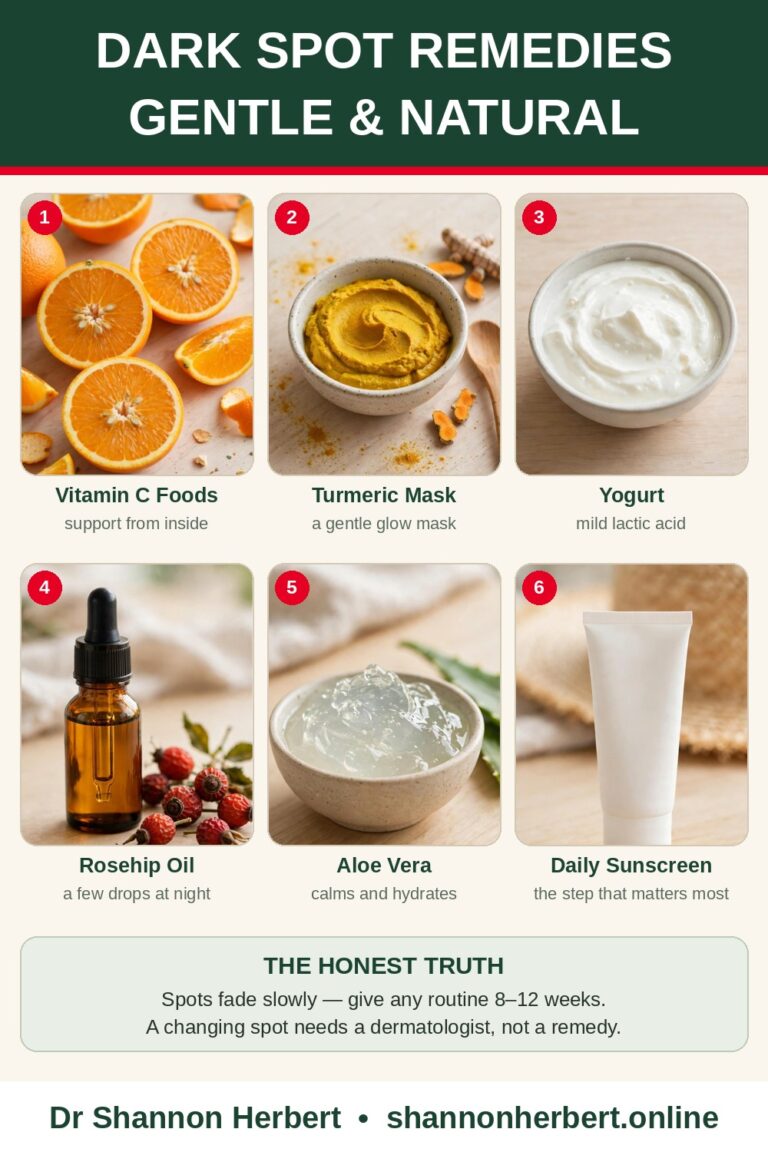
- Watch every spot. Any new, changing, bleeding, or irregular spot on your skin must be checked by a dermatologist promptly — do not just treat it at home and hope. Most spots are harmless, but only a proper examination can tell, and early checks matter.
- Children and pregnancy: Plain topical gel is generally considered low-risk, but for babies and young children, and during pregnancy, it is sensible to check with your doctor before regular use.
When to See a Doctor
- A burn that blisters, is large, looks white or charred, or is on the face, hands, feet, or joints
- Sunburn with fever, dizziness, severe pain, or widespread blistering
- A rash that spreads, weeps, or does not settle within a few days
- Scalp problems with crusting, bleeding, or hair loss
- Any skin spot that is new, changing, bleeding, or irregular in shape or color
Frequently Asked Questions
Can I use store-bought gel instead of cutting a leaf?
Yes. Choose a gel that is as close to pure as you can find — ideally 99% aloe, with no added color, fragrance, or alcohol. Some bright-green gels are mostly additives; the real thing is clear or nearly clear.
How long does fresh gel keep?
About a week in a clean, sealed jar in the refrigerator. If it develops an off smell or changes color, throw it out. Freezing gel in an ice cube tray keeps it much longer, and a thawed cube is a handy single portion for a small burn or sunburn patch.
Can I put aloe on my face every day?
For most people, yes — once or twice a day after a successful patch test. If your skin is dry, layer moisturizer over it. If your skin starts to feel tight or irritated, cut back.
Why did my skin itch when I tried aloe?
The most common reason is latex residue from a leaf that was not drained, which can irritate. A true sensitivity to aloe itself is less common but possible. Rinse the gel off, let your skin settle, and if you want to try again, use a small patch test with a pure commercial gel.
Does aloe cure eczema, acne, or other skin conditions?
No. Aloe soothes and moisturizes, and it may make some symptoms more comfortable, but it does not cure skin conditions. Treat it as a gentle helper alongside — not instead of — proper care.
A Simple Plant, Used Well
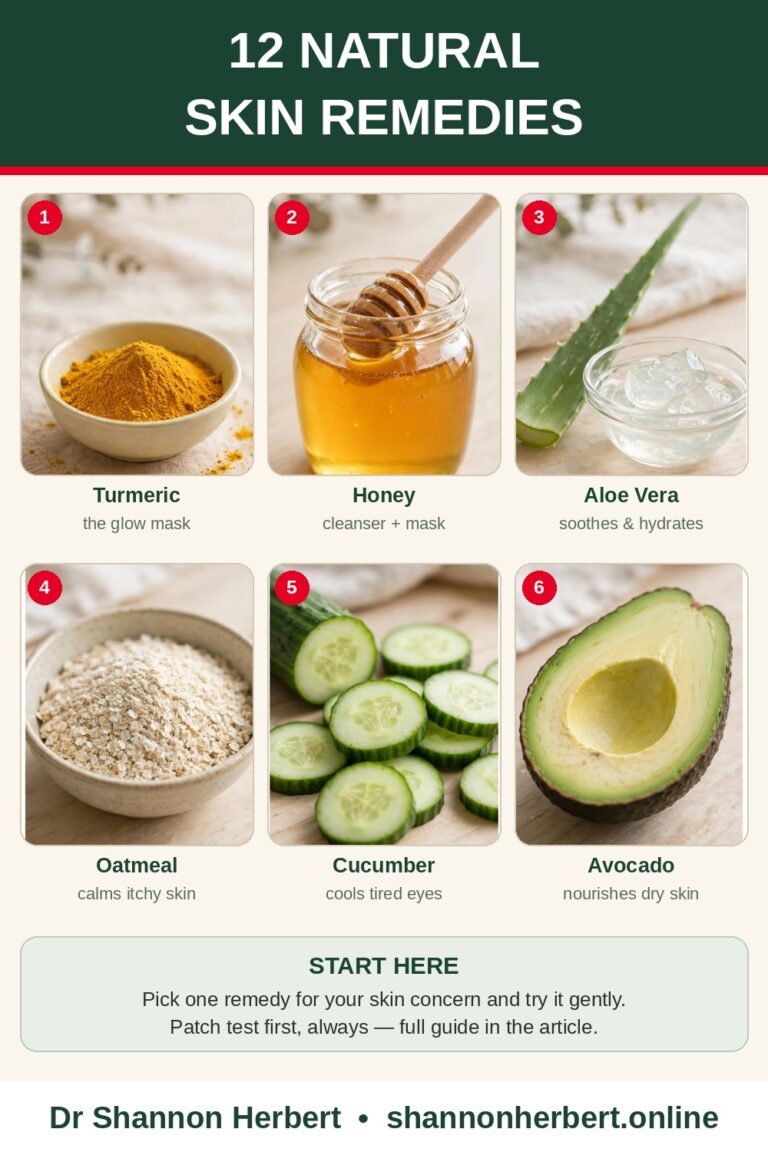
Aloe vera’s reputation is bigger than any one plant deserves, but underneath the hype is a genuinely useful remedy: a cooling, hydrating gel that calms minor sunburn, softens dry skin, soothes shaved skin, comforts small cooled burns, eases a flaky scalp, and softens rough patches overnight. Prepare it properly, patch test, respect its limits, and it will earn its windowsill space. For more ideas in the same spirit, browse our natural skin remedies collection — and remember that small changes in daily habits, like the ones in our simple nutrition tips, support your skin from the inside as well.
This article is for general information only and is not medical advice.