Homemade Chest Rub: An Easy DIY Balm With Coconut Oil and Eucalyptus
There is something instantly comforting about a chest rub on a stuffy night — that cool, minty vapor that helps you breathe a little easier while you rest. The good news: you can make a simple version at home with just a few ingredients, very much like the classic store-bought rubs.
If you have ever lain awake turning your pillow over, wishing the night felt less heavy, you understand why chest rubs have stayed popular for so long. They do not promise miracles. They offer a small, familiar ritual: warm hands, a soothing scent, and a cool feeling on the skin that makes rest more comfortable. Making your own lets you control the scent strength, the firmness, and exactly what goes onto your skin.
This guide covers the ingredients and why each one is there, how vapor rubs create comfort, texture and scent variations, storage and shelf life, troubleshooting, common mistakes, patch testing, and who should avoid this rub. Please read the safety section carefully. This rub is a comfort product for adults and older children only — not a medicine, and not a treatment for infection or any illness.
Why Make Your Own?
- You know exactly what goes on your skin.
- It costs a fraction of branded rubs.
- It takes about 10 minutes, plus cooling time.
- A small jar lasts the whole season.
- You can adjust the scent and texture to your own preference.
- You avoid extra fragrances and dyes you did not choose.
How Vapor Rubs Create a Feeling of Comfort
A chest rub does not open airways the way a medicine might, and it does not clear an infection. What it does is create strong sensory signals that your brain interprets as easier, cooler breathing.
When a rub containing eucalyptus and peppermint is applied to the chest or back, its aromatic compounds rise with your body heat. As you inhale them, they stimulate cold receptors in the nose and upper airways, which send a message that cool air is moving freely. Your actual airflow may not have changed much, but the sensation of airflow improves — and that matters a lot when you feel stuffy and restless at bedtime.
The base matters too. Coconut oil and beeswax hold the essential oils against the skin and release their scent slowly, rather than all at once, so a balm stays comforting through the evening while a drop of oil on a tissue fades in minutes. The gentle massage of applying it helps as well: warm hands, slow breathing, and a few quiet minutes of care are part of the comfort.
Think of a chest rub like a warm blanket or a cool pillow — a comfort measure that helps you rest while your body does its own work. If breathing is actually difficult, that always needs urgent medical care, not a rub.
Meet the Ingredients
Coconut Oil — The Smooth Base
Coconut oil is solid at cool room temperature and melts on contact with warm skin: firm in the jar, silky on application. It spreads easily, carries the essential oils evenly, and leaves skin soft when used modestly. Unrefined oil smells faintly of coconut; refined oil is more neutral. Both work. Note that coconut oil softens in a warm room and firms up in a cold one — that explains most texture surprises.
Beeswax — The Ingredient That Sets the Balm
Beeswax turns soft oil into a balm that holds its shape, raises the melting point, and helps the rub stay where you put it. Pellets melt evenly and are easy to measure. If you prefer not to use beeswax, leave it out for a soft salve, or use candelilla wax at about half the amount, as it is harder than beeswax.
Eucalyptus Essential Oil — The Classic Vapor Scent
Eucalyptus is the signature scent of chest rubs: clean, camphor-like, and sharply fresh. Its main aromatic component, often called eucalyptol or 1,8-cineole, gives that cool, clear feeling as you breathe in the vapor. It also demands the most caution. It is not recommended for young children, and it should never be used on or near a baby’s face. Here it is always diluted in a full batch of oil and wax — never apply undiluted essential oil to skin, and never ingest it.
Peppermint Essential Oil — Cool and Bright
Peppermint brings a bright, cooling top note. Its natural menthol creates a tingle of coolness on the skin and reinforces the sensation of clear breathing. A little goes a long way — peppermint easily overpowers eucalyptus, which is why this recipe uses half as much. Like eucalyptus, it is for adults and older children only in this context, must always be diluted, must never be ingested, and should never be used on or near a baby’s face.
Once you know the basic recipe, you can try small variations, such as a drop or two of lavender for a softer evening scent. If you are new to essential oils, master the simple two-oil version first — it is safer, easier to patch test, and easier to adjust.
What You Need
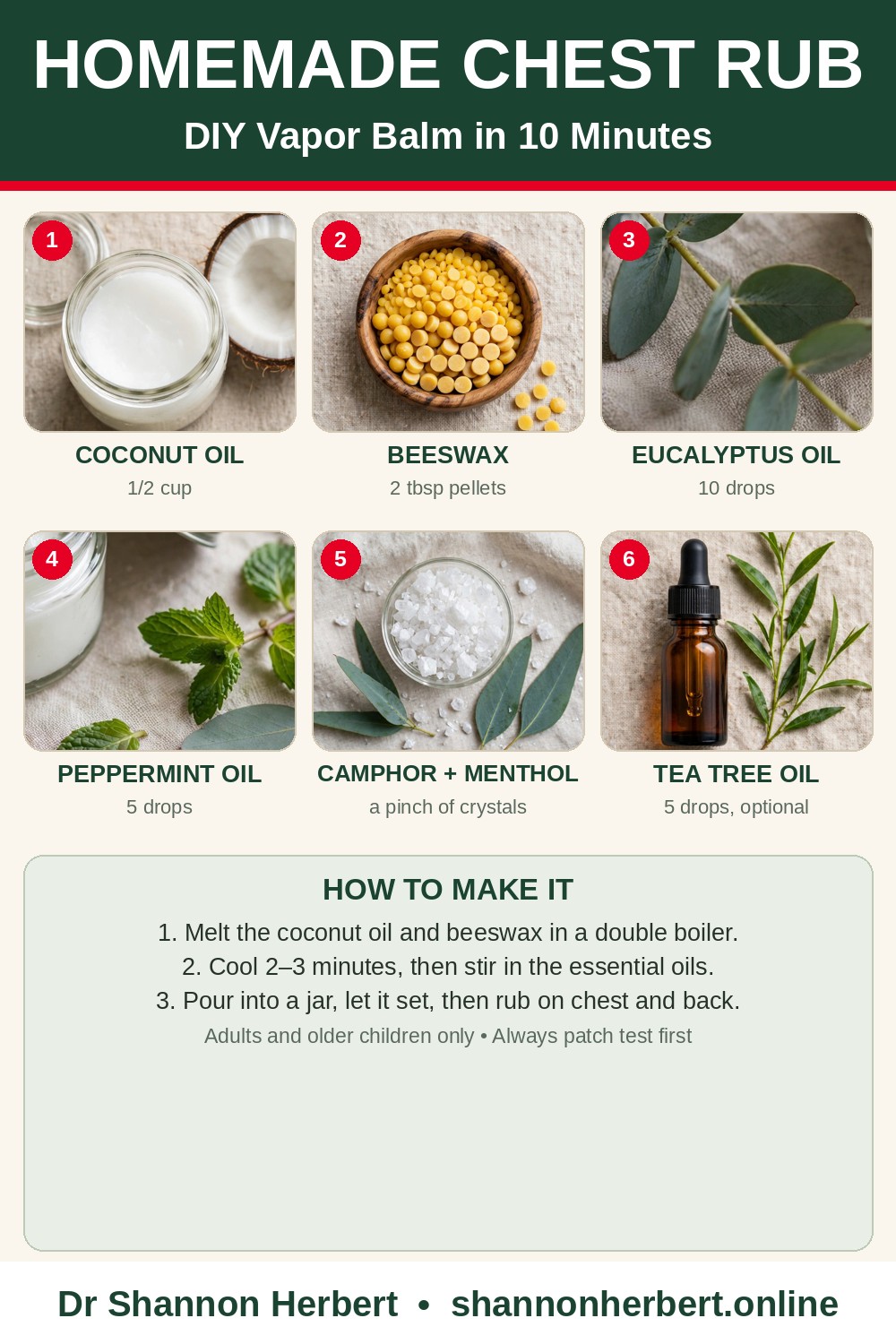
- 1/2 cup coconut oil
- 2 tablespoons beeswax pellets (for a firm balm; skip for a soft salve)
- 10 drops eucalyptus essential oil
- 5 drops peppermint essential oil
- A small clean glass jar
You will also want a heat-safe bowl, a pan for simmering water, a spoon, and a label and pen. Write the name, the date, and “External use only — not for young children” on the jar, so it is never mistaken for food or lip balm. Use a jar of about 4 ounces with a tight lid, washed in hot, soapy water and dried completely — water left inside can shorten the balm’s life.