Homemade Chest Rub: An Easy DIY Balm With Coconut Oil and Eucalyptus
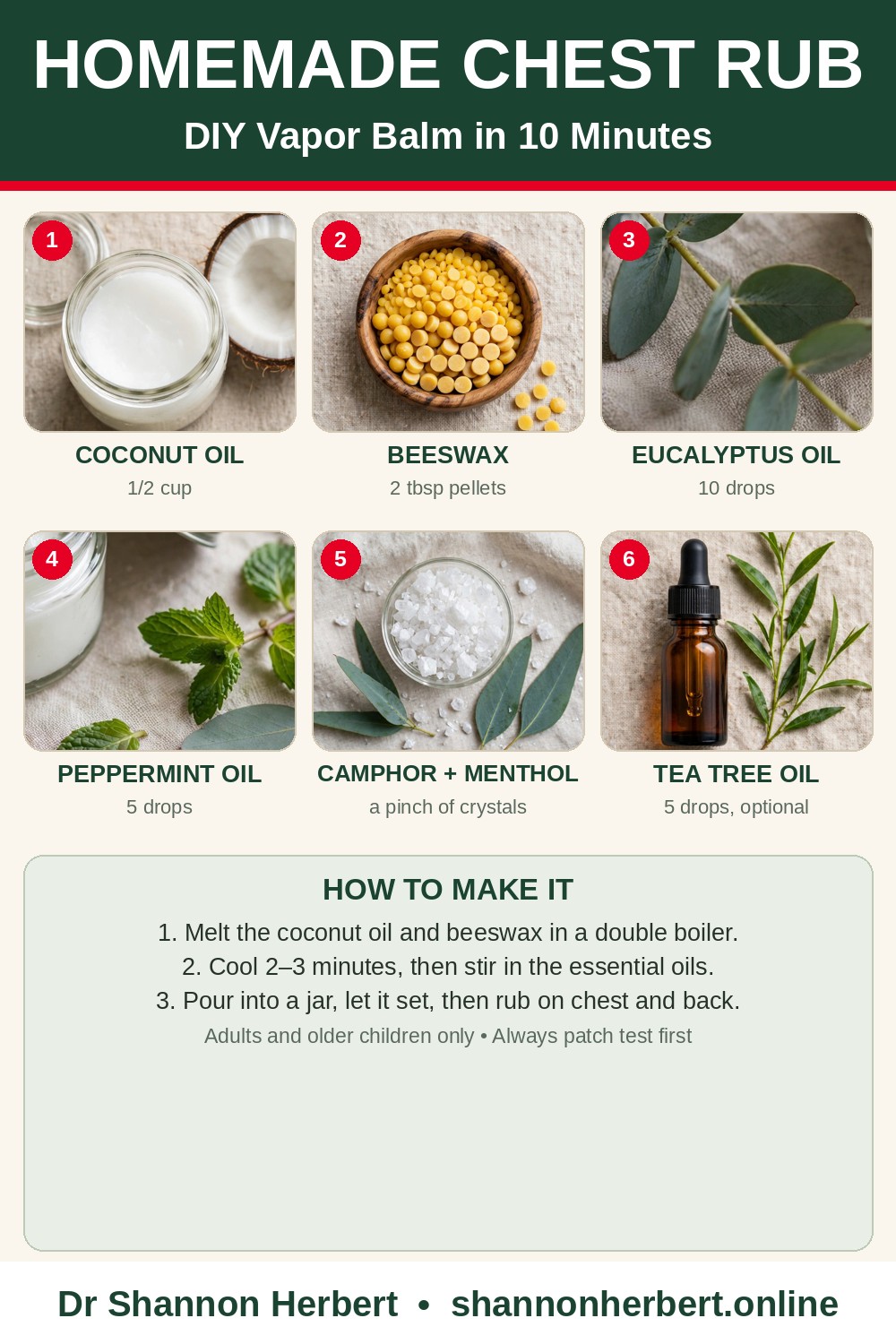
How to Make It
- Melt the coconut oil and beeswax together in a heat-safe bowl over a pan of simmering water.
- Remove from the heat and let it cool for 2–3 minutes — warm, not hot.
- Stir in the eucalyptus and peppermint oils.
- Pour into the jar and let it set at room temperature until firm.
A few details separate a good jar from a great one. Use gentle, indirect heat: a bowl over simmering, not boiling, water melts everything evenly. Stir occasionally and wait until the beeswax pellets have completely disappeared — beeswax melts more slowly than coconut oil.
Cool before adding the essential oils. This is the step beginners most often rush. Essential oils are volatile, so their scent evaporates quickly with heat. Stirred into piping-hot oil, much of it floats away, leaving a weak rub. Let the base cool for 2–3 minutes, until warm to the touch and just starting to look slightly cloudy at the edges, then stir the oils in thoroughly.
Pour once, then leave it alone. Let the jar set undisturbed at room temperature. Moving or repeatedly refrigerating it while it sets can cause cracks or a grainy surface. A few hours is usually enough; overnight is ideal. Once firm, it should give slightly under your fingertip and melt smoothly as you scoop. If the texture is not right, page 3 shows how to remelt and adjust it.
Texture Variations: Firm Balm vs. Soft Salve
The classic firm balm. Use the recipe exactly as written. It holds its shape in a warm room, travels well without leaking, and applies in a thin layer. It is the best choice for a first attempt and for warm climates. Warm a little between your fingertips before spreading it on.
The soft salve. Skip the beeswax entirely, or reduce it to 1–2 teaspoons. It melts instantly on skin and is lovely in winter, when a firm balm can feel stubborn. The trade-offs: it can turn liquid in a hot room, is messier to travel with, and is easier to over-apply. Keep it in a cool cabinet and scoop with clean hands or a spoon.
The whipped version. Let the basic balm cool until opaque and just beginning to set, then whisk briefly with a clean fork until pale and fluffy, and spoon it into the jar. It feels creamier and spreads faster. Whipping adds air, so the jar looks fuller than an unwhipped batch — that is normal.
Adjusting for your climate. In a warm home, add an extra teaspoon of beeswax. In a cold home, reduce the wax slightly so the balm stays scoopable. Treat the recipe as a middle point, and note any change on the label so your next batch starts from your best version.
Scent Variations to Try
Keep the total at about 15 drops per batch and change the proportions rather than simply adding more. Stronger is not more effective, and it raises the risk of irritation.
- Classic vapor: 10 drops eucalyptus, 5 drops peppermint. Clean, cool, and familiar.
- Softer evening blend: 8 drops eucalyptus, 3 drops peppermint, 4 drops lavender. Rounder and calmer for bedtime.
- Extra minty: 8 drops eucalyptus, 7 drops peppermint. Bright and bracing — patch test carefully.
- Gentler herbal: 7 drops eucalyptus, 3 drops peppermint, 5 drops cedarwood. Warmer and less sharp.
The safety rules never change with the blend: adults and older children only, always diluted, patch test first, never on broken skin, never on or near a baby’s face, and never ingest it. Do not make a “children’s version” with fewer drops — eucalyptus and peppermint oils are not recommended for young children, so skip essential-oil rubs for little ones and ask a pediatrician what is appropriate for their age.
How to Use It
Rub a small amount onto the chest, back, or the soles of the feet before bed. A little goes a long way. Wash your hands after applying, and avoid touching your eyes.
A pea-sized amount is enough for most adults. Warm it between your palms, then apply a thin, even layer over the upper chest or between the shoulder blades. A thin layer releases vapor steadily and feels comfortable under sleepwear; a thick layer mostly wastes product and can feel sticky. If you apply it to the soles of the feet — a popular folk tradition — put on clean socks afterward to protect bedding.
Apply it about 20–30 minutes before sleep, as part of a wind-down routine: dim lights, a warm drink if you like, and nourishing food earlier in the evening rather than a heavy meal right before bed. Our guides to Healthy Meals That Keep You Full and Simple Nutrition Tips are helpful companions here — steady, balanced eating supports good rest, even though no meal or rub replaces medical care when you are ill.
Use it only on intact skin, only externally. If the smell feels overwhelming, you have used too much — wipe off the excess, wash gently, and use less next time. Stop if you notice redness, itching, burning, or a rash, and do not reapply over irritated skin.
Storage and Shelf Life
Store the jar in a cool, dry place away from sunlight and heat — a bedroom drawer or a cabinet away from shower steam is ideal. Keep the lid tightly closed, and take product out only with clean, dry hands or a clean spoon. Water or dirt in the jar is the fastest way to shorten its life.
A batch made with fresh ingredients typically keeps well for 6 to 12 months. Essential oils gradually lose brightness, so a jar that smells noticeably weaker after many months is telling you to make a fresh batch, even if the base looks fine. Discard it if the oil smells rancid, if you see mold, if the color changes suddenly, or if water has got inside. When in doubt, throw it out — a fresh batch takes ten minutes. Keep it out of reach of children and pets, and never store it in a container that could be confused with food.