Healthy Meals That Actually Keep You Full (No More 4 PM Snacking)
You know the pattern: a “healthy” lunch at noon, and by 4 PM you are raiding the snack drawer. You tell yourself it is a willpower problem. It almost never is. It is a meal-design problem.
Think about what that virtuous lunch usually looks like: a plain salad with a little grilled chicken, dressing on the side, maybe a diet drink. It was low in calories, yes — and also low in everything that makes a human being feel fed. By mid-afternoon your blood sugar has drifted down, your stomach is empty, and your brain does exactly what it evolved to do: it sends you looking for quick energy. The biscuit tin is not a character flaw. It is a predictable response to an underbuilt meal.
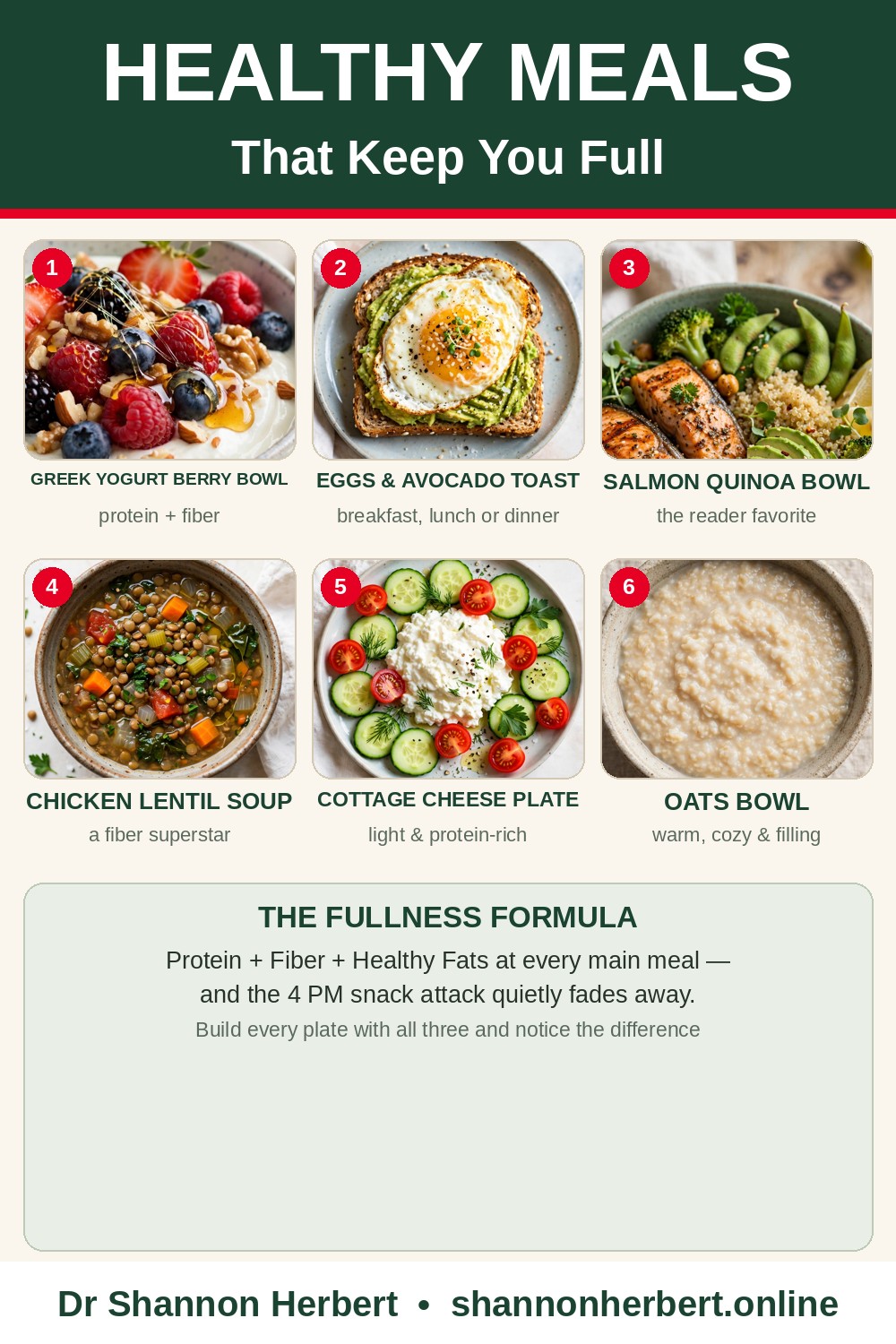
The fix is not to eat more of everything. It is to build meals that are designed to last. Meals that keep you full are built from three things: protein, fiber, and healthy fats. Miss one, and hunger comes back early. Include all three, in sensible amounts, and a normal-sized meal can carry you four, five, even six hours without a thought about food.
The Fullness Formula
- Protein — chicken, fish, eggs, lentils, Greek yogurt. Protein is the most satiating macronutrient: it slows digestion and directly dials down ghrelin, one of the main hunger hormones. As a rough guide, aim for a palm-and-a-half to two palms of protein food at a main meal — about 25–40 grams of protein for most adults.
- Fiber — vegetables, beans, whole grains, fruit with the skin on. Fiber adds physical bulk, slows the rise of blood sugar after a meal, and feeds the gut bacteria that produce their own appetite-regulating compounds. Most adults do well aiming for 25–38 grams across the day, and a main meal can reasonably carry 8–12 of them.
- Healthy fats — avocado, olive oil, nuts, seeds. Fat is the slowest macronutrient to leave the stomach. A meal with a little fat simply stays with you longer than a fat-free one, and it makes food taste like food, which matters more than most diet plans admit.
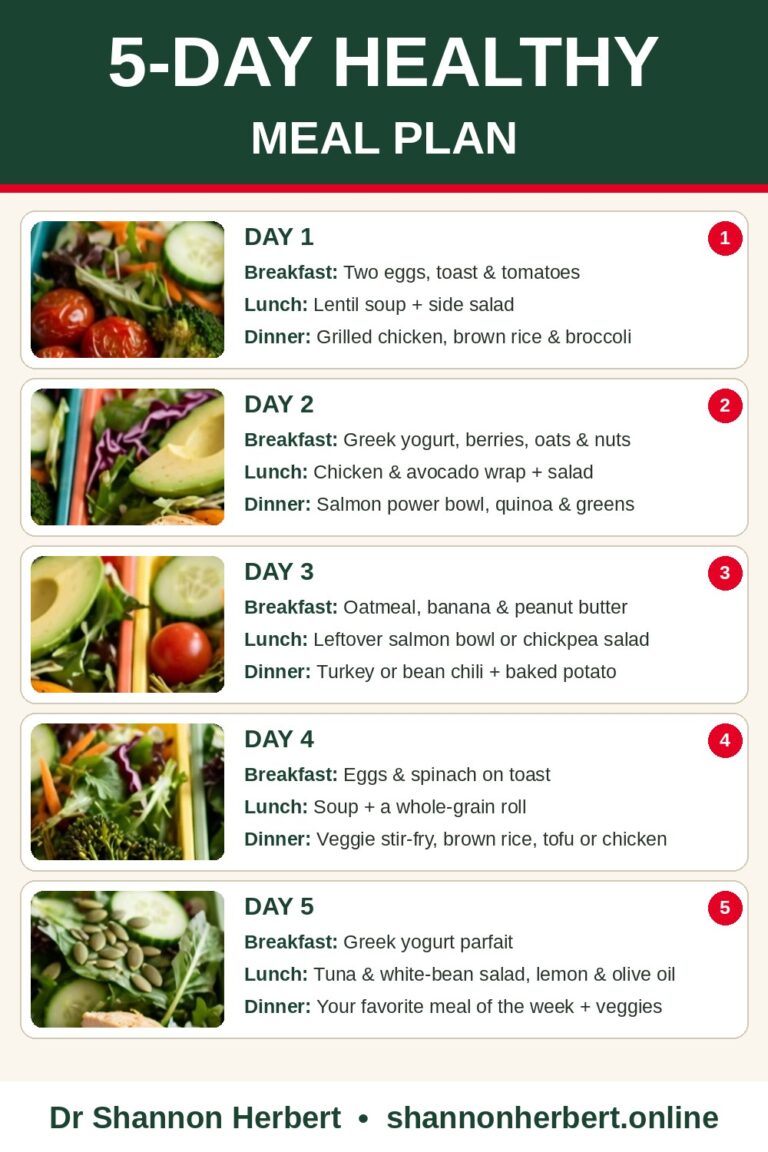
Build every main meal with all three, and notice what happens to your snacking. You will not white-knuckle your way past the snack drawer; you will walk past it because you genuinely are not hungry yet. That is the entire strategy of this article, and it is the same formula behind our Simple 5-Day Healthy Meal Plan.
One more element deserves an honorable mention: volume and water. Big, water-rich foods — soups, salads, vegetables, fruit — stretch the stomach and trigger fullness signals for very few calories. The five meal ideas below all use volume generously. None of them is a tiny “diet plate.” Feeling deprived is not part of the design.
Meal Idea 1: The Salmon Power Bowl
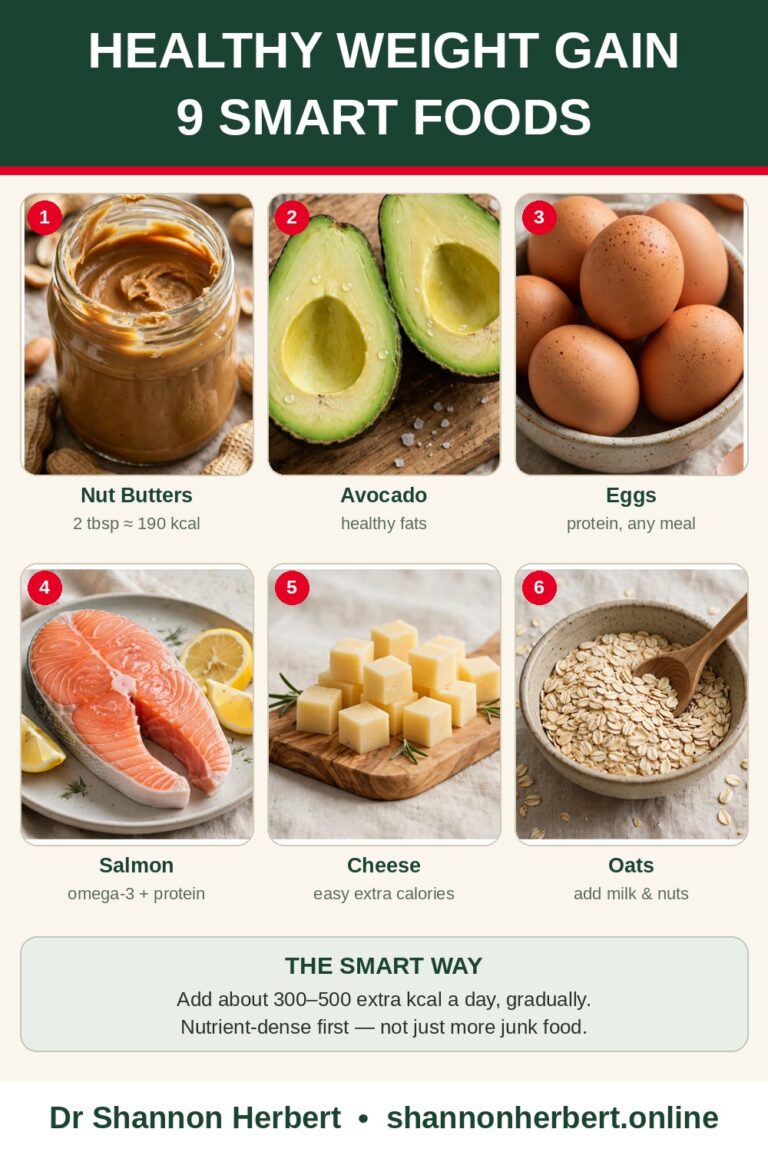
Grilled salmon over quinoa with avocado, chickpeas, and leafy greens, finished with lemon and olive oil. This is the bowl our readers ask about most — protein, fiber, and fats in every bite, in a combination that eats like a restaurant lunch.
How to build it (one generous bowl):
- 1 salmon fillet (about 5 oz / 140 g), grilled or baked with lemon and herbs
- 3/4 cup cooked quinoa (about 1/4 cup dry)
- 1/2 avocado, sliced
- 1/2 cup chickpeas, rinsed — warmed with a pinch of smoked paprika if you like
- Two big handfuls of baby spinach or mixed greens
- Dressing: 1 tablespoon olive oil, juice of half a lemon, salt, pepper, and a little garlic
Why it lasts: Roughly 35 grams of protein, 12+ grams of fiber, and slow fats from both the salmon and the avocado. Most people report this bowl holds them from lunch to dinner without effort.
Variations and budget notes: Canned salmon or even canned tuna works in place of a fresh fillet. Brown rice or barley can stand in for quinoa at half the price. Frozen edamame adds protein if chickpeas are not your thing. If avocado is expensive where you live, a tablespoon of tahini or a sprinkle of seeds in the dressing covers the fat role.
Meal-prep version: Cook a big batch of quinoa and a tray of salmon on Sunday. Assemble bowls through Wednesday; keep the avocado and dressing separate until serving so everything stays fresh.
Meal Idea 2: Eggs, Any Time of Day
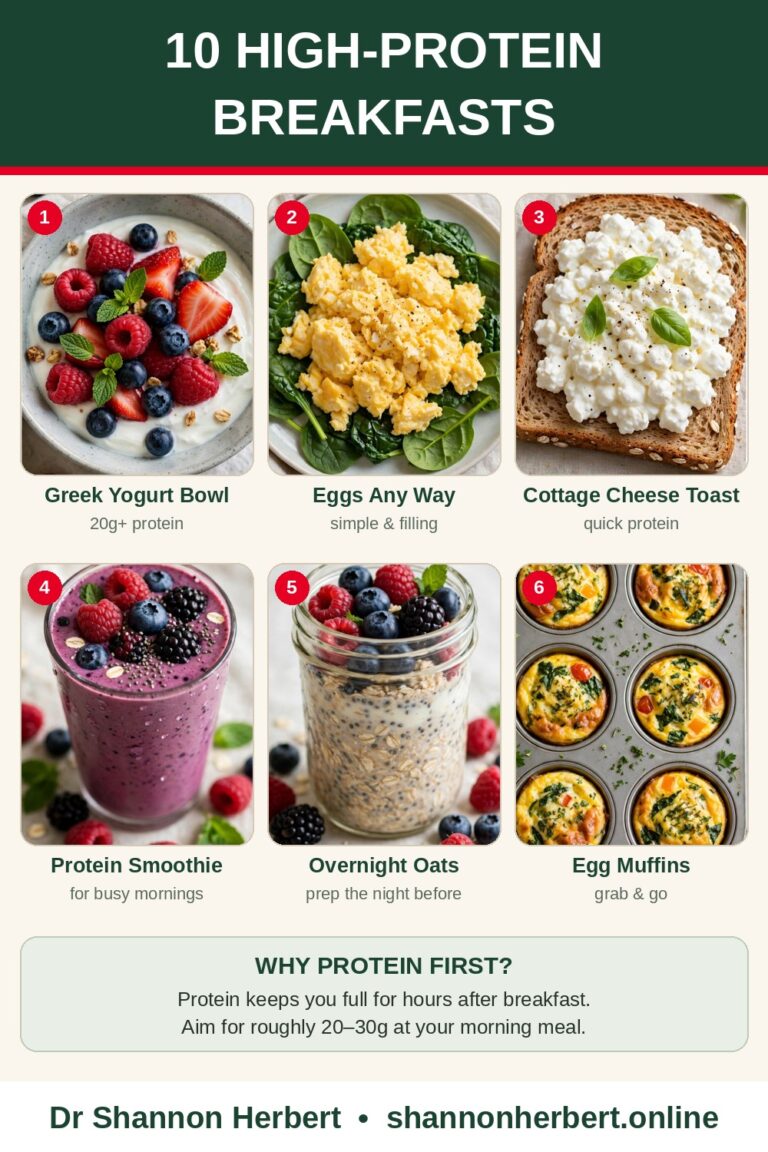
Two or three eggs with whole-grain toast, tomatoes, and a handful of spinach. Breakfast food that works perfectly well as a light dinner — and one of the fastest full meals in existence, at about ten minutes from fridge to plate.
Eggs score remarkably high on satiety indexes — the scales researchers use to compare how full foods keep people. Part of that is protein, part is fat, and part is that eggs feel like a “real meal” in a way a smoothie or a cereal bar never quite does. Never underestimate the psychology of sitting down to hot food on a plate.
How to build it:
- 2–3 eggs, scrambled, poached, or boiled
- 1–2 slices of whole-grain toast
- A handful of spinach wilted in the same pan, or a sliced tomato with salt
- Optional staying-power boosters: a few tablespoons of cottage cheese stirred into scrambled eggs, or a side of leftover beans
Make it a bigger meal: Add a small bowl of lentil soup first, or finish with Greek yogurt and berries. This turns a light plate into a genuinely substantial dinner without much effort.
Common mistake: Eggs alone, nothing else. Two eggs by themselves are only about 140 calories — a snack, not a meal. The toast, vegetables, and add-ons are what convert eggs into hours of fullness.