Healthy Meals That Actually Keep You Full (No More 4 PM Snacking)
Small Tricks That Make Meals Last Longer
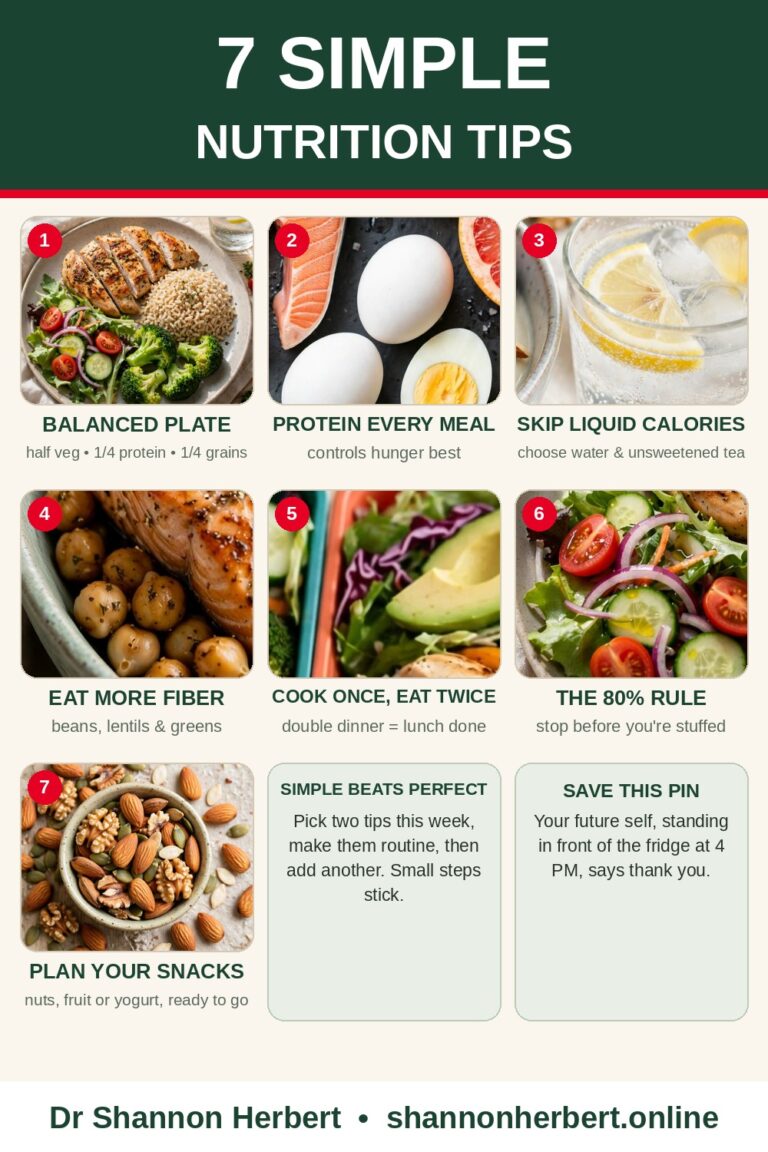
- Eat slowly. Fullness signals need about 20 minutes to arrive. If you finish in eight minutes, your body has not yet had the chance to tell you that you have had enough. Put the fork down between bites; chew properly; let the meal take the time it takes.
- Put protein on the plate first, then build around it. When protein is an afterthought, it tends to shrink. When it anchors the meal, everything else falls into place.
- Drink water with the meal. Thirst often disguises itself as hunger, and a glass of water with food also adds to the sense of a full stomach. You do not need to flood yourself — one glass with the meal and normal drinking through the day is fine.
- Start with soup or salad. A small bowl of soup or a starter salad before the main course reliably reduces how much people eat at the main — without them feeling they ate less overall.
- Keep tempting snacks out of sight, and planned snacks within reach. Environment beats willpower almost every time. The nuts and fruit on the counter get eaten; the biscuits in the cupboard get forgotten — and the reverse is equally true.
- Sleep is a hunger issue. One short night measurably raises hunger hormones the next day. If you are mysteriously ravenous, check last night before you blame today’s lunch.
- Beware the liquid lunch. Smoothies and juices digest fast, even healthy ones. If you love them, add protein and fiber (Greek yogurt, oats, seeds) and consider eating something chewable alongside — chewing itself is part of the fullness signal.
Common Mistakes That Make “Healthy” Meals Fail
The fat-free trap. Stripping all fat out of a meal in the name of health makes it digest quickly and taste like a compromise. A tablespoon of olive oil or a quarter of an avocado is not the enemy; it is often the reason the meal works.
The tiny-portion trap. A 250-calorie lunch is not discipline; it is a 4 PM snack attack scheduled in advance. Most adults need a genuinely substantial midday meal — often 500–700 calories with the formula above — to reach dinner comfortably.
The protein sprinkle. A few strips of chicken on a large pasta or a single egg on a big plate of toast is protein as decoration. Weigh nothing if you do not want to — but learn what a real portion looks like: roughly your palm, and as thick, as a minimum.
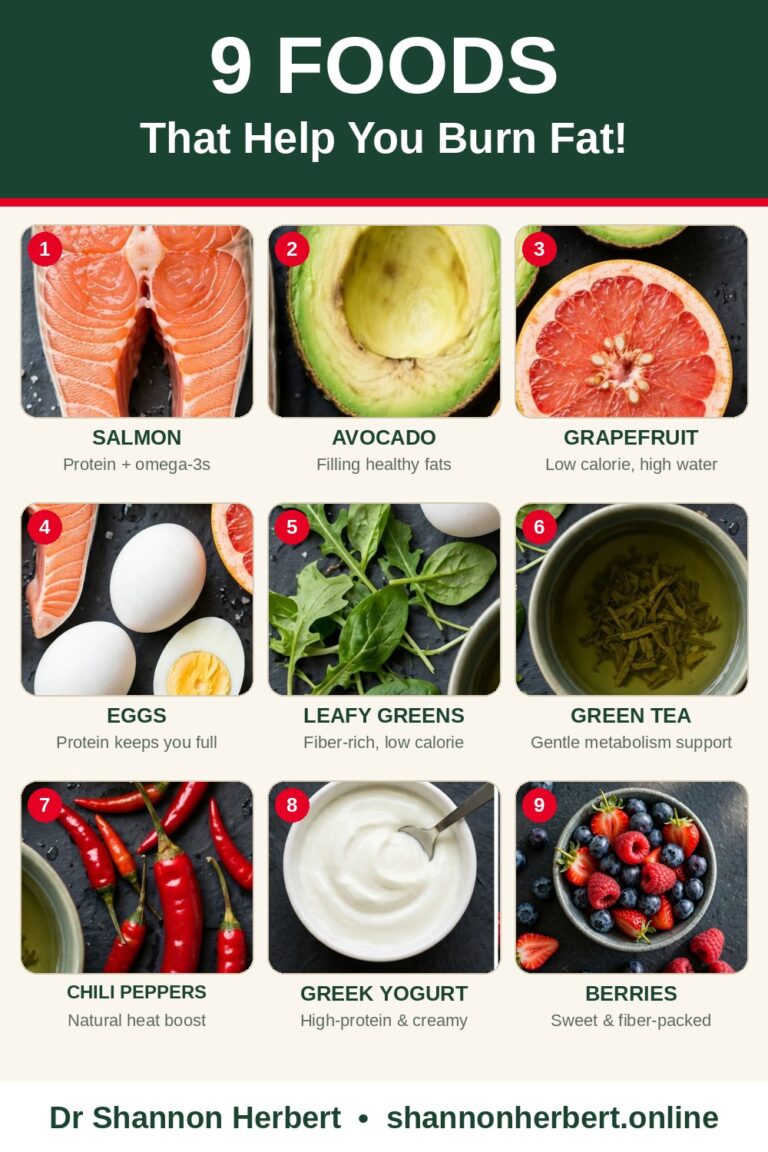
Skipping lunch “to save calories.” This reliably backfires into an enormous dinner and evening snacking. Steady beats extreme, every time. The foods in 9 Foods That Help You Burn Fat work inside regular meals, not instead of them.
A Sample Day Built on the Formula
So you can see the formula working across a whole day, here is what it looks like in practice — notice that nothing here is exotic, tiny, or joyless.
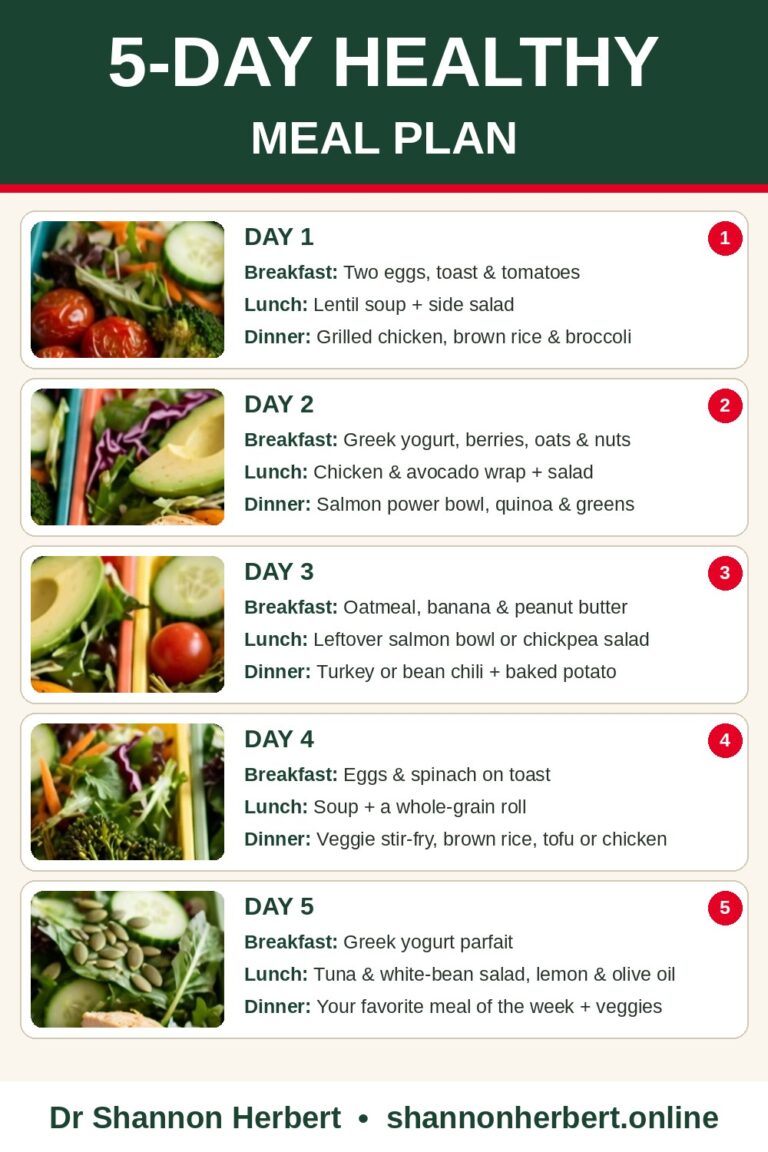
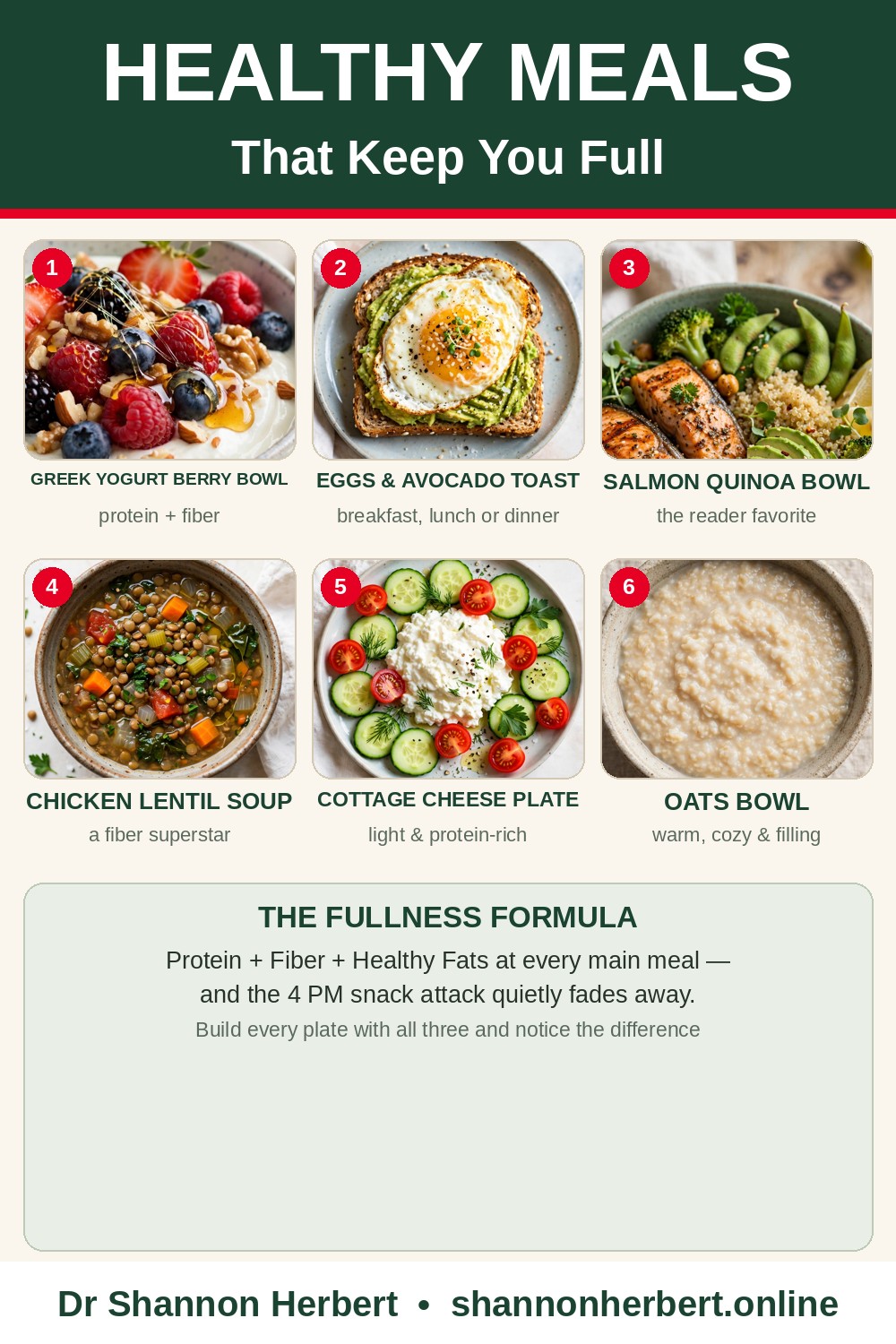
Breakfast: Two eggs scrambled with spinach and a slice of whole-grain toast, plus a small Greek yogurt if you are still hungry. Protein from the eggs and yogurt, fiber from the toast and spinach, fat from the yolks. Most people sail through to lunch.
Lunch: A big bowl of lentil soup with a whole-grain roll and a side salad with olive oil dressing. This is the meal that replaces the 4 PM snack drawer — expect to feel comfortably full at 3 PM, 4 PM, and beyond.
Afternoon (optional): An apple with a small handful of nuts, or nothing at all. On formula days, many people find the snack becomes genuinely optional rather than desperately necessary — use it when you need it, skip it when you do not.
Dinner: The salmon power bowl, or chicken with brown rice and a large portion of greens. Finish eating feeling satisfied rather than stuffed, and notice how the evening grazing simply does not start.
Total the day up and it is not a starvation ration — it is roughly what most adults need — but the shape of the hunger is completely different from a day of light, low-protein meals followed by evening snacking. Same person, same calories, different design. That difference is the entire argument of this article, and it is why the meal plan built on this formula works for beginners who have failed on stricter diets before.
Frequently Asked Questions
How long should a good meal keep me full?
For most people, a well-built main meal satisfies for about 4–5 hours. If you are hungry again in under 2 hours, the meal was probably short on protein, fiber, or total amount — adjust the next one rather than blaming yourself.
Is snacking always bad?
No. A planned snack built on the same formula — Greek yogurt, nuts and fruit, hummus and vegetables — is a tool. Unplanned grazing driven by an underbuilt lunch is the problem pattern.
What if I am vegetarian?
The formula does not change; the protein sources do. Lentils, beans, chickpeas, tofu, tempeh, eggs, and Greek yogurt all anchor meals well. The lentil soup and parfait above are already vegetarian, and the power bowl works with chickpeas and edamame in place of salmon.
Can I use this formula at restaurants?
Yes — scan the menu for a protein, ask for extra vegetables, and choose the option with beans, grains, or a side salad built in. Most kitchens will swap fries for vegetables or a salad if you ask.
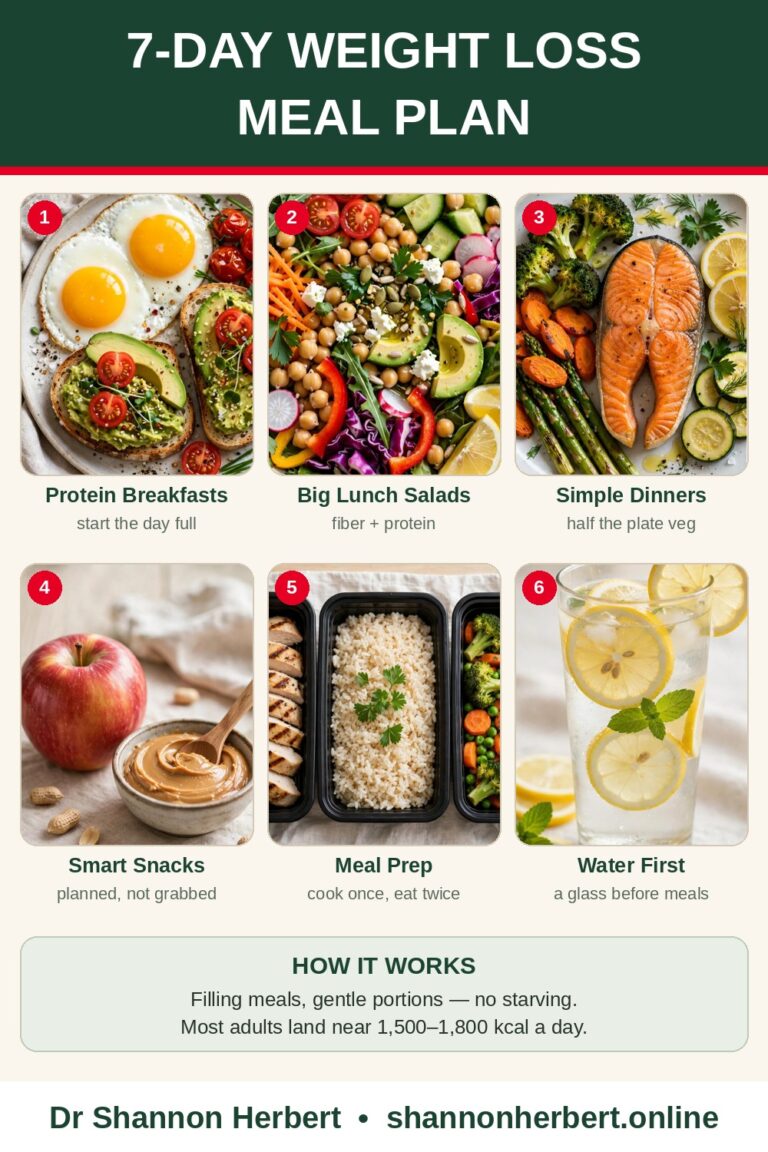
Want these ideas organized for a whole week? Open our Simple 5-Day Healthy Meal Plan, and check the foods doing the heavy lifting in 9 Foods That Help You Burn Fat.
This article is for general information only and is not medical advice.