10 High-Protein Breakfasts That Help With Weight Loss
If your usual breakfast leaves you hungry again by ten o’clock, the problem is probably not your willpower. It is the breakfast. A bowl of sweet cereal, a slice of white toast, or a pastry can taste perfectly fine and still leave you empty an hour later, because it is mostly fast-digesting carbohydrates with very little protein or fiber to slow things down.
A high-protein breakfast works differently. It keeps you full for hours, steadies your energy, and quietly makes the rest of the day easier: fewer snacks, smaller cravings, and no desperate hunt for the vending machine at 11 a.m. It is the same idea behind our guide to healthy meals that actually keep you full — build the meal around protein and fiber, and fullness largely takes care of itself.
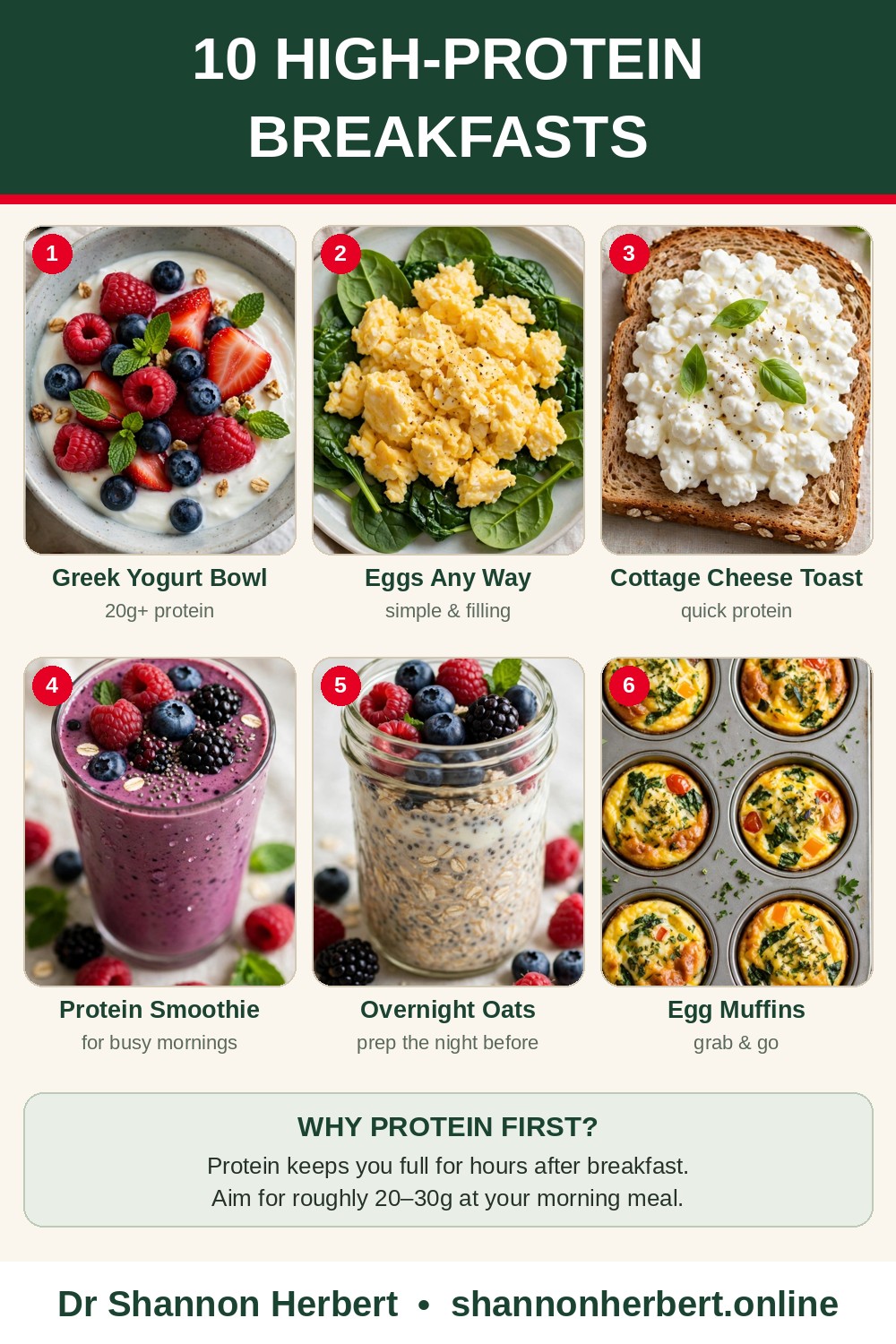
Below are ten breakfasts that real people actually make on busy mornings. None of them needs special equipment or expensive ingredients. Each one provides roughly 20–35 grams of protein, takes fifteen minutes or less (several take five), and tastes like breakfast — not like a diet.
Why Protein at Breakfast Helps With Weight Loss
Protein is the most filling of the three macronutrients. Compared with the same calories from carbohydrates or fat, protein lowers the hunger hormone ghrelin and raises the gut hormones that signal “I’m satisfied.” In plain language, you feel full sooner, and you stay full longer.
Protein also digests slowly, which softens the blood-sugar spike and crash that follows a sweet or starchy breakfast. That crash is often what shows up mid-morning disguised as sudden hunger and cravings.
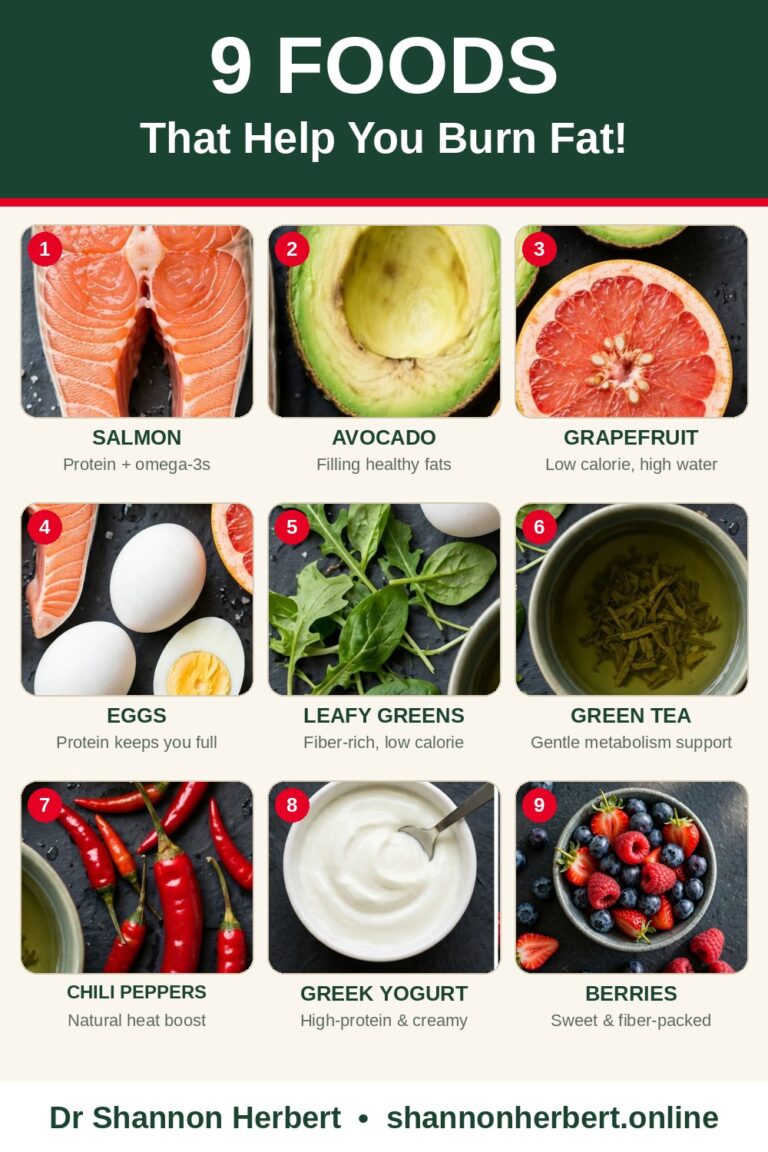
There is a third benefit that matters during weight loss. When you lose weight, you want to lose fat, not muscle. Eating enough protein, spread across the day and starting at breakfast, helps your body hold on to muscle — and muscle is part of what keeps your metabolism healthy. Protein also has a higher “thermic effect” than carbs or fat, meaning your body uses a little more energy digesting it. It is a modest bonus, not magic, and it is one reason protein-rich choices feature in our list of foods that help you burn fat.
How much should breakfast carry? A practical target for most adults is about 25–40 grams of protein at breakfast. You do not need a perfect number — going from 5 grams (toast and jam) to 25 grams is already a big upgrade.
A simple way to build any of these breakfasts — or invent your own — is the anchor-plus-two rule. Start with a protein anchor: eggs, Greek yogurt, cottage cheese, tofu, beans, or smoked fish. Then add one fiber source, such as oats, whole-grain toast, beans, or berries, and one produce item for volume and freshness. Anchor plus fiber plus produce — that is the whole formula, and every recipe below is a variation on it. It also means you can rescue almost any breakfast: a plain bowl of oatmeal becomes a weight-loss breakfast the moment you stir in Greek yogurt and add berries, and a slice of toast transforms with cottage cheese and tomato on top.
1. Greek Yogurt Power Bowl
What it is: Thick Greek yogurt topped like a sundae, but built to keep you full until lunch.
Ingredients:
- 1 cup (245 g) plain nonfat or 2% Greek yogurt
- 1/2 cup mixed berries, fresh or thawed frozen
- 2 tablespoons chopped walnuts or almonds
- 1 tablespoon ground flaxseed or chia seeds
- 1 teaspoon honey or maple syrup (optional)
Method: Spoon the yogurt into a bowl, scatter the berries, nuts, and seeds over the top, and drizzle with honey if you like. That is the whole recipe — about three minutes.
Why it helps: Greek yogurt is strained, so it packs roughly twice the protein of regular yogurt — around 20–24 grams in a cup. It is mostly casein protein, which digests slowly, and the nuts and seeds add fiber and healthy fats that stretch the fullness even further.
2. Spinach and Feta Egg Scramble
What it is: Soft scrambled eggs wilted with spinach and salty feta — a café breakfast you can make in five minutes.
Ingredients:
- 2 large eggs plus 2 egg whites (or 3 whole eggs)
- 1 cup baby spinach, roughly chopped
- 1/4 cup crumbled feta cheese
- 1 teaspoon olive oil
- 1/2 cup cherry tomatoes, halved
- Salt, black pepper, and a pinch of chili flakes
Method: Warm the oil in a nonstick pan, add the spinach for about 30 seconds until it wilts, then pour in the beaten eggs. Stir gently over low heat until just set, fold in the feta and tomatoes, and season to taste.
Why it helps: Eggs are among the most filling breakfast foods ever studied, and the extra egg whites raise the protein without adding much fat. The spinach adds volume — a bigger plate for very few calories — so the meal feels generous rather than restricted.
3. Cottage Cheese Toast With Tomato and Herbs
What it is: The no-cook breakfast for people who “don’t have time to cook.” Cottage cheese has quietly become a protein hero, and this is the easiest way to use it.
Ingredients:
- 1 thick slice whole-grain bread, toasted
- 3/4 cup low-fat cottage cheese
- 1 small tomato, sliced (or a handful of cherry tomatoes)
- 1/4 cucumber, sliced
- Everything-bagel seasoning, or salt, pepper, and chopped fresh herbs
Method: Pile the cottage cheese onto the toast, layer the tomato and cucumber over the top, and finish with the seasoning. Eat it open-faced, with a knife and fork.
Why it helps: Cottage cheese delivers about 18–20 grams of slow-digesting casein protein in that 3/4 cup, for surprisingly few calories. The crunchy vegetables add freshness and volume, and the whole-grain toast brings the fiber — the protein-plus-fiber combination that keeps hunger quiet for hours.