10 Winter Health Problems in America and Europe — and Simple Home Solutions
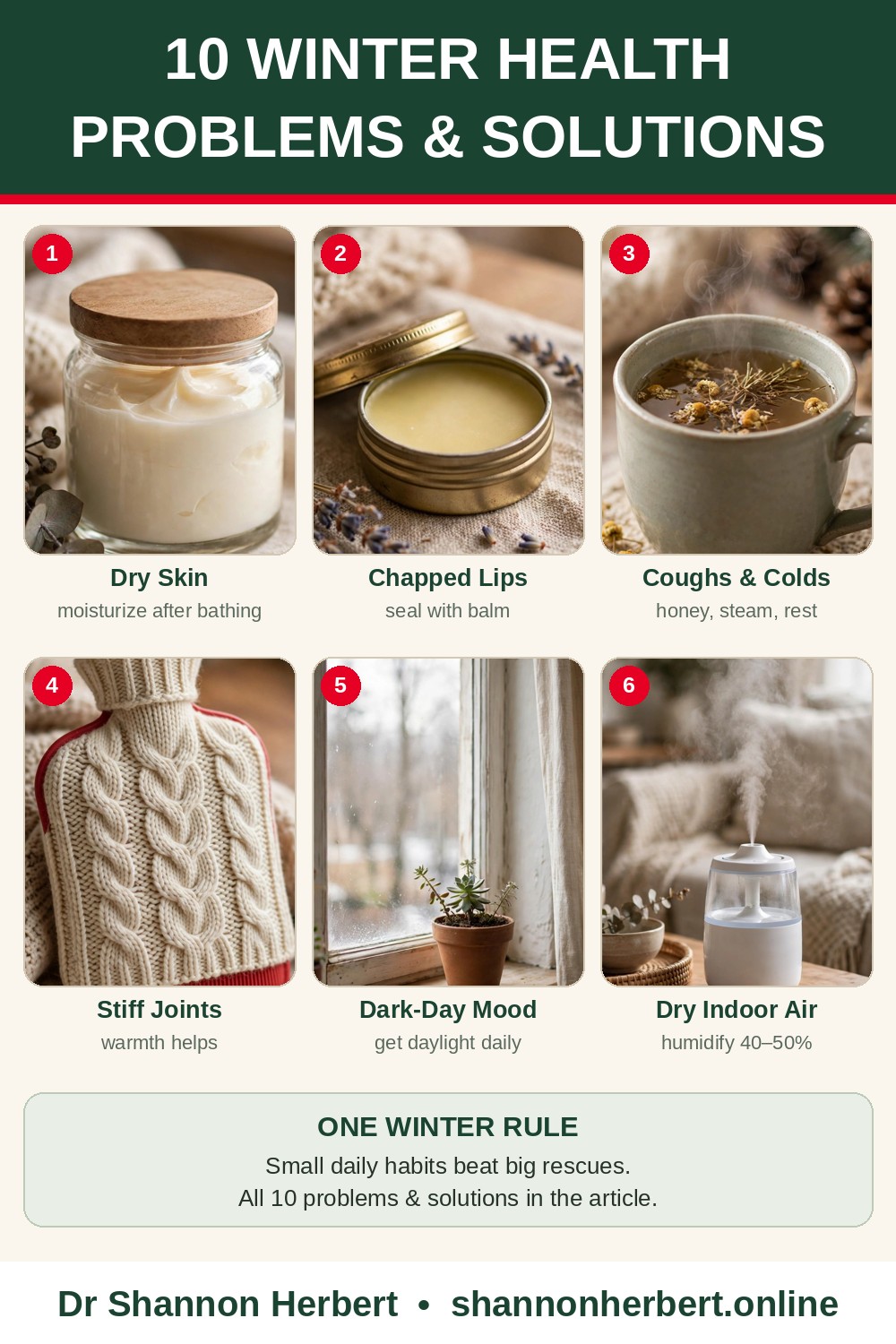
8. Dry Indoor Air and Nosebleeds
Why it happens in winter: Heated indoor air can drop below 20 percent humidity. The delicate lining inside your nose dries out, tiny blood vessels near the surface crack, and a small nosebleed follows — often at night or first thing in the morning. Dry air also worsens snoring, scratchy throats, and morning headaches.
Simple home solutions:
- Run a clean humidifier in the bedroom, aiming for 40 to 50 percent indoor humidity, and clean the unit weekly so it does not grow mold.
- Keep the nasal lining moist with saline spray or a thin smear of petroleum jelly just inside the nostrils.
- If a nosebleed starts: sit up, lean slightly forward, pinch the soft part of the nose for 10 to 15 minutes without peeking, and breathe through your mouth. Do not lean back or lie down.
- Drink enough water, and avoid aggressively blowing a dry nose — blow gently, one side at a time.
See a doctor if: a nosebleed will not stop after 20 to 30 minutes of proper pressure, bleeds are frequent (several a week), blood runs down the throat heavily, you take blood-thinning medication, or a bleed follows a head injury.
9. Winter Weight Gain
Why it happens in winter: Short days and cold weather cut outdoor activity, comfort food is everywhere from holiday tables to dark-evening snacking, and heavier clothes hide gradual change until spring. A few pounds across a winter is extremely common and nothing to panic about — but it is easier to steady early than to reverse later.
Simple home solutions:
- Keep one daily movement anchor that survives bad weather: a morning walk in daylight, an indoor routine, stairs on purpose.
- Build meals around filling, protein-rich foods so willpower is not doing all the work — our healthy meals that keep you full guide is built for exactly this.
- Keep the kitchen stocked with the good defaults (soups, eggs, beans, frozen vegetables) so the easiest choice is a decent one.
- Watch liquid calories and evening grazing, the two quietest sources of winter gain, and sleep enough — tired people snack more.
See a doctor if: weight changes quickly without explanation in either direction, or gain comes with unusual fatigue, swelling, or other new symptoms — unexplained change is worth a check-up, not a diet.
10. Catching Every Bug at the Office
Why it happens in winter: Offices, schools, trains, and shops concentrate people in warm, dry, shared air for hours — ideal conditions for cold and flu viruses. Add dry nasal passages (weaker defenses), shared surfaces, and tired, run-down colleagues, and it can feel like the whole building takes turns being ill from November to March.
Simple home solutions:
- Wash hands with soap for 20 seconds when you arrive, before eating, and when you get home; keep sanitizer for the moments in between.
- Keep your hands away from your face — the average person touches their face constantly, and eyes, nose, and mouth are the virus’s front doors.
- Support your baseline: sleep, real food, fluids, and daylight. Many of the simple tonics in our natural remedies you can make at home collection exist precisely to make staying well feel doable.
- Air out rooms when you can — even ten minutes of open windows exchanges stale shared air — and stay home when you are genuinely ill; presenteeism spreads the bug to the whole team, including back to you in its next mutation.
- Keep tissues and sanitizer at your desk, and wipe down shared equipment — phones, keyboards, door handles — during the peak weeks.
See a doctor if: you develop flu-like illness and are in a higher-risk group (over 65, pregnant, chronic heart/lung/kidney disease, weakened immune system) — early advice matters because antivirals work best when started promptly — or if any illness brings breathing difficulty, chest pain, confusion, or dehydration.
Frequently Asked Questions
Why do all these problems arrive at the same time?
Because they share causes. Dry cold air outside, drier heated air inside, less daylight, and more time in crowded indoor spaces drive most of the list at once. That is also the good news: humidifying your bedroom, moisturizing properly, and getting morning light each help several problems simultaneously.
What is the single most useful purchase for winter health at home?
A humidifier with a simple hygrometer to check humidity — kept clean. It helps skin, lips, nose, throat, and sleep all at once. After that, a big jar of plain petroleum jelly, which appears in half the remedies in this article.
Can home remedies replace flu vaccination or medical care?
No. Home remedies ease symptoms and support your body; they do not prevent influenza the way vaccination does, and they do not treat infections or conditions that need medicine. Think of them as the foundation of winter self-care, with professional care used promptly whenever the “see a doctor” lines in this article apply.
Are these remedies safe for children?
Many are, with adjustments: lukewarm baths, moisturizers, humidifiers, saline spray, and warm drinks suit children well. The firm exceptions: honey must never be given to babies under 12 months, essential-oil chest rubs and strong vapor products are not for babies and toddlers (our homemade chest rub guide gives the age guidance), and children with breathing difficulty, high fever, or dehydration signs should always be seen promptly.
My symptoms are mild. Do I really need to do all of this?
No — pick the one or two problems that actually bother you and work on those. The remedies here are deliberately small and cheap, and most people find that two or three changes — a humidifier, a real moisturizer routine, a morning walk in daylight — cover most of their winter complaints. Add more only if something specific is still troubling you after a couple of weeks.
When does a winter cold stop being “just a cold”?
When it stops improving. A normal cold peaks around day three and fades over a week or so. Warning signs that it has become something else include a fever returning after you had felt better, sinus pain that is still worsening after ten days, breathlessness, or a cough that deepens instead of loosening. Those patterns can mean flu or a bacterial complication, and they deserve medical attention rather than another home remedy.
How do I know if my low mood is “winter blues” or something more?
Duration and depth are the clues. A few flat, tired days that lift with light, activity, and company are common. Low mood that is heavy most of the day for more than two weeks, or that steals your interest in everything, deserves a conversation with a doctor — that conversation is a normal, sensible step, like getting a persistent cough checked.
One Season, One Strategy
Winter health is not ten separate battles. It is one environment — cold, dry, dark, and crowded indoors — meeting one body. Warmth, moisture, daylight, rest, simple food, and a few honest kitchen remedies answer most of it. Start with the problem that bothers you most, borrow the solutions that stack, and let the season feel shorter this year. If you do only three things after reading this, make them these: moisturize like you mean it, humidify the room you sleep in, and get outside while the light lasts.
This article is for general information only and is not medical advice.