10 Winter Health Problems in America and Europe — and Simple Home Solutions
4. Sore Throat
Why it happens in winter: Most winter sore throats come from the same viruses as colds, helped along by dry heated air and a night of mouth-breathing through a blocked nose. The throat lining dries, gets irritated, and every swallow reminds you it is there.
Simple home solutions:
- Gargle with warm salt water — ½ teaspoon of salt in a glass (8 oz / 240 ml) of warm water — several times a day. It is an old remedy because it works: it soothes and gently cleans the throat.
- Sip warm drinks with honey and lemon; honey coats and calms the throat (again, never honey for babies under 12 months).
- Suck ice chips or plain lozenges to keep the throat moist, and rest your voice.
- Keep bedroom air moist with a humidifier, and breathe through your nose when you can.
Our collection of old remedies that still work includes several of these throat soothers with their full stories.
See a doctor if: the sore throat is severe or lasts more than a week, you cannot swallow saliva or open your mouth fully, there is a high fever, a rash, white patches with fever but no cough (possible strep throat, which needs testing), or one side of the throat is much more swollen and painful than the other.
5. Dry Scalp and Dandruff
Why it happens in winter: The same dry air that attacks your skin attacks your scalp, while hats trap sweat and warmth, hot showers strip scalp oils, and most people wash either too often or too harshly. Ordinary dandruff (flaking with mild itch) often flares in winter because the yeast that lives on every scalp thrives when the scalp’s balance is disturbed.
Simple home solutions:
- Wash with a gentle or anti-dandruff shampoo two to three times a week, and let the lather sit on the scalp for five minutes before rinsing so the active ingredients can work.
- Rinse with lukewarm, not hot, water, and go easy on scratching — use fingertips, never nails.
- Massage a few drops of coconut or olive oil into the scalp 30 minutes before washing if your scalp feels tight and dry (skip this if your flakes are oily and yellowish, which is a different pattern).
- Brush gently to loosen flakes before washing, and give your head some hat-free time indoors so the scalp can breathe.
See a doctor if: the scalp is red, inflamed, crusted, or oozing, there are thick silvery patches (possible psoriasis), hair is falling out in patches, or four to six weeks of anti-dandruff shampoo changes nothing.
6. Stiff, Achy Joints
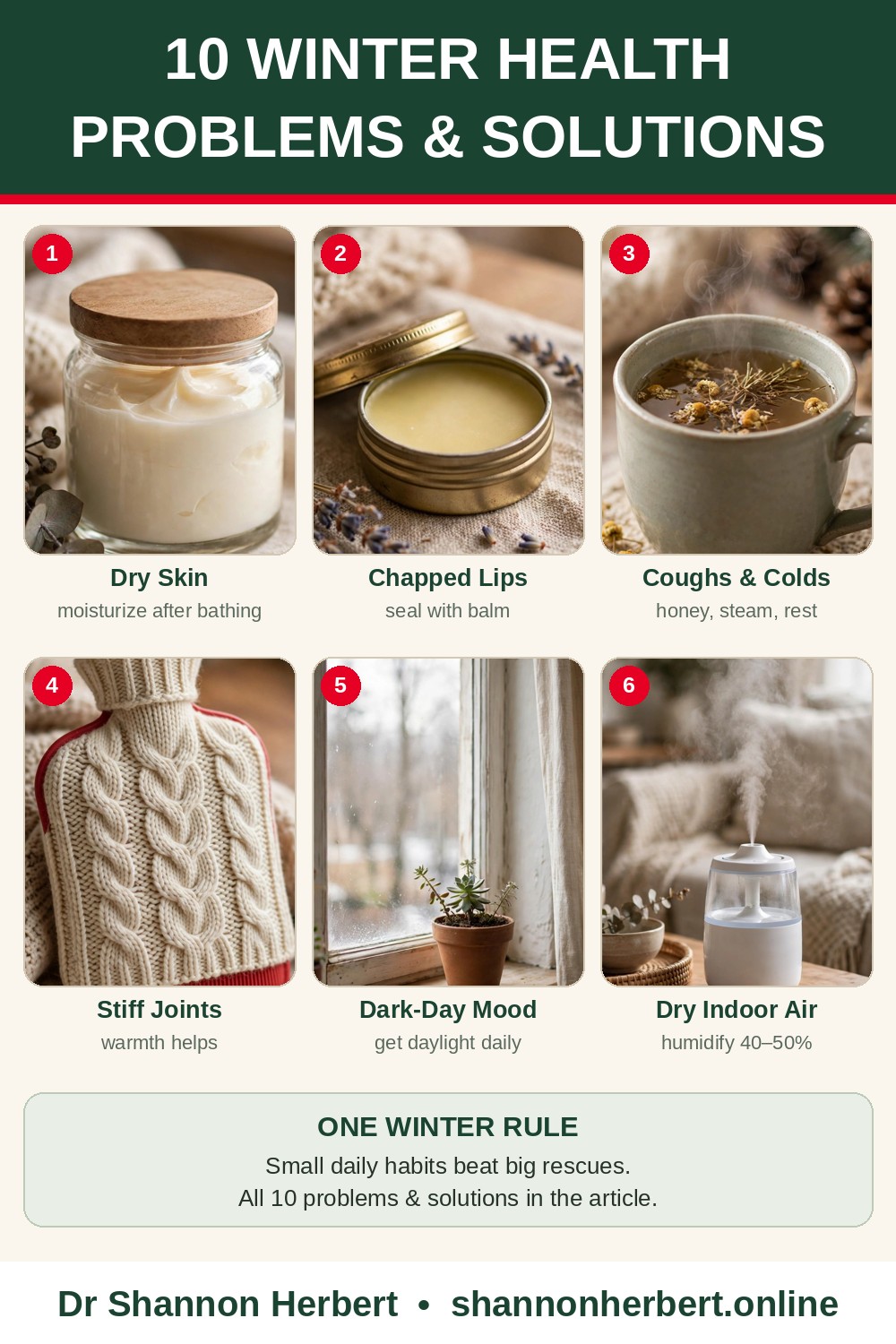
Why it happens in winter: Cold makes the fluid in joints slightly thicker and tissues less flexible, many people move less in winter, and changes in air pressure genuinely seem to bother arthritic joints. The result: knees, hands, hips, and shoulders that feel stiff in the morning and grumble on cold days.
Simple home solutions:
- Keep joints warm — layers, gloves, a scarf, and a warm (not hot) bath or shower to loosen up in the morning.
- Keep moving, gently and daily. Short walks, stretching, and light indoor exercise do more for stiff joints than rest does; muscles that support joints are built by use.
- Use a warm compress or heating pad for 15 to 20 minutes on stiff joints; use cold packs instead on a freshly swollen, hot joint.
- Warm drinks and proper meals help more than people expect — see our guide to healthy meals that keep you full for winter-friendly eating that supports energy and joints alike.
- Eat regularly and do not skimp on protein and healthy fats; an under-fueled body feels the cold — and every ache — more keenly.
See a doctor if: a joint is hot, red, and swollen, pain follows an injury, you cannot bear weight, stiffness lasts more than 30–45 minutes every morning for weeks (a pattern worth checking for inflammatory arthritis), or pain steadily worsens despite home care.
7. Low Mood on Dark Days
Why it happens in winter: At northern latitudes the sun sets in the afternoon, and many people commute both ways in darkness. Light regulates your body clock and mood chemistry, so weeks of short, gray days can leave anyone flat, tired, and unmotivated. For some people this deepens into seasonal affective disorder (SAD), a real form of depression that returns each winter.
Simple home solutions:
- Get outside in the morning light whenever you can — even 20 to 30 minutes on a gray day delivers far more light than indoor lighting does.
- Keep a steady sleep schedule; the winter urge to hibernate overshoots easily, and oversleeping often worsens the flat feeling.
- Move your body daily — a walk counts, and it stacks daylight and exercise in one habit.
- Stay connected on purpose: make the call, keep the plan, eat with people. Winter low mood feeds on withdrawal.
See a doctor if: low mood is heavy, lasts most of the day for more than two weeks, or comes with loss of interest in everything, big changes in sleep or appetite, or hopelessness. Home tips are support, not treatment for depression — please talk to a doctor or a mental health professional, and if you ever feel you might harm yourself, contact local emergency services or a crisis line right away. There is no shame in this, and help genuinely helps.