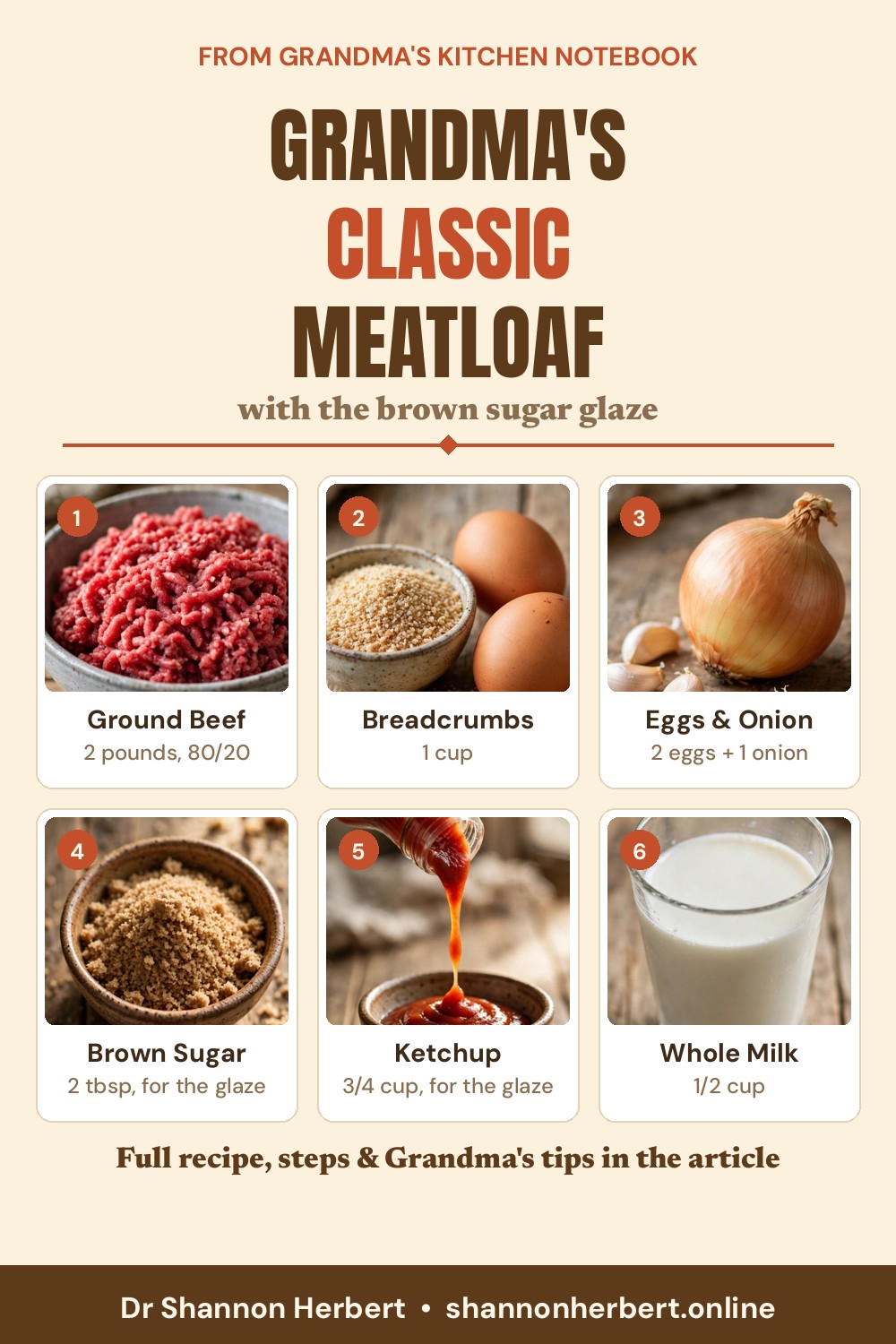
Grandma’s Classic Meatloaf with Brown Sugar Glaze
Storage and Reheating
Food safety first, because meatloaf deserves the same respect as any ground meat dish. Refrigerate leftovers within 2 hours of cooking — sooner in a hot kitchen. Stored in an airtight container, cooked meatloaf keeps safely in the refrigerator for 3 to 4 days.
To reheat slices, arrange them in a baking dish, spoon a little water or broth over the top, cover with foil, and warm in a 325°F oven for about 15 minutes, until heated through to 165°F. Covering the dish is what keeps the slices from drying out. Individual slices also reheat well in a covered skillet over low heat with a splash of water, or in the microwave at reduced power, though the oven gives the best texture.
Meatloaf freezes very well, which is why it has always been a friend to busy households. Wrap individual cooled slices tightly in plastic wrap and then foil, or place them in a freezer container with parchment between slices, and freeze for up to 3 months. Thaw overnight in the refrigerator and reheat as above. You can also freeze the unbaked loaf: shape it in a foil-lined pan, freeze it solid, wrap it well, and thaw it completely in the refrigerator before baking as directed — never bake a meatloaf from frozen in the center and hope for the best, because the outside will overcook long before the middle reaches a safe 160°F.
Simple Variations
Turkey meatloaf. Swap the beef for ground turkey and add an extra tablespoon of ketchup and a teaspoon of Worcestershire to the mixture to keep it savory. Turkey must also reach 165°F, so adjust your thermometer target. This is one of the easiest of the healthy food swaps for a weeknight menu.
Half and half. Use 1 pound of ground beef with 1 pound of ground pork for a richer, softer loaf — the way many farmhouse cooks made it when pork was the cheaper meat.
Muffin-tin minis. Divide the mixture among the cups of a greased muffin tin, glaze the tops, and bake for about 20 to 25 minutes, checking that the centers reach 160°F. Children love them, they cook quickly, and the built-in portions freeze perfectly for future lunches.
Cheese in the middle. Press half the mixture into the pan, lay 3 or 4 slices of cheddar or a handful of shredded cheese down the center, and cover with the rest of the meat, sealing the edges. Slice carefully and serve to applause.
Vegetables tucked inside. Finely dice a small bell pepper, a rib of celery, or a carrot and fold it in with the onion. Cut small, they soften completely in the oven, add sweetness and moisture, and stretch the meat a little further — a trick from lean years that turns out to be a good idea in generous ones too. Keep the total added vegetables to about a cup so the loaf still slices cleanly.
A heartier plate, balanced. Meatloaf is satisfying because protein and a proper portion genuinely keep you full — a point we return to often in our guide to healthy meals that keep you full. Fill half the plate with vegetables, keep the slice thick but singular, and the meal is as balanced as it is comforting. It also slots neatly into weekly planning: our 5-day healthy meal plan uses exactly this pattern, with a hearty cooked dinner early in the week providing planned leftovers later. For more everyday ideas in the same spirit, our simple nutrition tips cover the small habits that make home cooking like this the backbone of the week rather than the exception.
Frequently Asked Questions
Why did my meatloaf fall apart?
Usually it needed more binder, more rest, or both. Make sure the eggs and panade are in, let the baked loaf rest the full 10 minutes before slicing, and slice with a sawing motion instead of pressing straight down. A loaf sliced hot and impatiently will crumble no matter how well it was made.
Why is my meatloaf dry?
The three usual causes are lean meat, overmixing, and overbaking. Use 80/20 beef rather than very lean ground beef, mix only until combined, and pull the loaf when the center reaches 160°F rather than giving it extra time to be safe. The panade helps enormously, so do not skip the 5-minute soak.
Can I make meatloaf ahead of time?
Yes. You can assemble the raw loaf in its pan, cover it tightly, and refrigerate it for up to 24 hours before baking; add about 5 minutes to the baking time since it starts cold. Or bake it fully, cool it, refrigerate it, and reheat the whole loaf covered at 325°F until it reaches 165°F in the center.
Loaf pan or baking sheet — which is better?
Both are genuinely fine. The pan gives softer sides and neat, even slices, and it contains the juices. The baking sheet gives you caramelized edges on three sides and more surface for glaze. Grandma used a pan; many diners use a sheet. Pick based on whether your household argues over the crispy end pieces.
What should I do with the fat in the pan?
Let the loaf rest, then pour or spoon the fat off before slicing. A little of the pan juice spooned over the slices is delicious; a puddle of grease is not. If you are reheating leftovers the next day, any fat that solidified on top in the refrigerator lifts off in one piece.
Supper’s Ready
There is a reason meatloaf has survived a century of food fashions: it is honest cooking that turns modest ingredients into a dinner people are glad to sit down to. Make it once, exactly as written, and learn how it behaves in your oven. Then make it yours — a little more onion, a spicier glaze, crackers instead of crumbs — and write your changes in the margin, the way every good family recipe has always grown. That margin, full of one family’s small adjustments and honest notes about what actually worked, is worth more than the printed page it surrounds. Recipes survive because cooks keep talking back to them.
For the full old-fashioned evening, follow it with Grandma’s Old-Fashioned Apple Pie with Flaky Crust and strong coffee, and you have the exact Sunday supper Grandma served when she wanted the whole family to linger at the table. Both recipes live in our growing collection of Grandma’s Old Recipes, where the measuring is in cups, the instructions are plain, and nothing comes from a box unless the box is a century old.
This article is for general information only and is not medical advice.