7 Simple Nutrition Tips That Actually Make a Difference
Forget the complicated rules. The people who eat well for years are not following a 40-point system, tracking seventeen nutrients, or cycling through a new named diet every spring. Watch them closely and you will see something almost disappointing in its simplicity: they are doing a handful of ordinary things, consistently, without much drama. No forbidden food groups. No guilt spirals. Just defaults that quietly point in the right direction.
That is genuinely good news, because it means the gap between how you eat now and how they eat is probably not knowledge — you likely already know vegetables are good and soda is not. The gap is a few habits, installed one at a time. These are the 7 tips that make the biggest difference for our readers. Each one includes exactly how to do it, the mistake that usually undermines it, and a way to make it easier. You do not need all seven this week. The last section explains the order most people find easiest.
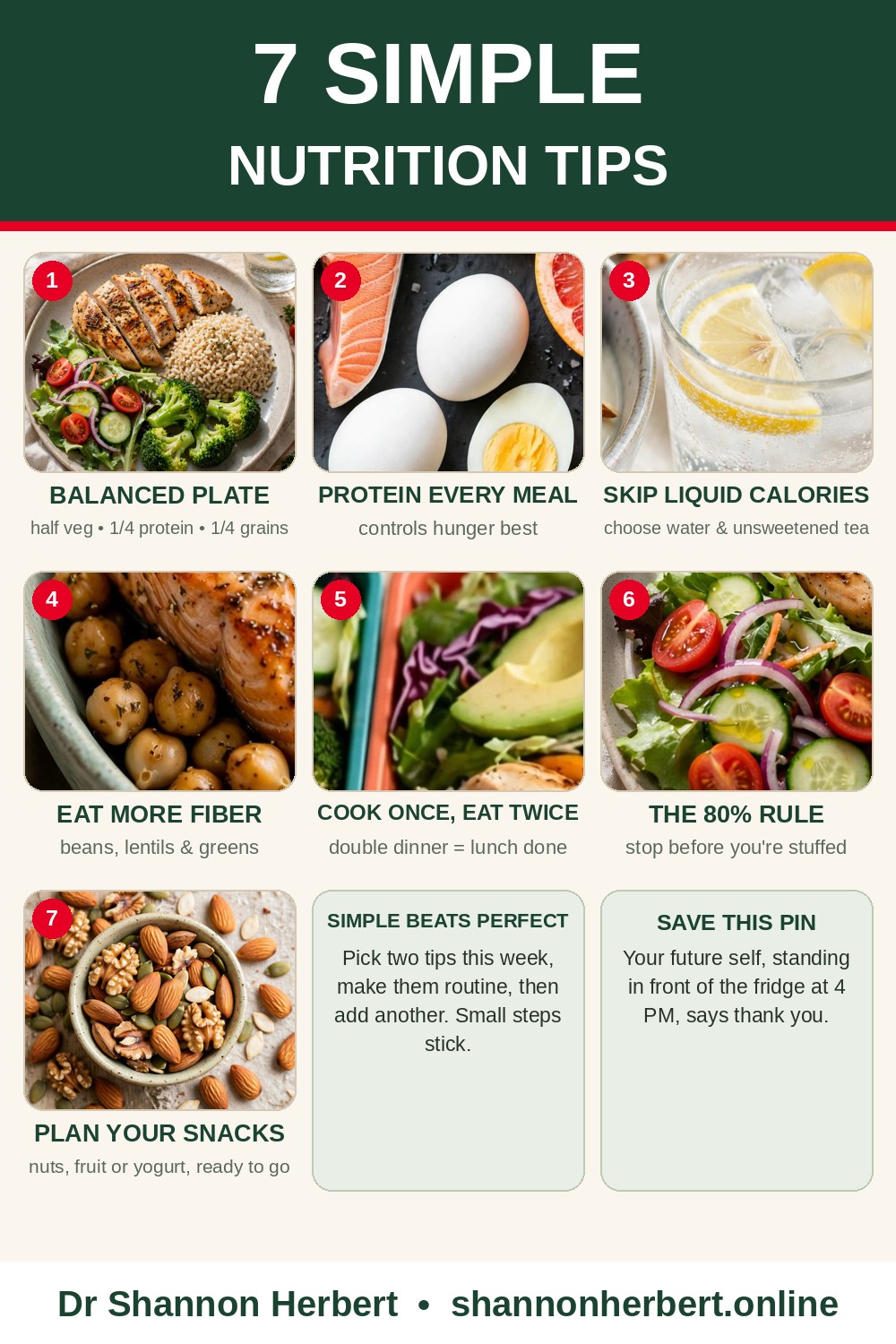
1. Build the Balanced Plate
Half vegetables, one quarter protein, one quarter whole grains or starchy vegetables. No counting, no apps — just look at the plate.
This works because it replaces arithmetic with geometry. Calorie counting is accurate but exhausting, and most people quietly stop within a few weeks. The plate method survives because it takes two seconds and works anywhere: at home, at a buffet, at a restaurant, at your mother’s house. Fill half the plate with vegetables first — they are the volume that makes the meal feel generous. Then a quarter for protein, roughly the size and thickness of your palm, plus a bit more. Then a quarter for grains or starchy vegetables, roughly a fist-sized portion. Fats ride along in cooking and dressings; you do not need to allot them a section, just a sane hand.
How to start: Use your current plates, not special smaller ones — restriction theater backfires. At your very next meal, serve the vegetables first and double whatever amount you would normally take. That single move changes the entire balance of the plate without removing anything you love.
Common mistake: Counting fries or a token side salad as “the vegetables.” The half-plate is meant to be genuinely half, and mostly non-starchy vegetables: greens, broccoli, peppers, carrots, beans in their pod form, salads. Once the vegetable half is real, the rest of the plate almost fixes itself.
Make it easier: Keep frozen mixed vegetables and bagged salad as permanent residents of your kitchen. The balanced plate fails on busy nights only when the vegetable half requires a special trip or twenty minutes of chopping.
2. Protein at Every Meal
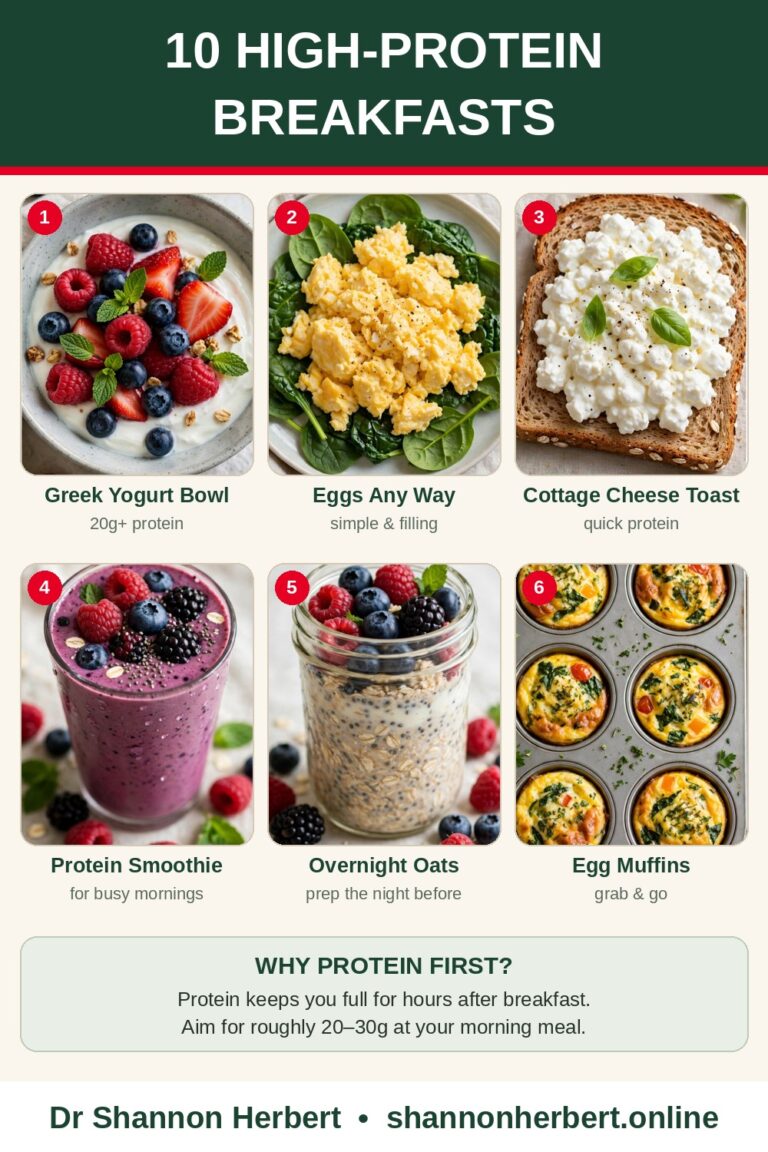
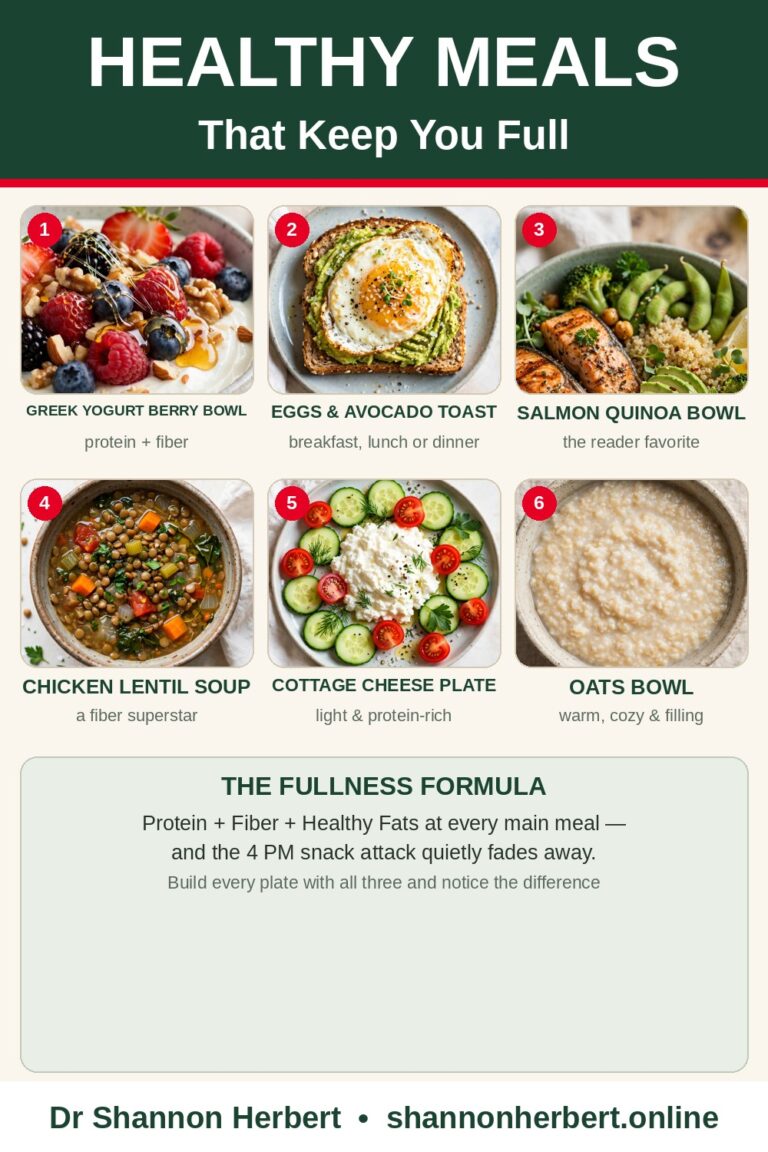
Protein controls hunger better than anything else on the plate. Of the three macronutrients, it is the most satiating per calorie, it blunts the blood-sugar swings that trigger cravings, and it protects your muscle while you lose fat — which matters, because muscle is a large part of what keeps your metabolism up. Eggs, fish, chicken, beans, lentils, or Greek yogurt — something at every meal. Our Healthy Meals That Actually Keep You Full shows how.
The meals where protein usually goes missing are breakfast and lunch. A breakfast of toast and jam, or cereal and juice, can leave you hungry by 10 AM even if the calories were adequate. Lunch is often a smaller version of the same problem: mostly grains and vegetables, with protein as a garnish.
How much: A practical target for most adults is a palm-and-a-half to two palms of protein food per main meal — roughly 25–40 grams of protein. In everyday terms: two eggs plus Greek yogurt at breakfast; a chicken breast, a cup and a half of lentils, or a salmon fillet at lunch and dinner. Snacks can contribute too, but meals should do the heavy lifting.
Common mistake: Front-loading protein at dinner and skimping all day. Your hunger is managed meal by meal, not by the day’s total. A huge steak at 7 PM does nothing for the 4 PM snack drawer; moving some of that protein to breakfast and lunch changes the whole day’s shape.
Make it easier: Keep a standing cast of no-cook proteins: Greek yogurt, canned tuna and sardines, rotisserie chicken, boiled eggs, canned beans, cottage cheese. When protein requires no cooking, it stops being the first thing dropped on a busy day.
3. Do Not Drink Your Calories
Sodas, sweet juices, and fancy coffee drinks can quietly add a meal’s worth of calories — a large sweet coffee drink can carry 300–500 calories, a liter of soda around 400 — and liquid calories are uniquely unsatisfying. Your stomach and brain barely register them. Drink 400 calories and you will eat almost as much at the next meal as if you had drunk nothing; eat 400 calories of real food and you will noticeably eat less later. That asymmetry is why drinks are the single highest-value target for most people.
Water, sparkling water with lemon, or unsweetened tea most of the time. Notice what this tip does not say: it does not say never. A juice at brunch or a sweet coffee on a Saturday is an occasion. The problem is the daily default, the drink that shows up twice a day without being noticed.
How to start: Audit one normal day. Write down every drink that is not water. Most people are genuinely surprised by the total — the morning juice, the sweet tea, the afternoon soda, the “small” flavored latte. Then replace the most frequent one first. Cold turkey on all of them at once works for some people; a one-at-a-time replacement works for almost everyone.
Common mistake: Switching from soda to fruit juice and calling it even. Juice removes the fiber of fruit and keeps the sugar; a glass of orange juice can hold the sugar of four oranges you would never sit down and eat. Eat the fruit; drink the water.
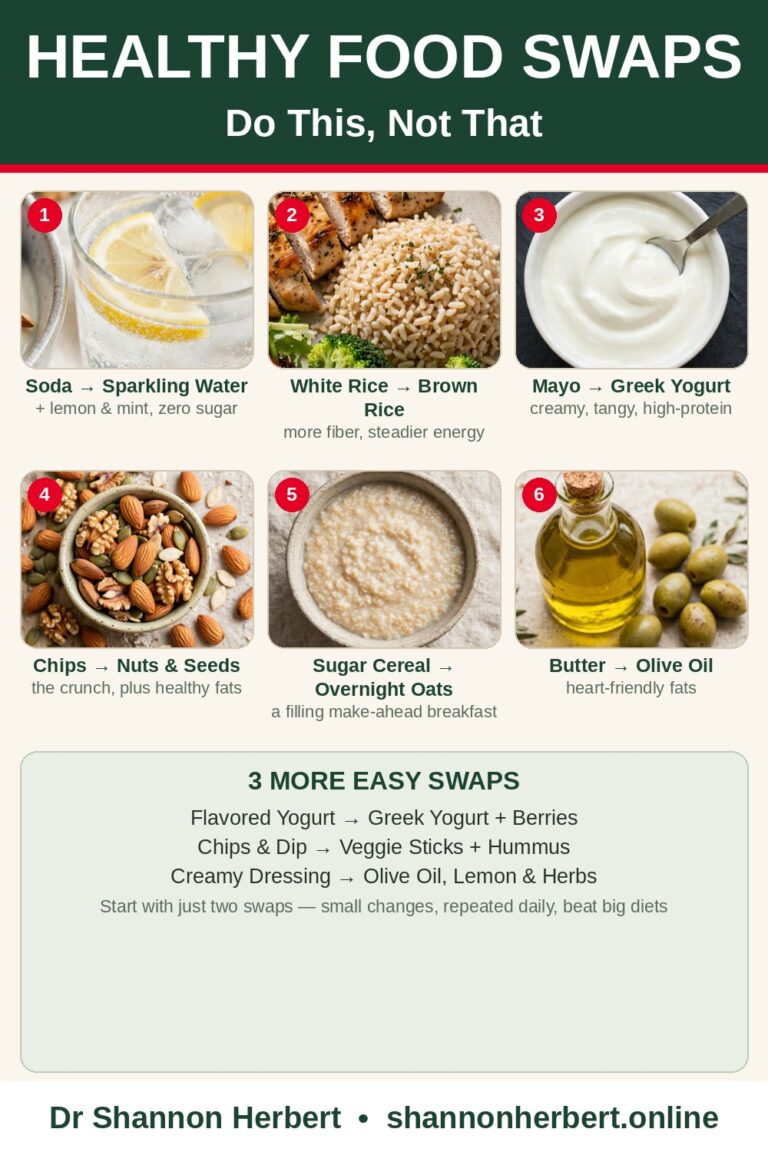
Make it easier: Keep a bottle of water where you spend your day, and make the replacement drink genuinely pleasant — sparkling water with lime and mint, iced tea with lemon, or water infused with cucumber. Willpower lasts longer when the alternative is not a punishment. The full treatment of this swap is in Do This, Not That: 8 Simple Food Swaps.