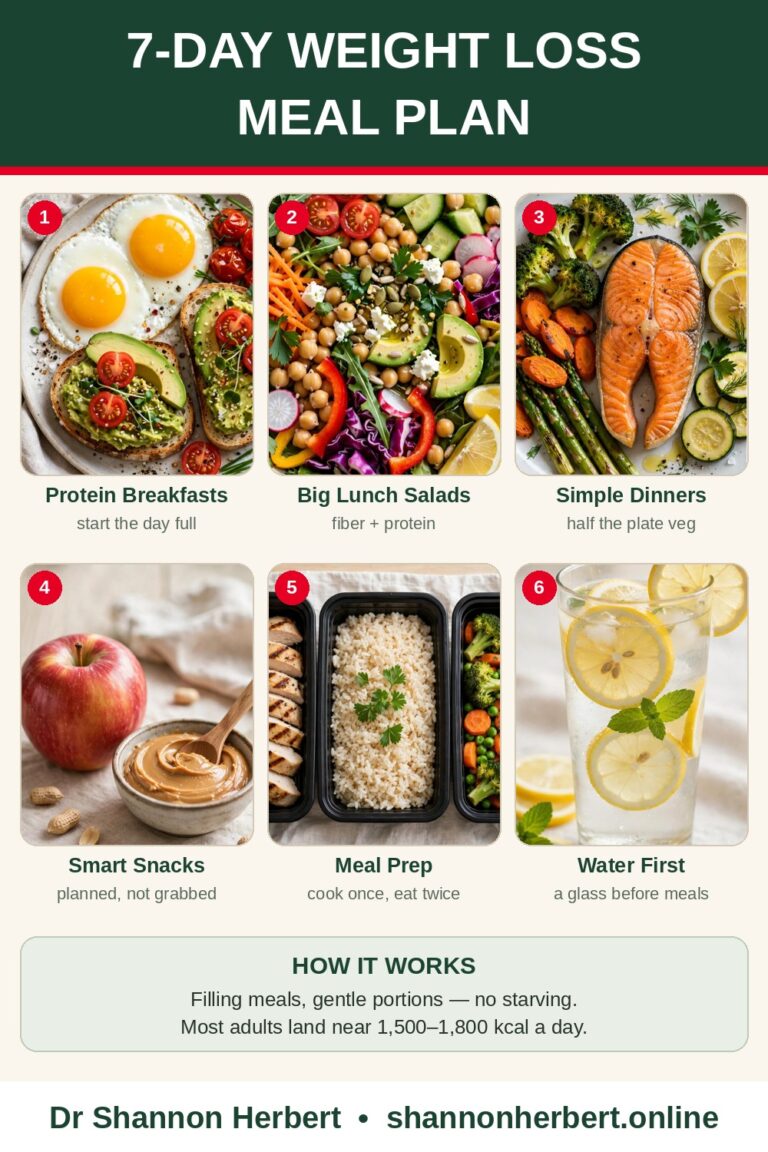
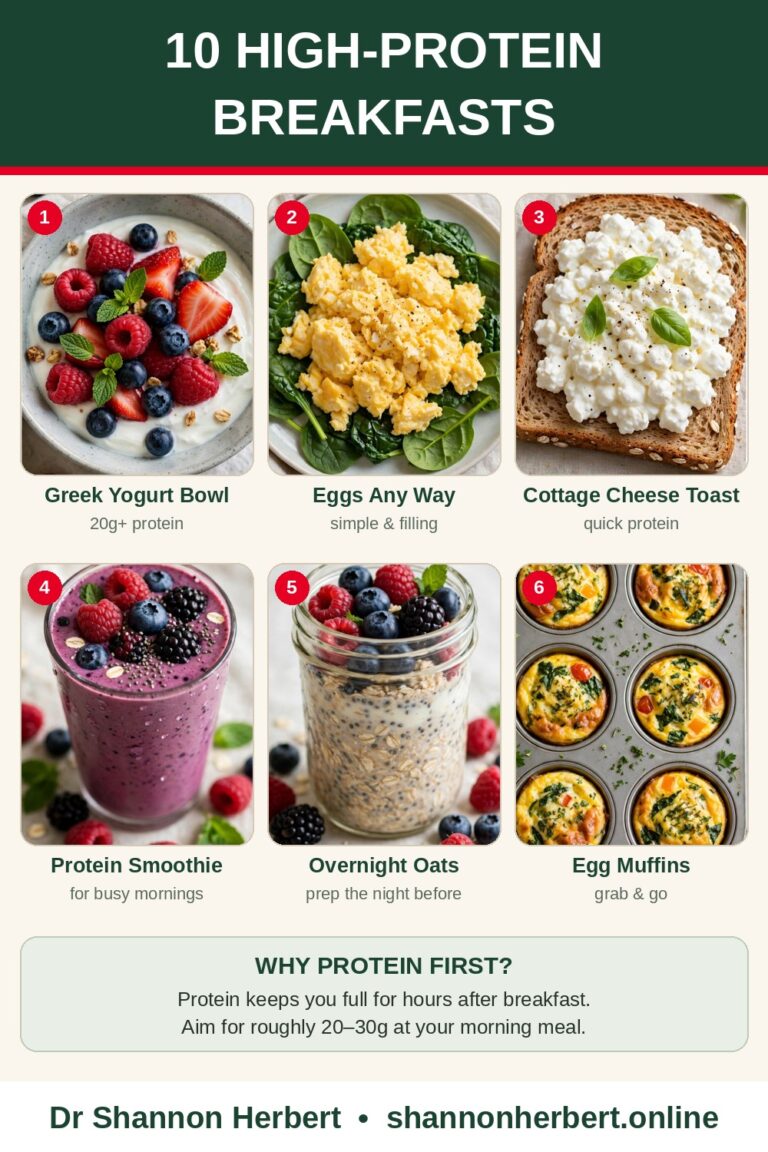
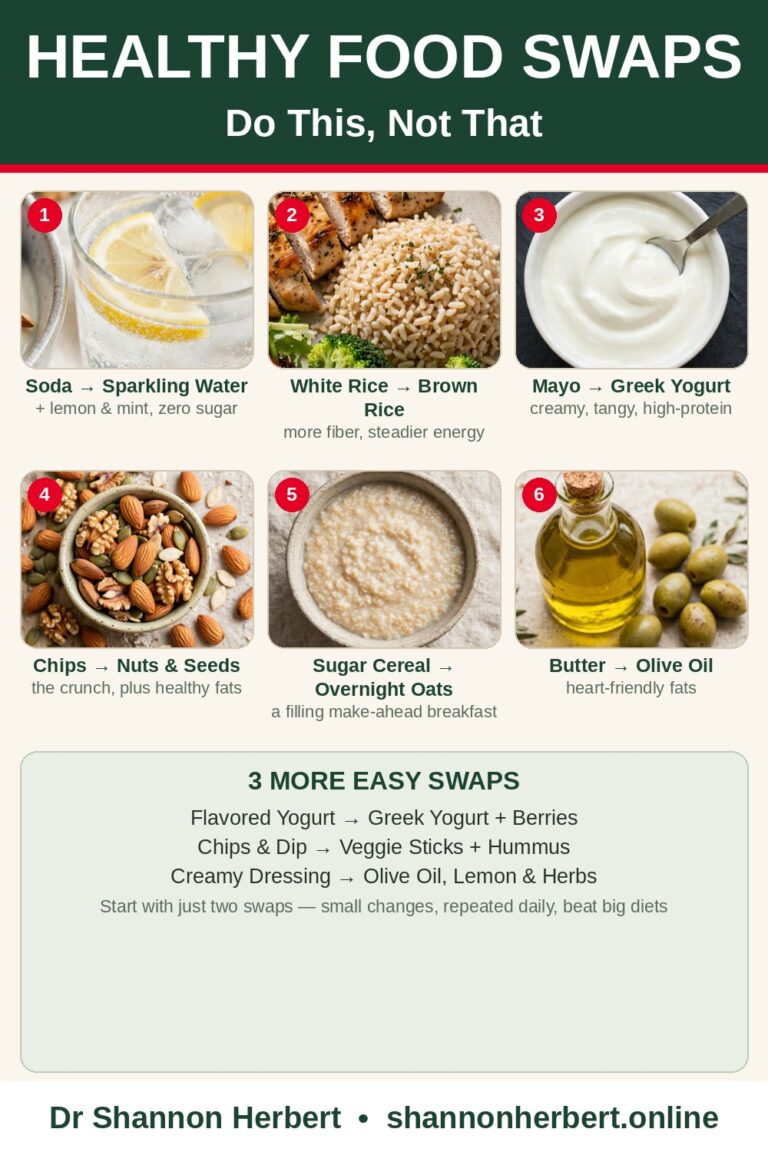
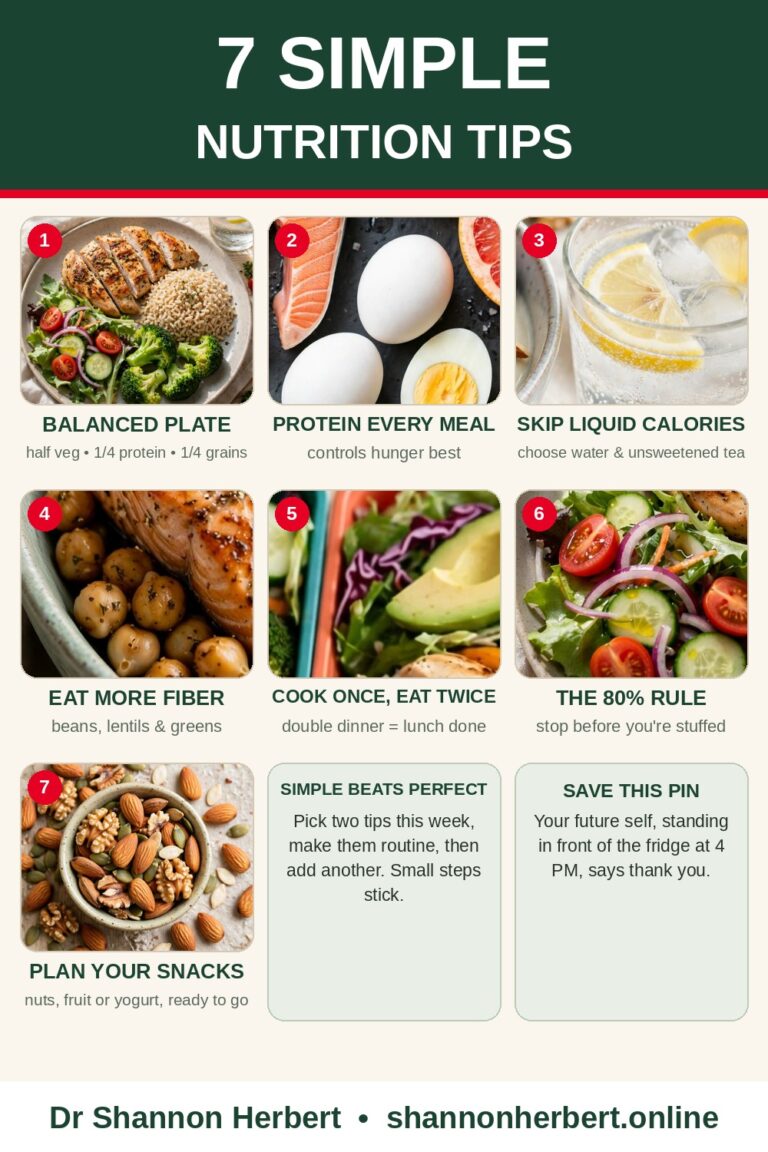
A Simple 5-Day Healthy Meal Plan for Beginners
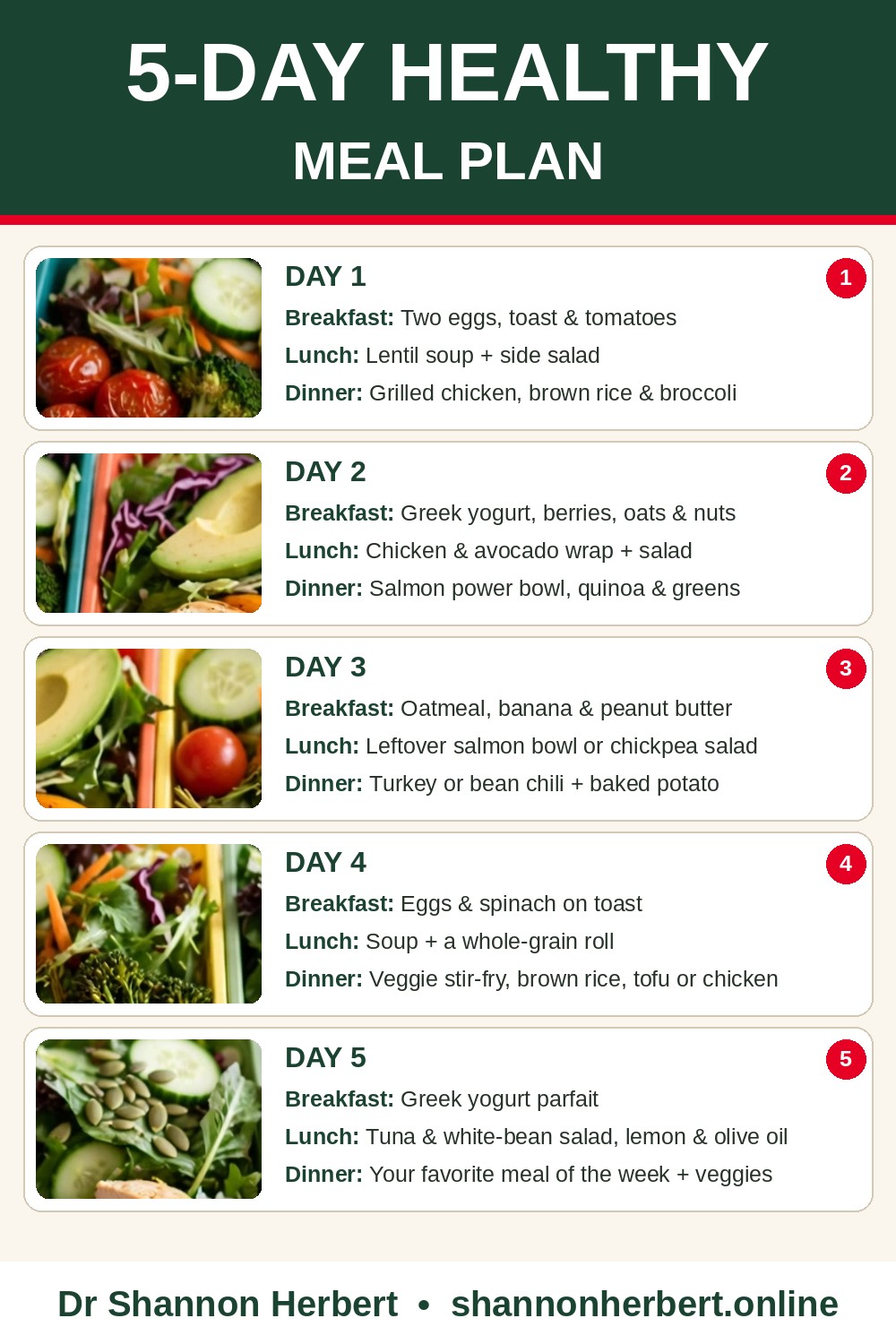
Day 3
- Breakfast: Oatmeal with banana and a spoon of peanut butter
- Lunch: Leftover salmon bowl or a big chickpea salad
- Dinner: Turkey or bean chili with a small baked potato
How the day works: Oatmeal is the slow-burn breakfast — the soluble fiber in oats is particularly good at steadying blood sugar, and the peanut butter adds the fat that makes it last. Lunch is deliberately flexible: if there is salmon bowl left, eat it; if not, a chickpea salad (chickpeas, cucumber, tomato, red onion, olive oil, lemon, herbs) takes five minutes and travels well. Dinner is chili night. Ground turkey chili or a fully bean-based version both work; serve it over or beside a small baked potato, with a spoon of Greek yogurt on top instead of sour cream.
Prep note: Make a full pot of chili — tomorrow-you and the freezer will both be grateful. Chili genuinely improves overnight as the flavors settle.
Day 3 hunger notes: This is the day people most often report the afternoon slump, usually because lunch was the flexible one. If you chose the chickpea salad, make it a big one and add a boiled egg or a small yogurt on the side — the protein top-up is what carries you to chili time. Drinks matter today too: keep water and unsweetened tea flowing, and if you usually have a sweet drink mid-afternoon, today is a good day to notice what happens when sparkling water and a planned snack take its place.
Day 4
- Breakfast: Eggs and spinach on toast
- Lunch: Soup and a whole-grain roll
- Dinner: Stir-fried vegetables with tofu or chicken and brown rice
How the day works: By Day 4 the plan is running on rails. Breakfast repeats the egg formula with spinach wilted into the pan — a full handful of spinach cooks down to almost nothing and adds fiber and micronutrients for about 10 calories. Lunch returns to the lentil soup, this time with a whole-grain roll for dipping; repetition is a feature here, not a failure of imagination, because it is what keeps the shopping list short and the waste at zero. Dinner is a stir-fry: whatever vegetables you have — peppers, broccoli, carrots, snap peas, cabbage — with tofu or chicken, garlic, ginger, and soy sauce, served over the brown rice from your prep batch. Stir-fry is the plan’s clean-out-the-fridge meal, and it is endlessly variable.
The stir-fry formula, so it never fails: Once you know the pattern, you will never need a recipe for this dinner again. Start with aromatics — garlic, ginger, and the white parts of spring onions if you have them — in a hot pan with a little oil. Add the protein next and let it actually brown rather than steam; crowding the pan is the one real enemy here, so cook in two batches if the pan is small. Remove the protein, then add vegetables in order of hardness: carrots and broccoli first, peppers and snap peas in the middle, leafy greens and bean sprouts for the final minute. Return the protein, pour over a simple sauce — three tablespoons of soy sauce, a teaspoon of honey or sugar, a splash of vinegar or lime, and a little water with a teaspoon of cornstarch if you want it glossy — and toss for one minute until everything shines. Serve over the brown rice. Total time, once the rice is cooked: about fifteen minutes.
Why Days 3 and 4 are designed this way: Look at the pattern across the middle of the plan and you will see the waste-reduction engine working. Day 3’s lunch deliberately consumes Day 2’s leftovers. Day 3’s chili and Day 1’s soup are batch foods that quietly cover later lunches. Day 4’s stir-fry exists specifically to absorb whatever vegetables remain in the drawer before the Day 5 shop-free finish. Beginners often think a meal plan is a list of meals; it is actually a small logistics system, and these two days are where the system pays for itself — in money saved, food not thrown away, and evenings where dinner is a fifteen-minute assembly instead of a fresh problem.
Prep note: If your soup ran out, the spare freezer portion from Sunday is tonight’s insurance policy.
Mid-plan check-in: By the end of Day 4, pause and take stock, because this is the moment beginners either settle in or drift off. Ask three questions. Am I actually hungry between meals, or just bored? (Adjust portions or snacks accordingly.) Which meal this week would I happily eat again? (That is a keeper — plans are built out of keepers.) And what nearly tripped me up? (A missing ingredient, a late meeting, an unplanned lunch out — each has a simple fix.) Four days in, you have already done the hardest part: you have proof, in your own kitchen, that you can run this system on ordinary days.