Healthy Weight Gain: 9 Calorie-Smart Foods to Add Daily
8. Dried Fruit and Nuts
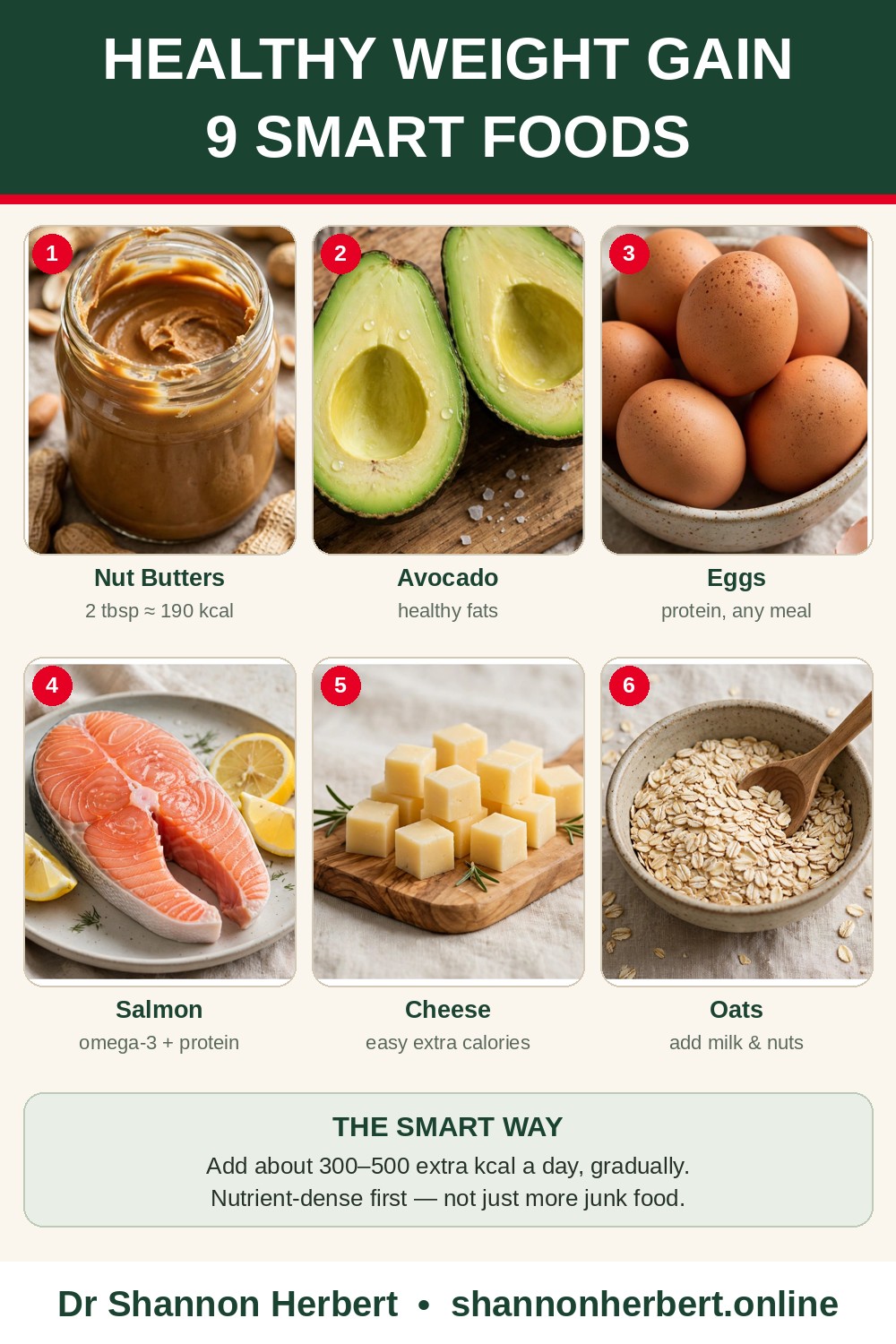
Fresh fruit is mostly water; dried fruit is the concentrated version. A small handful — 1/4 cup (about 40 g) of raisins — has around 120 calories, and 1/4 cup of mixed nuts has roughly 170 to 200 calories. Together they make the classic trail mix, one of the most portable calorie-dense snacks there is.
Why it helps: Dried fruit and nuts keep for weeks, travel anywhere, and can be eaten in small amounts many times a day. Nuts also add protein, fiber, and minerals like magnesium and zinc.
Easy ways to add it:
- Keep a jar of trail mix (nuts, raisins, dried apricots, a few dark chocolate chips) on your desk and take two small handfuls (about 1/2 cup total) across the day — roughly 350 calories.
- Sprinkle 2 tablespoons of chopped nuts over yogurt, salads, curries, and desserts.
- Add 1/4 cup of chopped dates or dried figs to oatmeal and baking.
- Choose dried fruit without heavy added sugar when you can, and rinse your mouth or brush later — dried fruit is sticky on teeth.
9. Salmon and Red Meat
The first eight foods add energy; this one helps decide where that energy goes. A 150 g (about 5 oz) salmon fillet provides roughly 280 to 310 calories and 30 grams of protein, plus omega-3 fats. A similar portion of lean beef offers around 250 to 300 calories and 30 to 35 grams of protein, with iron, zinc, and vitamin B12.
Why it helps: Adequate protein — most active gainers do well with roughly 1.2 to 1.6 grams of protein per kilogram of body weight daily — combined with strength exercise, steers weight gain toward muscle rather than only fat. Red meat is particularly useful for people whose iron runs low, a common and overlooked reason for fatigue and poor appetite.
Easy ways to add it:
- Plan 3 to 4 dinners a week around salmon, beef, lamb, or chicken thighs (which are more calorie-friendly than breast).
- Add a palm-sized portion of meat or fish to lunch as well as dinner when appetite allows.
- Batch-cook a beef and bean chili or salmon pasta bake so protein-rich meals are ready when you are busy.
Practical Tips That Make It Stick
- Drink some of your calories. Smoothies and milk-based drinks slip past a small appetite far more easily than solid food. A banana, whole milk, oats, and peanut butter smoothie can reach 500 calories without feeling like a meal.
- Eat the calorie-dense part first. At a meal, start with the protein and enriched foods, and leave salad and soup for later — light foods first can fill you up before the important bites.
- Set gentle alarms. Three meals plus 2 to 3 snacks on a loose schedule beats waiting until you feel hungry, because many lean people rarely do.
- Keep snacks visible. Trail mix on the counter, cheese in the front of the fridge, nut butter next to the kettle. Convenience quietly decides what gets eaten.
- Build slowly. Add one new habit a week — this week’s tablespoon of olive oil, next week’s evening smoothie. Our simple nutrition tips follow the same small-steps philosophy.
- Ready to put it together? Our 7-day meal plan for healthy weight gain turns these nine foods into a full week of meals and snacks, and our roundup of 15 simple habits for a healthy weight helps the routine last.
Common Mistakes to Avoid
- Relying on junk food. Burgers, fries, and sweets will add calories, but often leave you sluggish, short on protein and micronutrients, and gaining mostly fat. Use treats for pleasure, not as the strategy.
- Skipping breakfast. Missing the first meal makes the daily surplus nearly impossible to reach later. Even a smoothie counts.
- Drinking lots of water or tea right before meals. Stay hydrated, but drink most fluids between meals so your stomach has room for food.
- Expecting results in a week. Weigh yourself once a week, same time of day. If the trend has not moved after 3 to 4 consistent weeks, add another 200 calories a day.
- Doing lots of extra cardio. Movement is healthy, but if you add long runs, you must eat back those calories too. Favor strength training 2 to 4 times a week.
A Quick Safety Note
This article is general information only. If you are losing weight without trying, cannot gain despite eating well, or have ongoing symptoms such as fatigue, a racing heart, digestive problems, or changes in appetite, please see a doctor — thyroid conditions, diabetes, gut disorders, and other causes need to be ruled out before any eating plan. If you are pregnant or breastfeeding, under 18, or managing any medical condition, ask your own clinician for personal advice before changing your diet. And if food and body image cause you significant distress, a registered dietitian can help you build a plan that feels safe and sustainable.
Frequently Asked Questions
How fast should I expect to gain weight?
A steady 0.5 to 1 pound (0.25 to 0.5 kg) per week is a healthy, realistic pace for most people. Faster gain usually means more fat and more discomfort; slower, steady gain is far easier to maintain.
Do I need protein powder or weight-gainer shakes?
No. Whole foods can do the job, and homemade smoothies with milk, oats, banana, and nut butter are cheaper and gentler on the stomach. Supplements are only a convenience for very busy days.
What if I just don’t feel hungry?
That is common. Eat by the clock rather than by appetite, favor liquid calories, and make food tasty — appetite often improves after a week or two of regular, adequate eating.
Will eating more at night help?
A planned evening snack, such as Greek yogurt with honey and nuts (about 300 calories), is a practical way to complete your surplus. There is nothing magical about the timing; the daily total is what matters.
Can I gain weight without eating meat?
Yes. Lean on eggs, dairy, nut butters, tofu, lentils, and oils, and combine plant proteins across the day. The nine foods above include plenty of vegetarian options.
The Bottom Line
Healthy weight gain is not a battle to eat enormous meals — it is the quiet art of enriching ordinary ones. Add nut butter to breakfast, cook with olive oil, keep trail mix within reach, and let cheese, eggs, oats, avocado, and salmon do steady, delicious work. Give it a few consistent weeks, weigh yourself weekly, and adjust gently. Small additions, repeated daily, are how real and lasting change happens — in either direction.
This article is for general information only and is not medical advice.