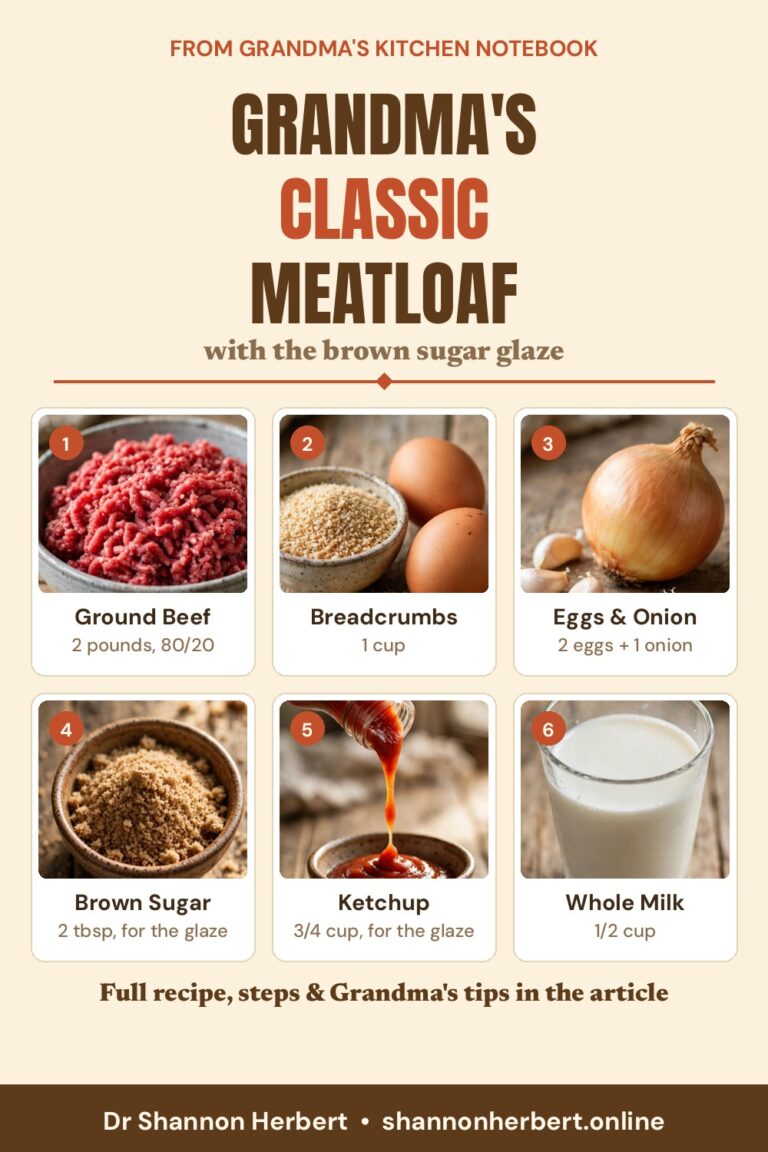
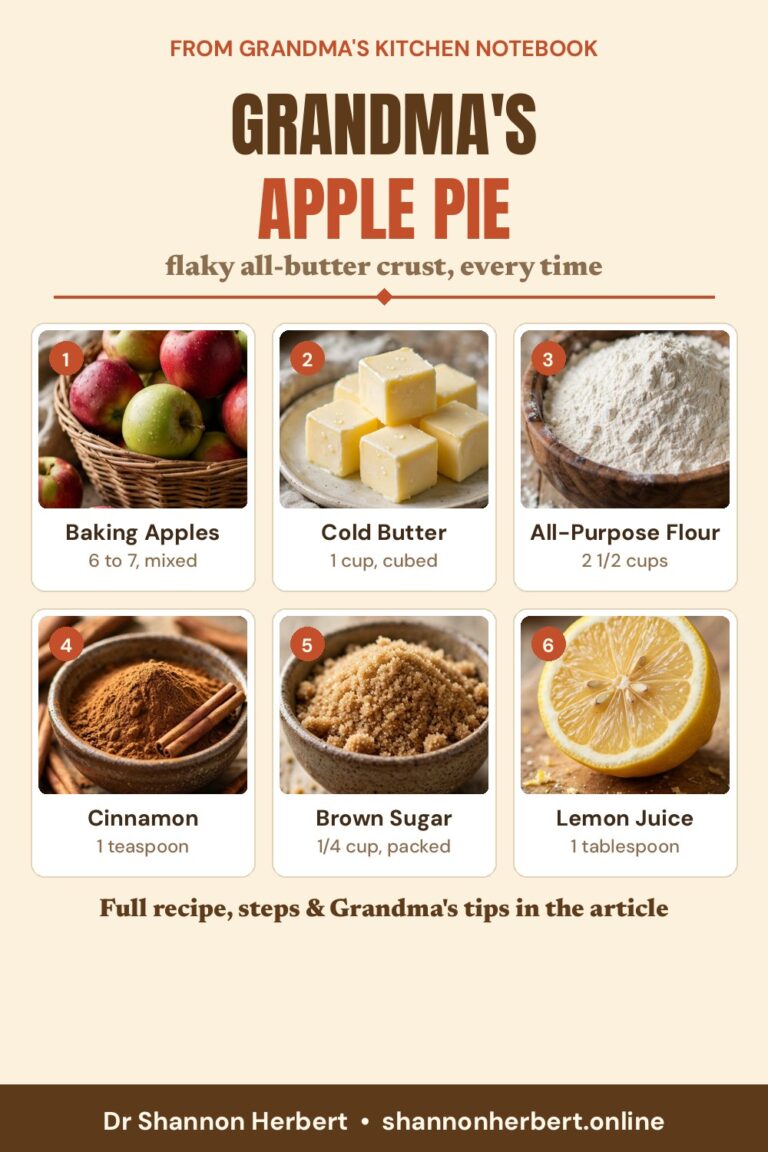
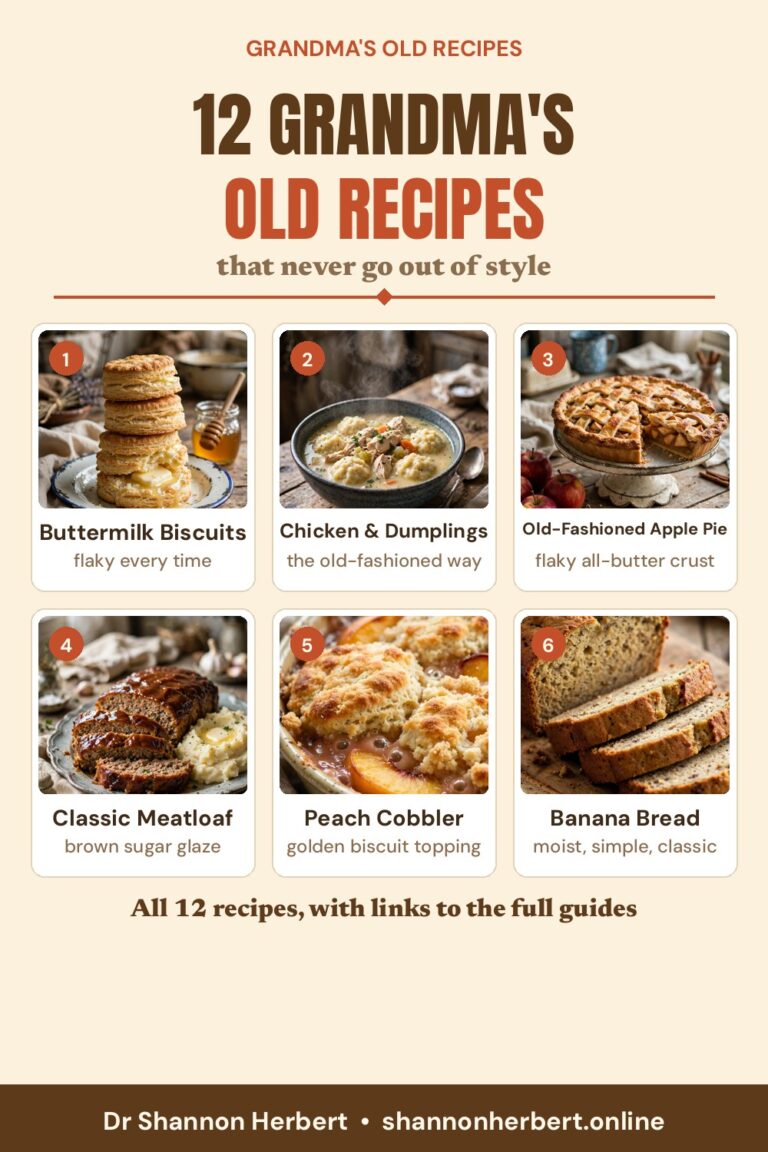
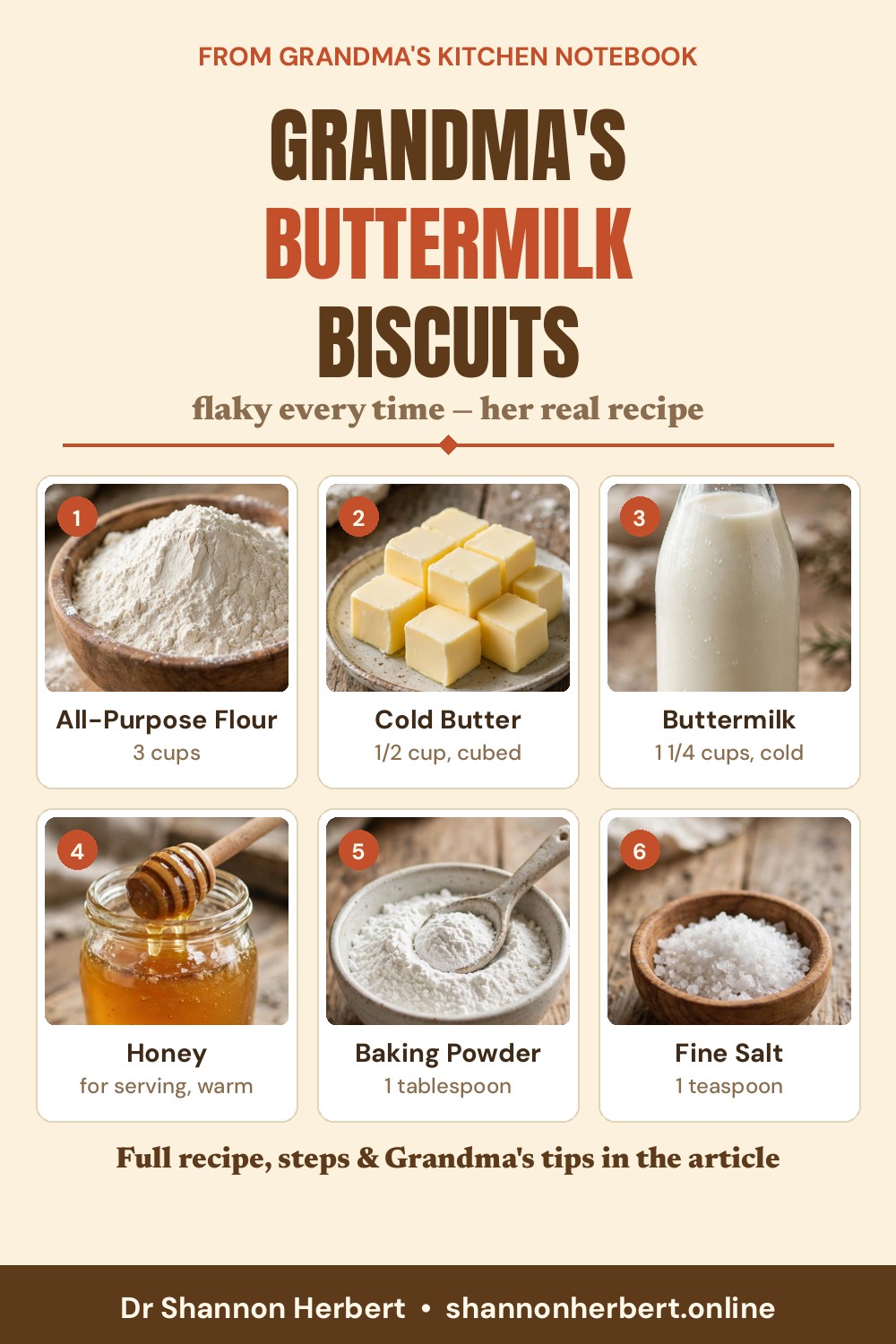
Grandma’s Old-Fashioned Buttermilk Biscuits (Flaky Every Time)
Grandma’s Tips
Freeze the butter, then grate it. On hot summer days, Grandma would freeze her stick of butter solid and grate it on the coarse side of a box grater straight into the flour. The shreds stay cold, mix in fast, and make exceptionally flaky layers. It is the single best trick in this whole recipe.
Keep everything cold, including your hands. If the dough starts to feel soft or greasy at any point, stop and chill the whole bowl for 10 to 15 minutes. Cold dough going into a hot oven is the whole secret; there is no shortcut around it.
Test your baking powder. Baking powder loses its strength after about six months in the pantry. To check it, stir 1/2 teaspoon into a few tablespoons of hot water. If it bubbles vigorously, it is fine. If it barely fizzes, buy a fresh tin — old leavening is the number one reason good dough turns into flat biscuits.
No buttermilk? Make a stand-in. Stir 1 tablespoon of white vinegar or fresh lemon juice into a measuring cup, then add regular milk up to the 1 1/4 cup line. Let it sit for 5 minutes until it thickens slightly and looks a little curdled. It will not be quite as rich as real buttermilk, but the acidity is what matters most, and the biscuits will still rise beautifully.
Handle the dough like it is hot. Grandma’s actual instruction was “treat it like a baby bird.” Pat, fold, cut, and stop. The less you fuss with biscuit dough, the more tender the result. A slightly rough, uneven surface is a sign you did it right.
Measure flour the gentle way. Spoon flour into the measuring cup and level it off with a knife instead of scooping straight from the bag. Scooping packs the flour down and can add a quarter cup you never intended, which is enough to turn tender biscuits dry.
The Pan Matters More Than You Think
Grandma owned exactly one biscuit pan: a heavy black cast-iron skillet older than her marriage. Cast iron holds heat evenly and gives biscuits their crisp, browned bottoms while the tops stay tender, and it keeps the biscuits warm at the table long after they leave the oven. If you do not have a skillet, a heavy metal baking sheet or a cast-iron griddle works nearly as well. What you want to avoid is a thin, lightweight pan, which heats in hot spots and can scorch the bottoms before the tops have browned. If a thin sheet pan is all you have, set it on a preheated baking stone or inside a second, heavier pan to buffer the heat, and your biscuits will never know the difference.
What to Serve With Them
A basket of these biscuits rarely sits alone for long. Grandma served them at breakfast with scrambled eggs and country ham, at lunch split and filled with sliced tomatoes in August, and at supper for sopping up the last of the gravy from a roast chicken. They are also the natural partner for soups and stews, because a warm biscuit turns a light meal into a satisfying one — the same principle behind the hearty plates in our guide to healthy meals that keep you full, where a sensible portion of something warm and filling keeps everyone at the table happy for hours.
For a weekend breakfast, try them with soft-scrambled eggs, a bowl of fresh fruit, and coffee. For supper, serve them alongside a big pot of soup or that pot of chicken and dumplings mentioned earlier. And if there are leftovers in the morning, split one, toast it, and top it with a fried egg and a slice of cheese for the kind of breakfast sandwich no drive-through has ever matched.
Biscuit sandwiches deserve their own mention. Split a warm biscuit and layer in a slice of country ham, a piece of fried chicken, or a thick slice of ripe tomato with a smear of mayonnaise, and you have a meal that travels. Grandma wrapped them in a clean tea towel for field lunches and long car rides, and they were always eaten within a few hours, still faintly warm, with strong coffee or cold sweet tea alongside.
If Your Biscuits Did Not Rise
It happens to everyone once. Flat biscuits almost always trace back to one of four things: the butter was too warm, the baking powder was old, the cutter was twisted and sealed the edges, or the oven was not fully preheated. Tough biscuits mean the dough was stirred or kneaded too much after the buttermilk went in. Dry, crumbly biscuits usually mean too much flour from scooping the cup. None of these are failures — they are directions. Make a note of which one sounds familiar, fix it next time, and eat the evidence warm with plenty of butter, exactly as Grandma would have insisted.