Natural Remedies for Dark Spots and Uneven Skin Tone
Gentle Options People Use
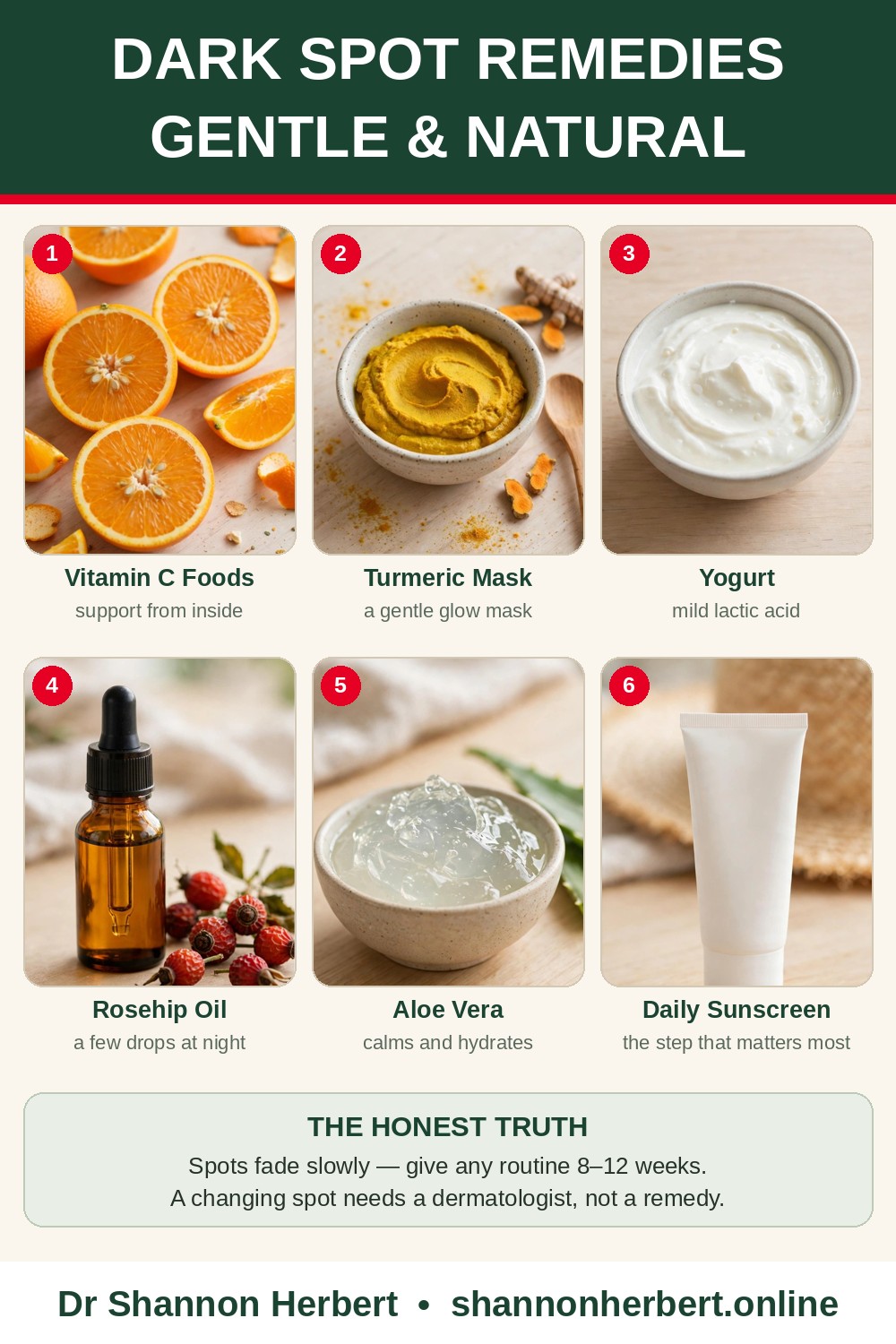
None of the following is a bleaching agent or a quick fix. Think of them as mild, low-cost ways to support your skin’s own renewal — most work by gently encouraging surface turnover, calming the irritation that drives pigment, or supplying nutrients skin uses. Introduce one at a time, a week apart, so you know what suits you. Keep simple notes as you go — the monthly photograph mentioned above, plus a line about what you used and how your skin felt. Dark-spot care fails most often not because the remedy was wrong, but because it was abandoned at week three, just before the first real change would have shown.
Aloe Vera Gel
Aloe contains a compound called aloesin, which has been studied for its ability to slow one step in melanin production. In practice, plain aloe gel is a sensible nightly layer: soothing, non-greasy, and unlikely to irritate — and calm skin makes fewer new marks.
How to use it: After cleansing at night, smooth a thin layer of pure aloe gel (from a leaf or a plain store-bought gel) over the whole face or just the spotted areas, let it absorb, and follow with your usual moisturizer. Use nightly. Our full guide to aloe vera for skin covers preparing fresh gel properly, including the important step of draining the irritating yellow latex from the leaf.
Turmeric
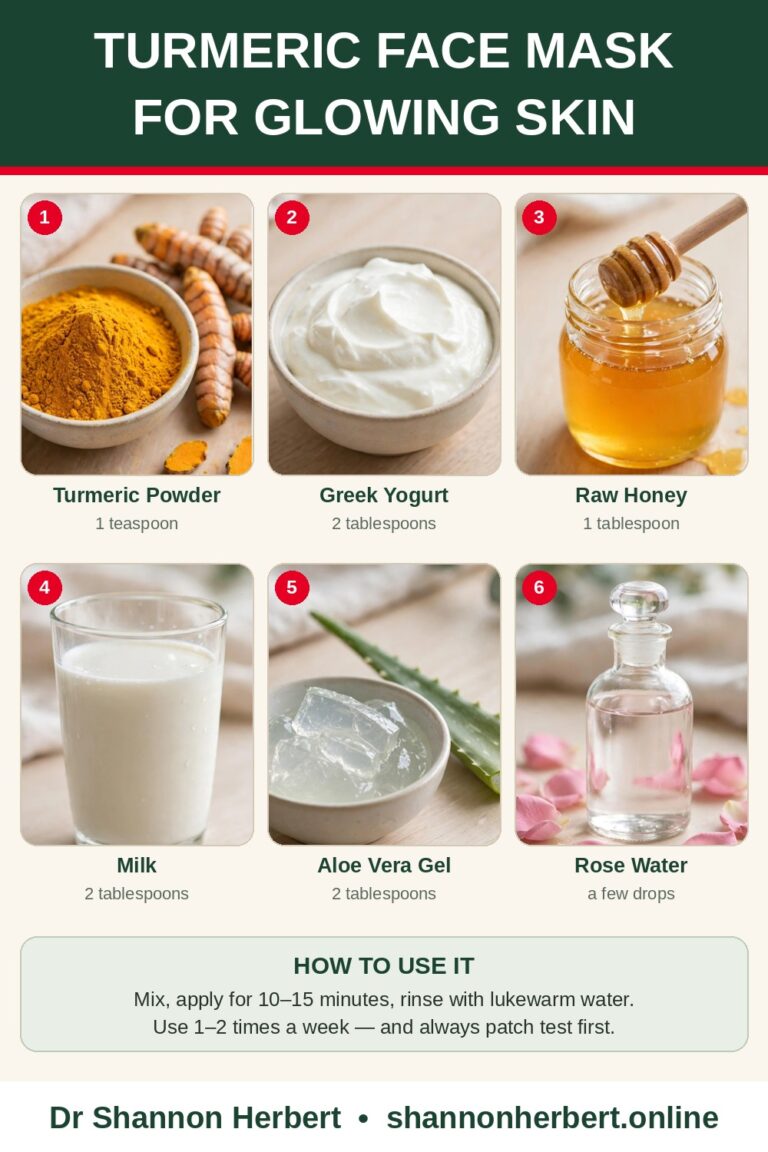
Turmeric’s active compound, curcumin, is a traditional remedy across South Asia for brightening skin, and there is early research interest in its effects on pigmentation. As a home remedy it is used as a short-contact mask — pleasant, gentle, and cheap.
How to use it: Mix 1/2 teaspoon of turmeric powder with 1 tablespoon of plain yogurt or honey to make a paste. Apply to clean skin, avoiding the eye area, and leave for 10 to 15 minutes. Rinse well with lukewarm water. Use two or three times a week. Two practical cautions: turmeric can leave a temporary yellow tint on the skin (it fades within hours — do this in the evening, not before an event), and it stains fabric, so use an old towel. Some people mix turmeric with a little milk instead of yogurt; either base works — what matters is the short contact time and a thorough rinse. Our detailed turmeric face mask recipe covers variations for different skin types.
Yogurt and Other Lactic Foods
Plain yogurt contains lactic acid, a mild alpha-hydroxy acid. In strong, formulated products, such acids are used to speed surface exfoliation; in yogurt, the concentration is low, which makes it a gentle option for people whose skin cannot tolerate stronger products. Kefir works the same way.
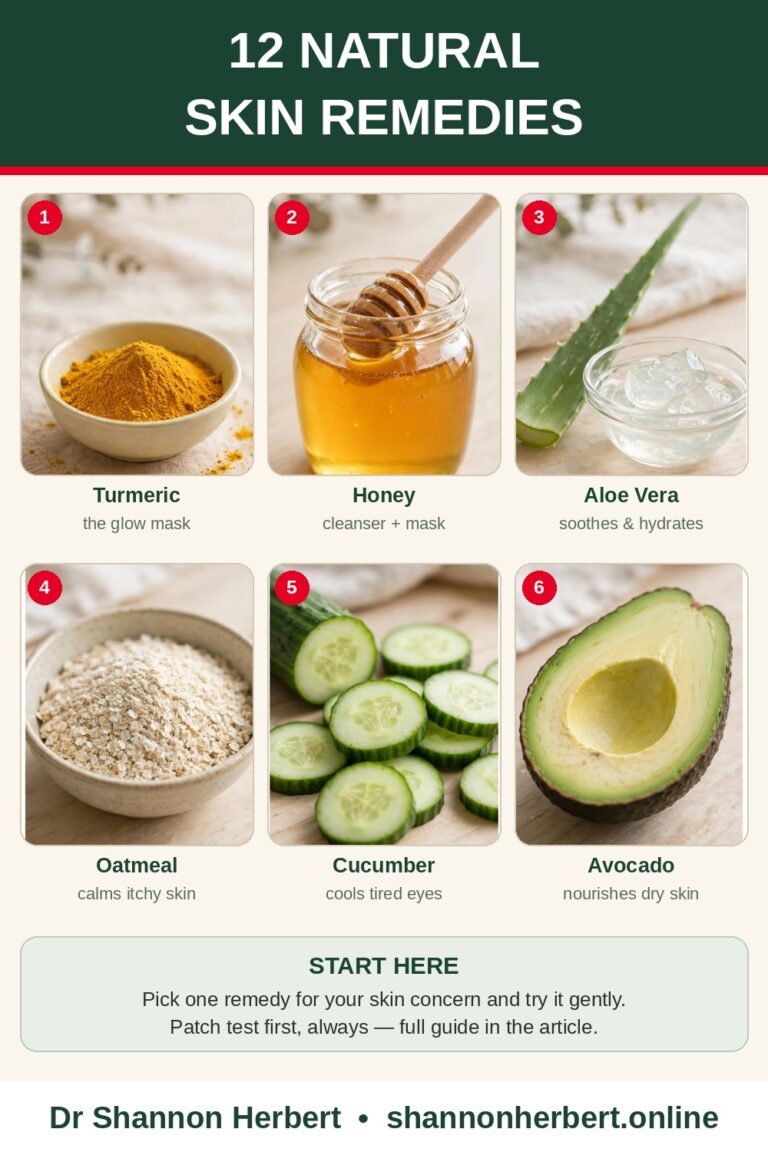
How to use it: Apply 2 tablespoons of plain, unsweetened yogurt as a mask to clean skin. Leave for 10 minutes, then rinse and moisturize. Use two or three times a week. Flavored or sweetened yogurt is not the same thing — keep it plain. If your skin is sensitive, start with five minutes and build up. Because the acid is mild, yogurt is a sensible first step for people who have reacted badly to stronger exfoliating products in the past. Gentle, regular exfoliation like this is one of the quiet themes in our wider natural skin remedies collection: small inputs, repeated patiently.
Vitamin-C-Rich Foods in Your Diet
Vitamin C is part of how skin builds collagen and part of its defense against the sun stress that drives pigmentation. Eating vitamin-C-rich foods will not spot-treat a mark — no food can — but a diet that regularly includes citrus fruit, bell peppers, kiwi, strawberries, and leafy greens supports overall skin health and repair, and it is the safest “remedy” on this list. It also costs nothing extra if these foods already appear in your kitchen.
How to use it: Simply make one vitamin-C-rich food a daily habit — peppers in the salad, kiwi or citrus at breakfast, greens at dinner. If you are reviewing your eating habits anyway, our guides to foods that help you burn fat and simple nutrition tips include many of the same skin-friendly foods, and healthy food swaps shows easy ways to fit more of them in.
Rosehip Oil
Cold-pressed rosehip oil, pressed from the seeds of wild rose hips, contains natural fatty acids and vitamin A compounds (the family that includes retinoids). It has a long folk reputation for improving the look of marks and uneven tone, and many people find a few drops at night makes skin look more even over a couple of months. Results vary, and the honest expectation is softening, not erasing.
How to use it: At night, after cleansing, warm 2 to 3 drops between your palms and press over the face, or dab directly onto spots, over or under your moisturizer. Use nightly. Choose a cold-pressed oil, store it away from heat and light, and patch test first — oils can occasionally clog very acne-prone skin, so introduce it on one area first. Rosehip pairs well with the aloe in this list — gel as a light daytime layer, oil at night — and both are inexpensive compared with most commercial spot treatments, which makes a patient three-month trial a low-risk experiment.