Natural Remedies for Dark Spots and Uneven Skin Tone
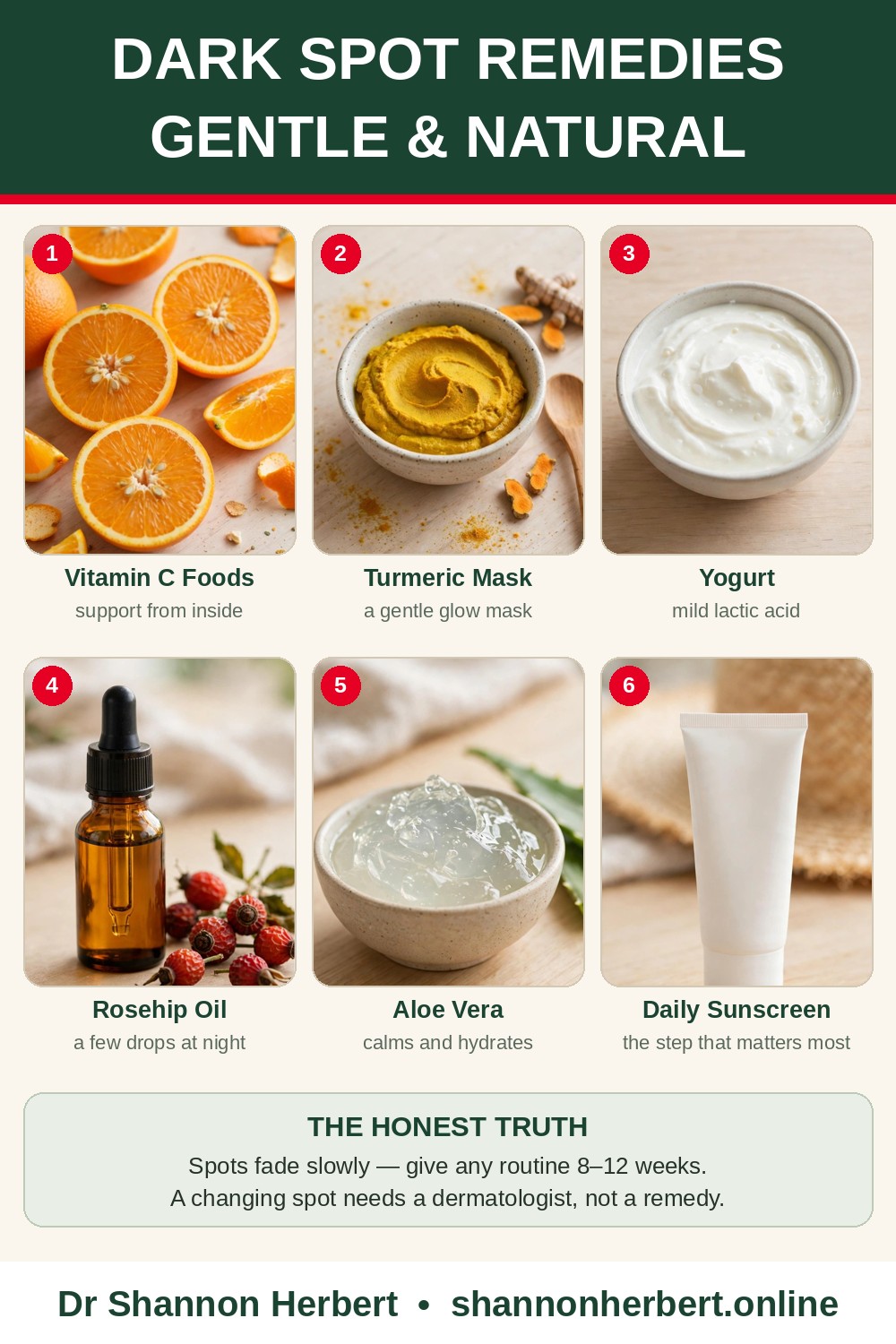
The Step That Matters Most: Daily Sunscreen
Everything above is the supporting cast. Sunscreen is the lead actor, and skipping it quietly undoes the rest. Ultraviolet light is what tells your skin to make more melanin; every unprotected day can darken existing spots, trigger new ones, and stall the slow fading you have been working for — even on cloudy days, and even through window glass, because the UVA rays involved pass through both. People are often diligent with masks and oils and casual about sunscreen, which is exactly backwards.
How to do it properly:
- Choose a broad-spectrum sunscreen of SPF 30 or higher that you like enough to wear daily — the best sunscreen is the one you will actually use.
- Apply enough: roughly two finger-lengths of product for the face and neck. Most people apply half what they need and get far less protection than the label promises.
- Put it on every morning as the last step of your routine, all year round, whether or not you plan to be “in the sun.”
- Reapply every two hours when you are outdoors, and after swimming or heavy sweating.
- Add the free helpers: a hat with a brim, shade at midday, and sunglasses for the delicate eye area.
A common question is whether makeup or a moisturizer with SPF counts. It helps, but it rarely replaces a proper sunscreen layer: most people apply makeup far too thinly to reach the protection on the label, and it is not reapplied through the day. If you wear makeup, put real sunscreen underneath it and let it set for a few minutes before you begin.
If you do only one thing from this entire article, do this one. It prevents new spots, protects the progress of everything else, and — not incidentally — reduces your risk of skin cancer. Think of the remedies above as helping old pigment leave, and sunscreen as stopping new pigment from arriving.
A Simple Routine That Puts It Together
- Morning: Gentle cleanse (or just lukewarm water), moisturizer if you need it, then sunscreen — every day.
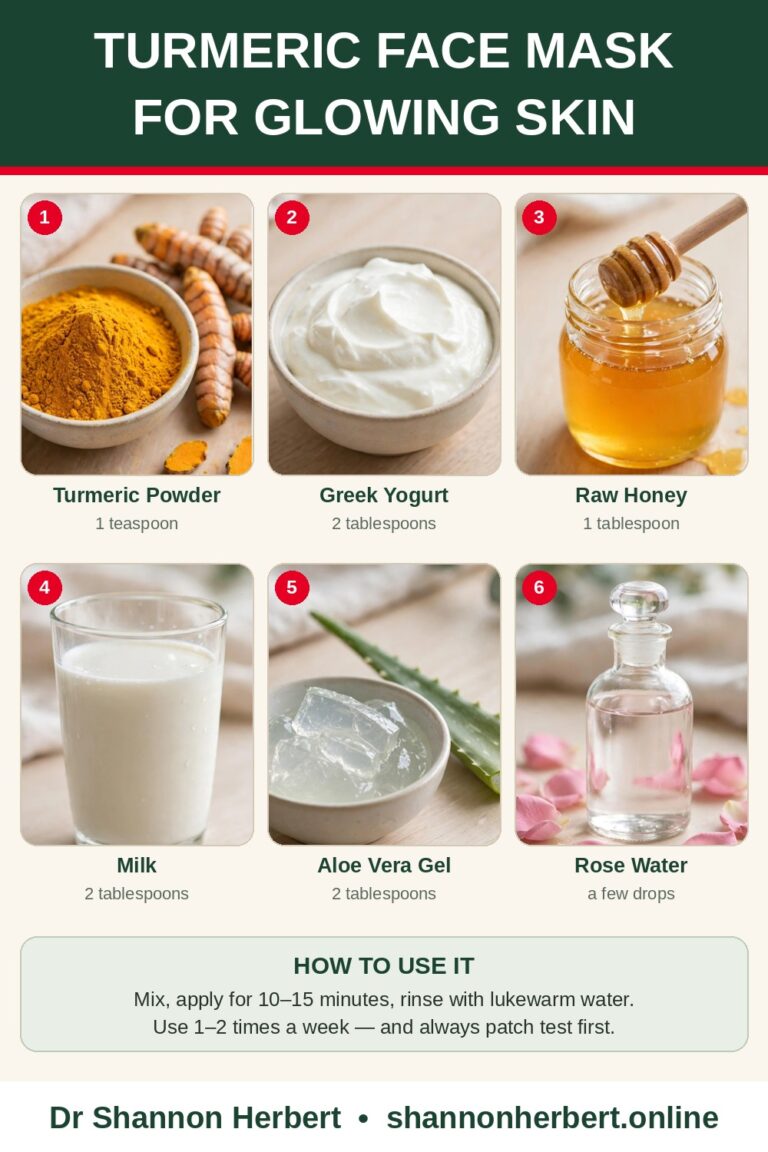
- Evening: Cleanse; on some nights, a yogurt or turmeric mask before cleansing; then aloe gel or a few drops of rosehip oil; moisturizer over the top if your skin is dry.
- Weekly: Nothing more dramatic than the above, repeated. Consistency over 8 to 12 weeks is the whole strategy.
- In the kitchen: One vitamin-C-rich food a day, as a habit rather than a project.
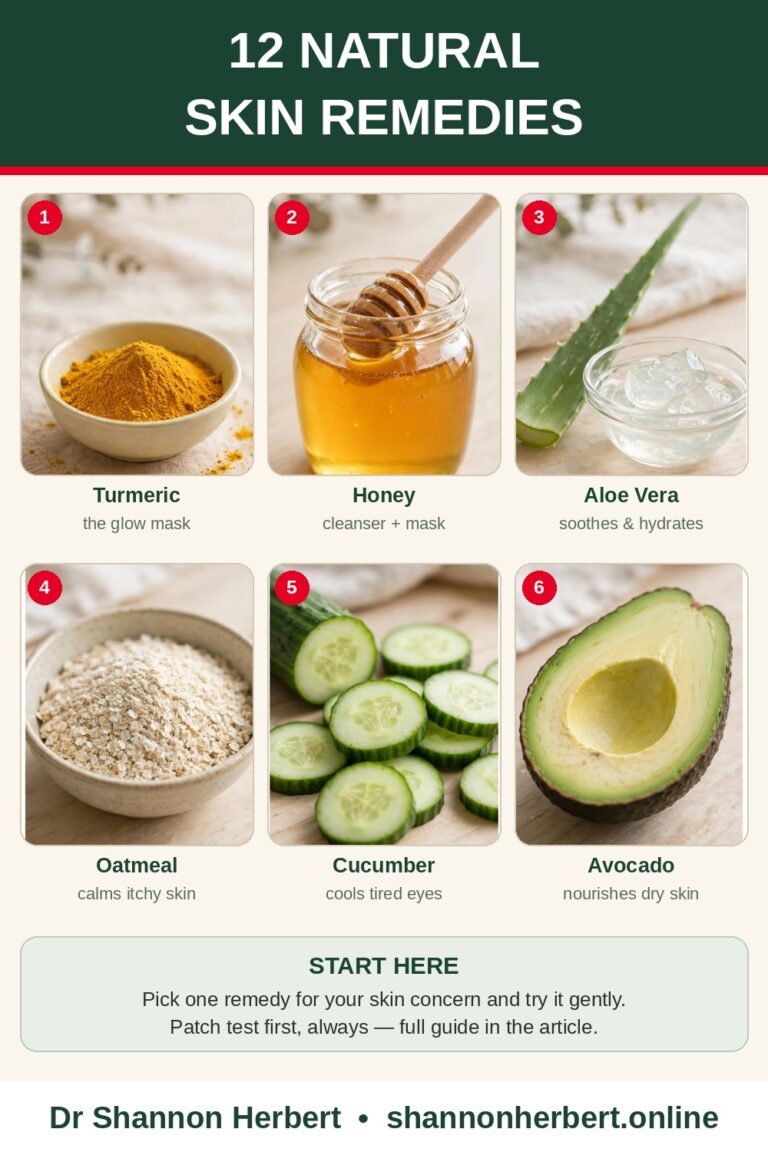
If you like pairing skin care with simple food-based routines, our honey face masks guide makes a good companion to this one — honey is another gentle ingredient that suits this slow-and-steady approach.
Safety and Cautions
- Patch test everything. Apply a little of any new mask, gel, or oil to your inner forearm or behind the ear and wait 24 hours before using it on your face.
- Stop if it irritates. Tingling that turns to burning, redness, or itching means the product is wrong for you. This matters doubly with pigmentation, because irritation itself can cause new dark marks.
- Go gentle. Avoid hard scrubs, strong homemade peels, and lemon juice on skin in daylight. These cause more pigment problems than they solve.
- Expect the turmeric tint. A temporary yellow cast after a turmeric mask is normal and fades; if it bothers you, use the mask in the evening and rinse thoroughly.
- Most important: watch every spot. Any new, changing, growing, bleeding, itchy, or irregular spot — one with uneven edges, more than one color, or a size that is increasing — must be checked by a dermatologist promptly. Do not just treat it at home. Most spots are harmless sun or age marks, but some “spots” are skin cancers, and no home remedy — and no article — can tell the difference. Only an in-person examination can, and early treatment makes a real difference.
- Melasma and widespread patches deserve a dermatologist’s input from the start; they are hormonally driven, quick to return, and often need prescription treatment alongside sun protection.
When to See a Doctor
- Any spot that changes in size, shape, or color, or that bleeds, crusts, or will not heal
- A new spot that looks different from all your others (the “ugly duckling”)
- Pigmentation that spreads quickly or covers large areas
- Marks accompanied by other symptoms, such as a rash, pain, or swelling
- Spots that trouble you and have not improved after three months of consistent gentle care and sunscreen — in-office options (such as prescription creams, chemical peels, or laser treatment) exist and can be discussed
Frequently Asked Questions
How long before I see a difference?
Give any gentle routine 8 to 12 weeks, with daily sunscreen, before you judge it. Surface pigment sheds on your skin’s renewal cycle, which takes about a month per round. Monthly photos in the same light show progress that day-to-day mirror checks miss.
Will these remedies remove age spots completely?
Probably not completely, and anyone promising that is overselling. Mild and recent marks may soften noticeably; long-standing sun spots often only fade partway with home care. If you want them gone, a dermatologist can discuss in-office treatments — but sunscreen remains essential either way, or they will simply come back.
Is lemon juice good for dark spots?
It is not recommended. Lemon juice is acidic enough to irritate, and citrus juice on skin reacts with sunlight to cause blistering and worse pigmentation. It is the rare folk remedy where the risk clearly outweighs any benefit.
Can I use several of these remedies at once?
Yes, but introduce them one at a time, about a week apart. That way, if something irritates your skin, you know which one it was — and you avoid overwhelming your skin with everything at once.
Do dark spots mean something is wrong with my health?
Usually not. The overwhelming majority are sun marks, age marks, or post-blemish pigment, all harmless. The exception is the changing spot: any spot that changes, bleeds, or looks irregular should be examined promptly, whatever else you believe about it.
Slow, Gentle, and Honest
Dark spots took months or years to form, and they leave on the same schedule they arrived — gradually. The approach that works is unglamorous: calm, gentle remedies used consistently, a diet that includes the foods skin needs, and above all, sunscreen every single morning. Give it a season, keep your expectations honest, and let a dermatologist look at anything that changes. For more gentle, kitchen-based ideas, browse our full natural skin remedies collection. And remember that the smallest steady habits — a hat kept in the car, sunscreen by the front door, hands off healing skin — quietly do more for an even tone over a year than any single product on a shelf.
This article is for general information only and is not medical advice.