Healthy Weight Gain: 9 Calorie-Smart Foods to Add Daily
If you have ever been told to “just eat more,” you already know how unhelpful that advice feels. Gaining weight in a healthy way is not about forcing down huge meals or living on fries and milkshakes. It is about adding the right foods — foods that pack plenty of energy and nutrients into small, comfortable portions — and adding them consistently, day after day.
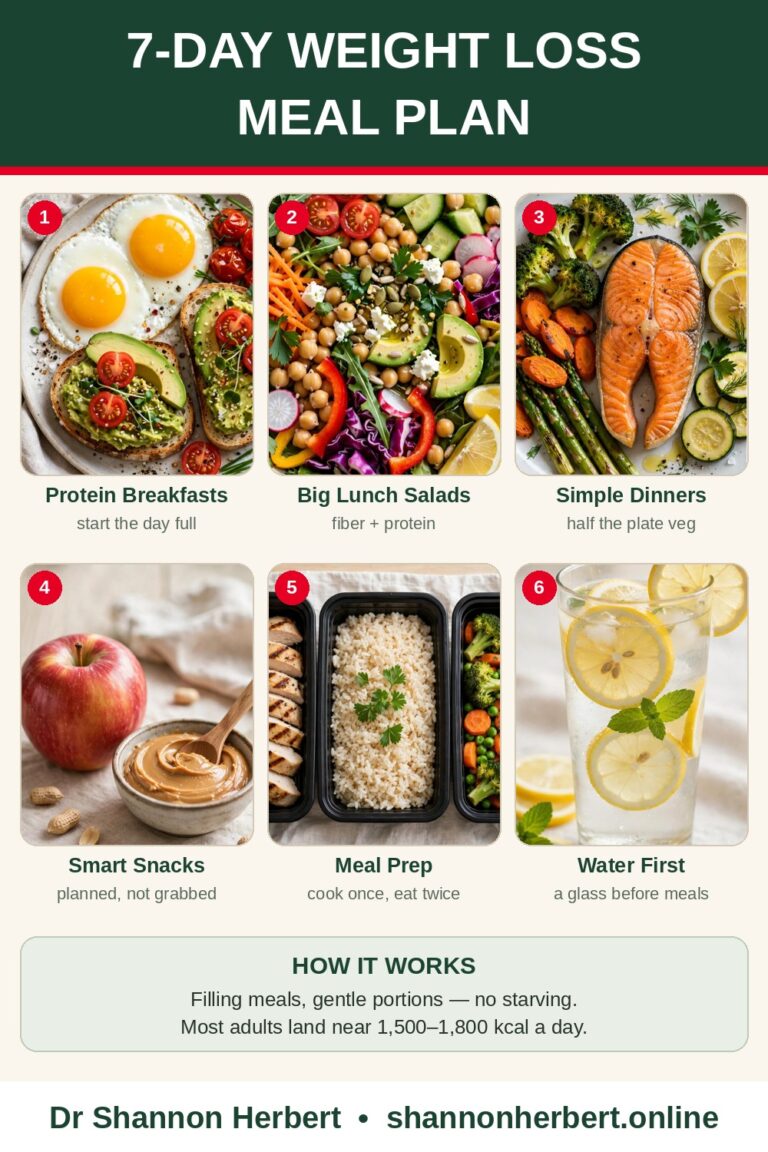
Many people want to gain weight for good reasons. You may be recovering from an illness, rebuilding strength after a busy or stressful season, naturally lean and tired of feeling fragile, or simply wanting a stronger, fuller frame. Whatever your reason, you deserve the same thoughtful guidance that people get for losing weight. If your goal is the opposite direction, our 7-day weight loss meal plan may suit you better — this article is for readers who want the scale to move up, slowly and healthily.
The encouraging news is that healthy weight gain does not require a completely new diet. Most people succeed by keeping the meals they already enjoy and quietly enriching them: a spoonful of nut butter here, a drizzle of olive oil there, a handful of nuts as an afternoon snack. Small additions of 100 to 200 calories at a time, repeated daily, are far easier to stick with than one enormous extra meal.
In this guide you will find nine calorie-smart foods that make gaining weight easier and more nourishing, with honest amounts, simple ways to add each one, and realistic tips for making the habit last. You will also find the common mistakes that quietly hold people back, and a short note on when it is worth talking to a doctor.
How Healthy Weight Gain Actually Works
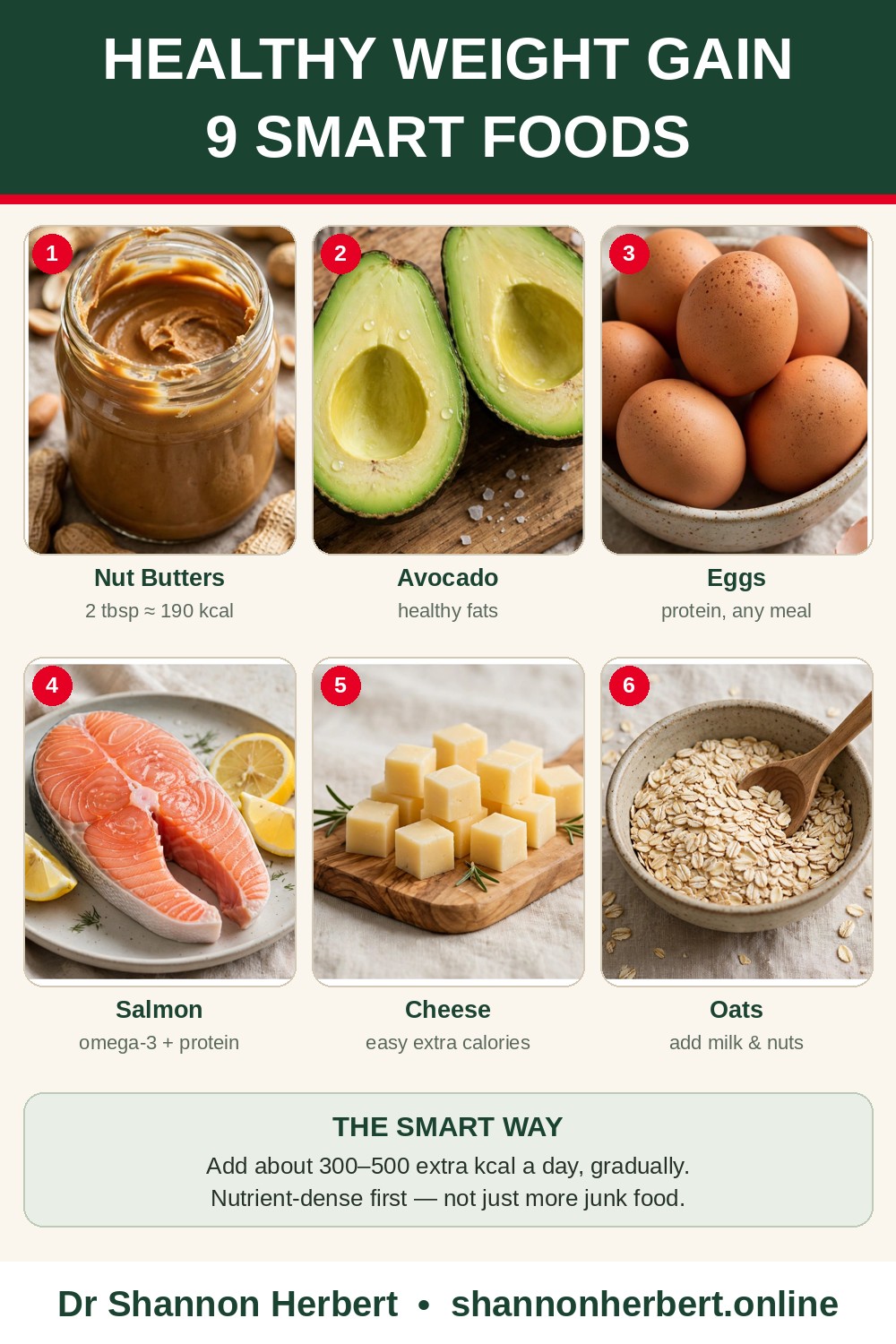
Your body gains weight when you consistently eat a little more energy than you burn. For most people, a gentle surplus of about 300 to 500 extra calories a day leads to a gain of roughly 0.5 to 1 pound (0.25 to 0.5 kg) per week — a pace that favors muscle and healthy tissue rather than mostly fat, especially when paired with some strength exercise.
The challenge is that many naturally lean people have modest appetites. Their stomachs feel full quickly, and large meals are genuinely uncomfortable. That is why the strategy in this article is calorie density, not volume. Calorie-dense foods give you more energy in fewer bites. A tablespoon of peanut butter and a whole apple contain similar calories, but the peanut butter takes up a fraction of the space.
Three simple principles run through everything below:
- Add, don’t replace. Keep your normal meals and enrich them, rather than swapping in “diet” versions or skipping foods you like.
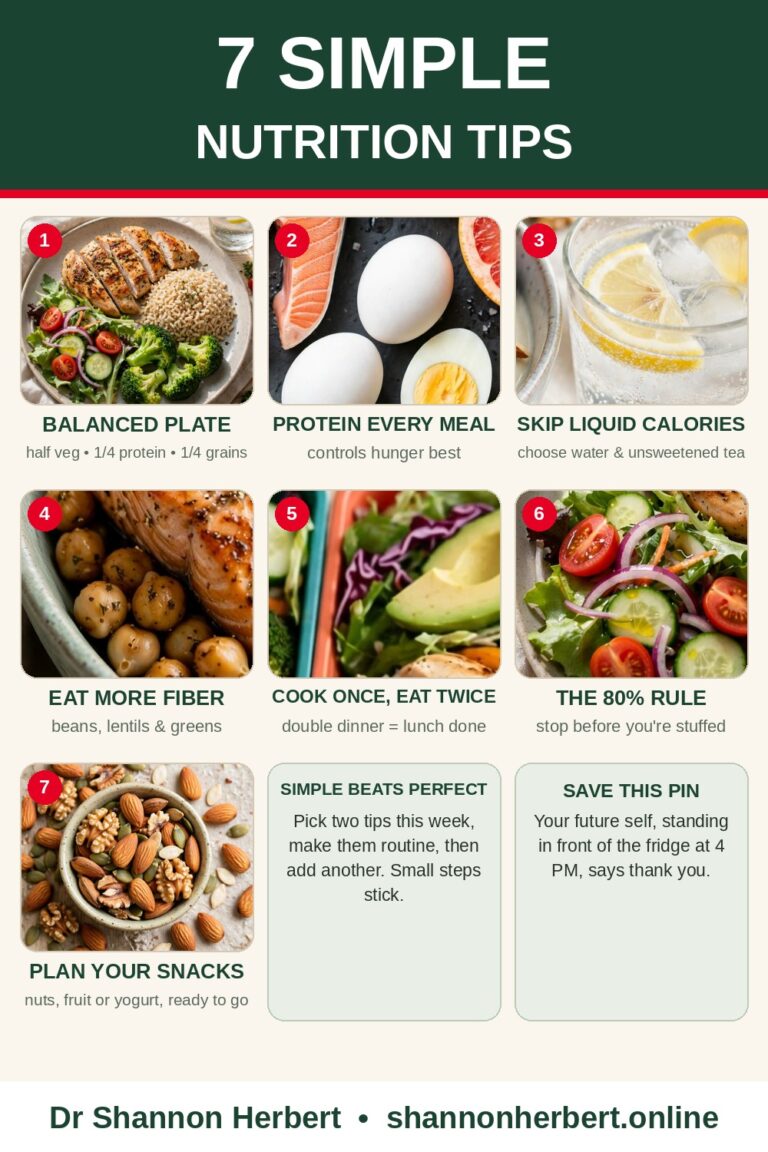
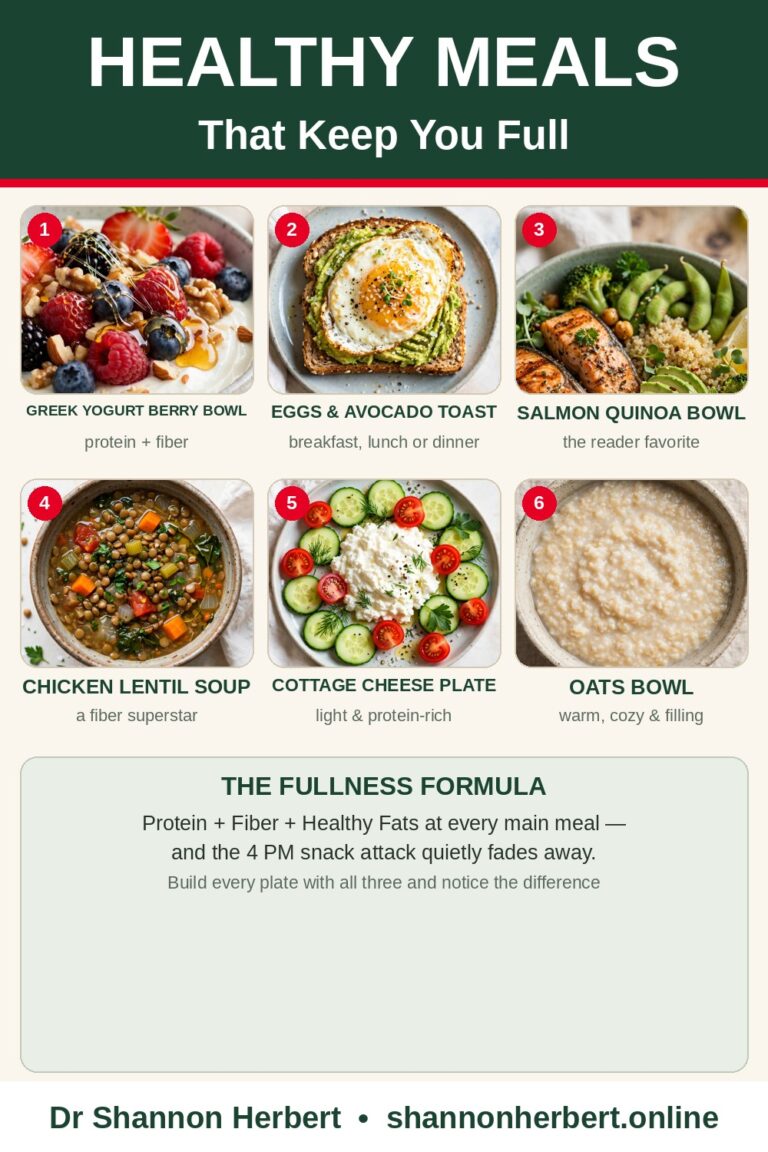
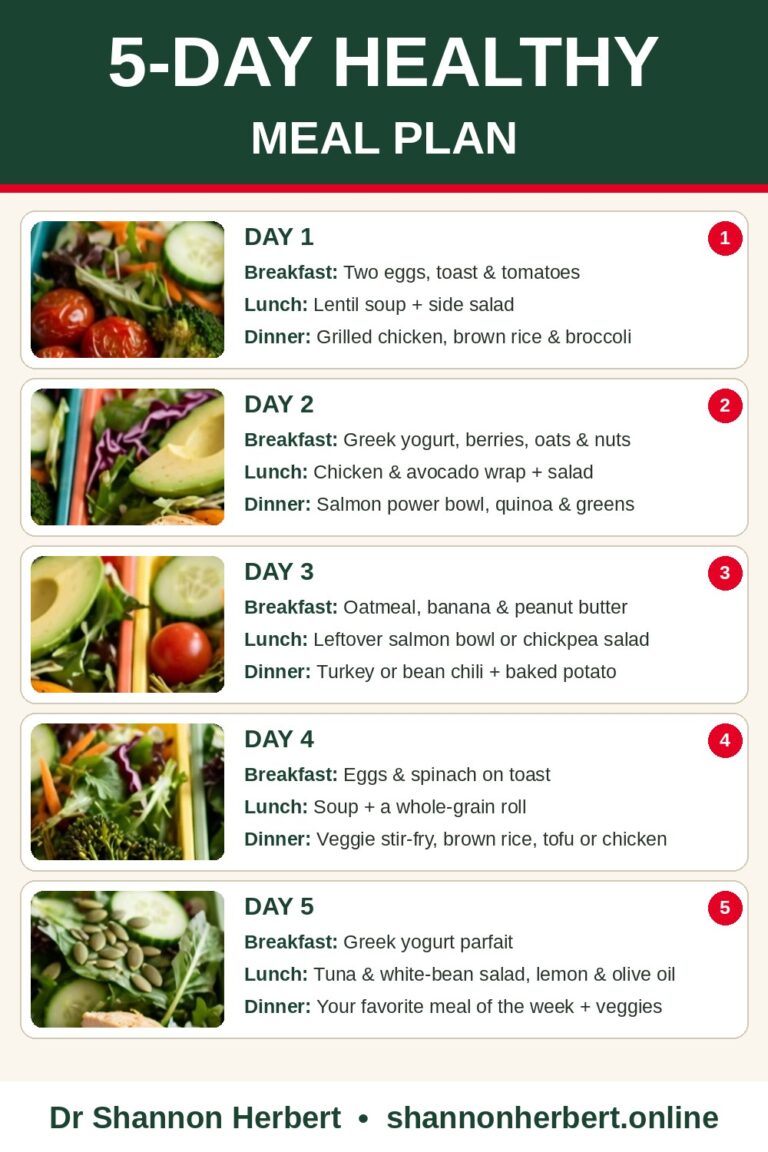
- Eat on a schedule. Appetite is unreliable; the clock is not. Regular meals and snacks — like the ones in our simple 5-day healthy meal plan — make the surplus happen almost automatically.
- Pair food with protein and strength work. Protein foods such as eggs, dairy, and salmon give your body the building blocks to turn extra calories into muscle, especially if you add some resistance exercise, even at home.
With those principles in mind, here are the nine foods that make the biggest difference.
1. Nut Butters (Peanut, Almond, Cashew)
Nut butters are the quiet champions of healthy weight gain. Just 2 tablespoons of peanut butter provide around 190 calories and 7 to 8 grams of protein, along with heart-friendly fats, vitamin E, and magnesium — all in a portion that takes seconds to eat.
Why it helps: Nut butters are extremely calorie-dense, shelf-stable, inexpensive, and endlessly versatile. Because they are smooth and rich rather than bulky, they rarely trigger that “too full” feeling.
Easy ways to add it:
- Spread 2 tablespoons on toast or a bagel at breakfast, with banana slices on top.
- Stir 1 to 2 tablespoons into hot oatmeal or porridge — it melts in and adds creaminess.
- Blend 2 tablespoons into a smoothie with milk and a banana for an easy 350 to 400 calorie drink.
- Use it as a dip for apple slices or celery as an afternoon snack.
Choose natural versions with just nuts (and maybe a pinch of salt) when you can, but any nut butter you enjoy and will actually eat is the right one.
2. Whole Milk and Full-Fat Yogurt
If you tolerate dairy well, whole milk and full-fat yogurt are among the simplest ways to drink and spoon your way to a gentle surplus. One cup (240 ml) of whole milk has about 150 calories and 8 grams of protein; a cup of full-fat Greek yogurt offers around 200 calories and 15 to 20 grams of protein.
Why it helps: Liquids and soft foods are usually easier to consume than solid meals, and dairy brings high-quality protein plus calcium and vitamin D for bone health — important when you are building body mass.
Easy ways to add it:
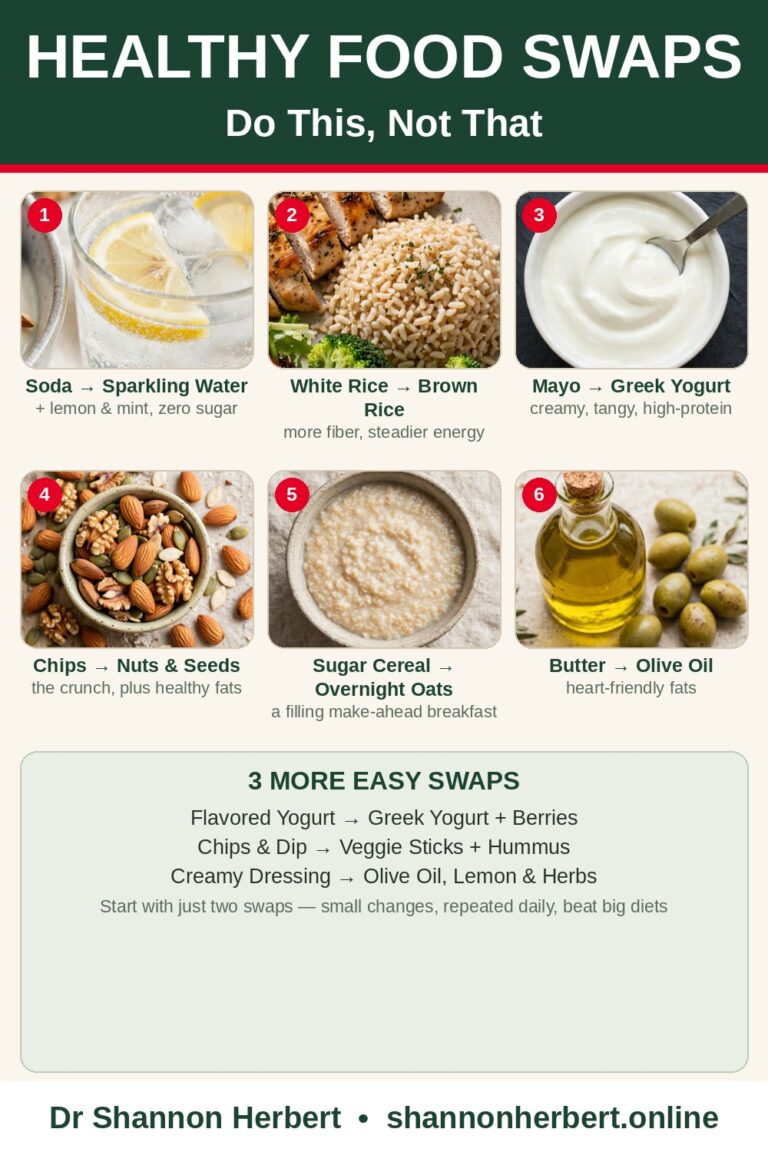
- Swap skimmed milk for whole milk in tea, coffee, cereal, and cooking — an effortless 50 to 60 extra calories per cup.
- Drink a glass of whole milk (1 cup) with your evening snack.
- Top full-fat Greek yogurt with 2 tablespoons of honey or granola and a handful of berries for a 300-calorie snack.
- Use yogurt in smoothies, salad dressings, and marinades instead of watery low-fat versions.
If dairy does not agree with you, fortified soy milk and soy yogurt are the closest alternatives in protein; oat and coconut-based drinks are lower in protein but still add useful calories.