12 Grandma’s Old Recipes That Never Go Out of Style
11. Rice Pudding
What it is: Rice simmered slowly in milk with sugar and vanilla until it turns into a soft, creamy pudding.
Why grandmas made it this way: It is one of the oldest thrift desserts in the world: a little rice, a pan of milk, and patience. Leftover cooked rice worked too, making it a standing answer to “what is for dessert.”
Key ingredients: Short- or medium-grain rice (or leftover cooked rice), whole milk, sugar, vanilla, a pinch of salt, cinnamon or nutmeg, and optional raisins.
The one tip that makes it work: Stir often and keep the heat low. Milk scorches and rice sticks; a heavy pot, a gentle simmer, and a wooden spoon every few minutes give you creaminess instead of a burnt bottom. Take it off the heat while it still looks slightly loose — it thickens as it cools.
Serving and storage: Serve warm with cinnamon on top, or chilled with jam or stewed fruit. It keeps four days refrigerated; loosen cold pudding with a splash of milk.
12. Homemade Pancakes with Buttermilk
What it is: Thick, fluffy pancakes with lacy golden edges and tangy buttermilk flavor — Saturday morning on a plate.
Why grandmas made it this way: Buttermilk again — the perpetual by-product of the churn — gives pancakes lift and tenderness plain milk cannot, because its acid works with the baking soda the moment batter hits the griddle.
Key ingredients: Flour, sugar, baking powder, baking soda, salt, buttermilk, eggs, and melted butter — plus butter for the griddle and maple syrup for the table.
The one tip that makes it work: Lumpy batter, rested ten minutes, and a properly hot griddle. Stir only until the flour disappears — lumps cook out, overmixing does not — and wait for bubbles and dry-looking edges before the single flip. Pressing with the spatula squeezes out the fluff.
Serving and storage: Serve in stacks with butter and warm syrup. Leftovers keep three days refrigerated and freeze between parchment for two months; the toaster revives them better than the microwave.
Grandma’s Pantry Rules
Twelve different recipes, but the same habits run underneath all of them:
Start with what you have. Grandma cooked from the pantry, cellar, and garden — not from a shopping list written for one recipe. Buttermilk, cornmeal, beans, flour, and canned tomatoes were always in the house, and dinner was built from them.
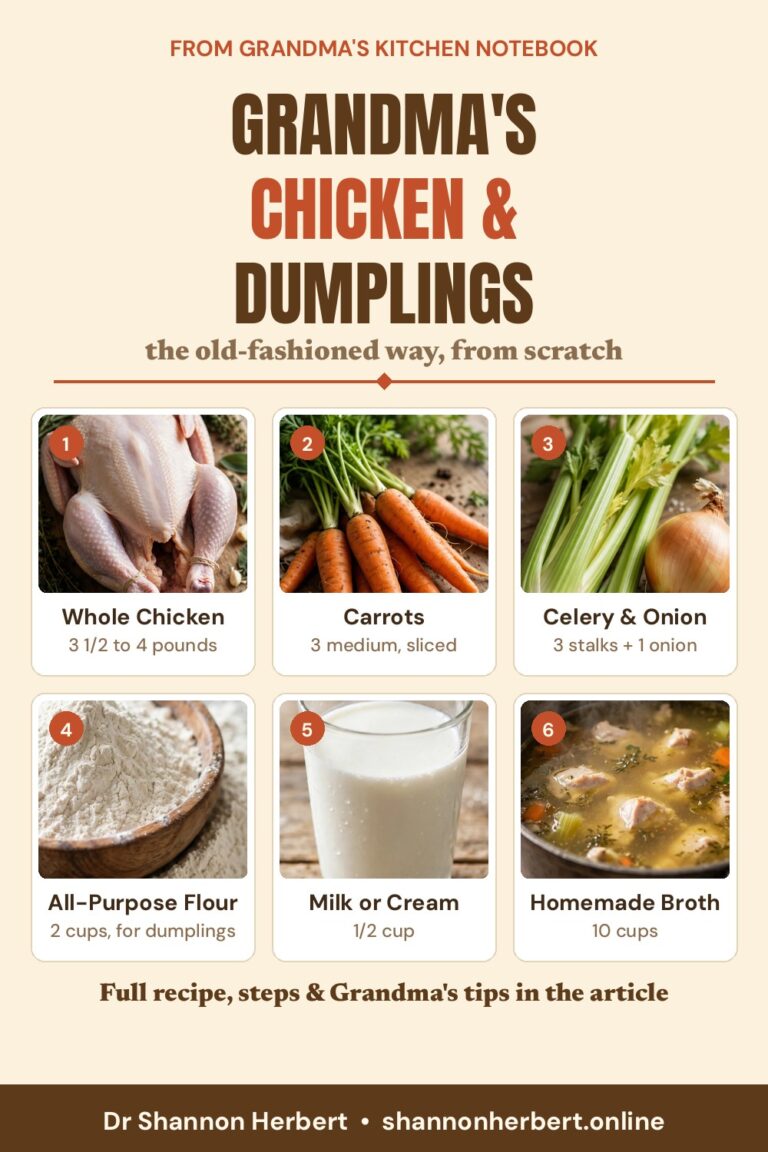
Waste nothing. Speckled bananas became bread, leftover rice became pudding, the chicken carcass became broth, and bacon drippings were saved because fat was flavor already paid for.
Season as you go, and taste. She salted the stew meat, the vegetables, and the gravy separately, in small amounts, tasting before anything reached the table. One handful of salt at the end never equals seasoning in layers.
Cold for pastry, hot for crusts, low for stews. Cold butter and buttermilk for biscuits; a ripping-hot skillet for cornbread; a gentle simmer for soup. Temperature was her main tool.
Write it down — loosely. Her cards say things like “butter the size of an egg” and “bake in a moderate oven till done.” She cooked by look and feel; the lesson is that she paid attention and repeated what worked. If you are the planning type, our 5-day healthy meal plan is the modern version of her weekly rhythm — and habits like cooking once and eating twice sit behind our simple nutrition tips too.
Feed people first, fuss later. These recipes go from pot to table in the dish they cooked in, judged by whether everyone asked for seconds.
Frequently Asked Questions
Do I need a cast-iron skillet for these recipes?
It helps most for the cornbread, where the hot skillet creates the crust, but every recipe here works in ordinary pans — a heavy baking dish for cobbler, a pie plate for the pie. The technique matters more than the pan.
Can I substitute regular milk for buttermilk?
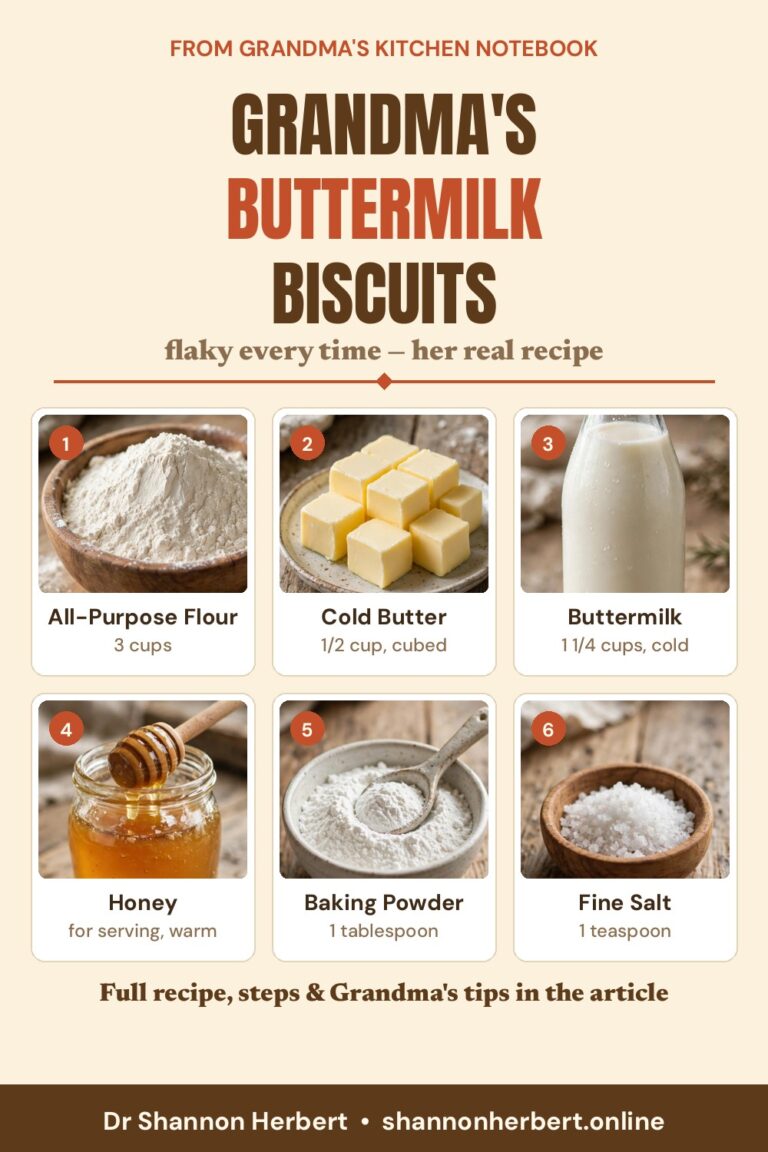
Yes, with a small fix: stir one tablespoon of lemon juice or white vinegar into a cup of milk and let it stand five minutes. You get the acidity biscuits, pancakes, and cornbread need for lift and tenderness.
Which of these recipes freeze best?
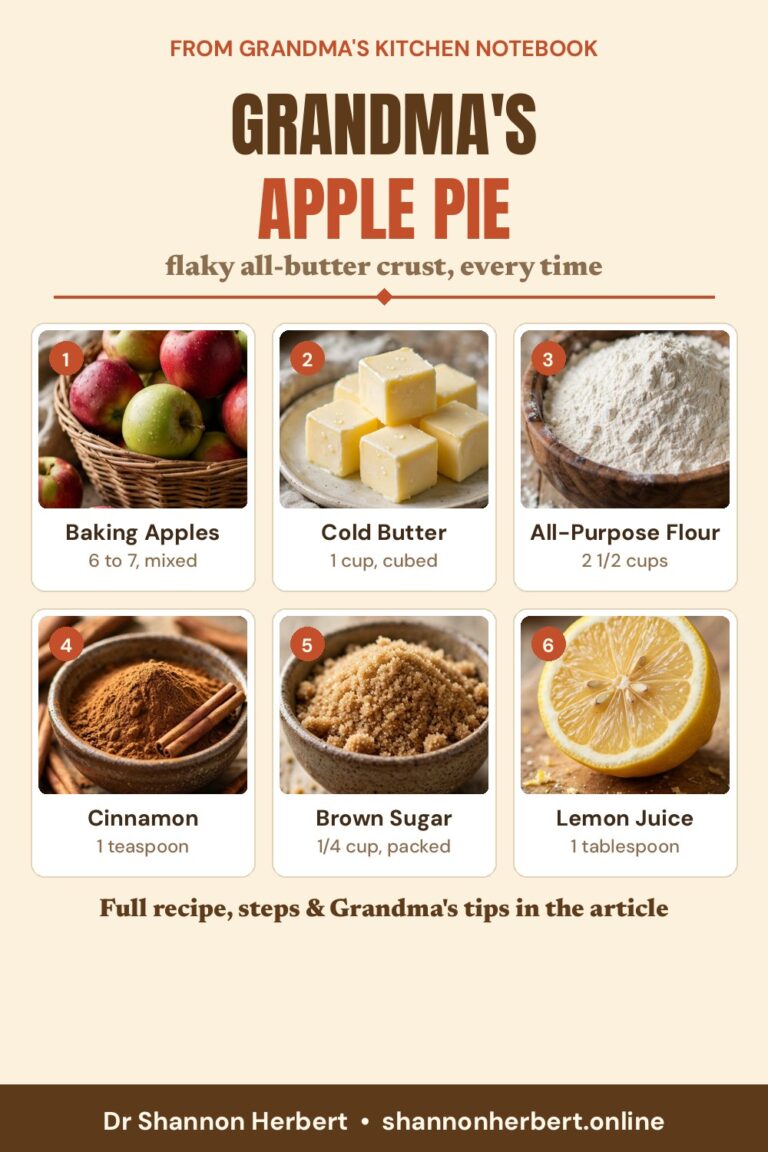
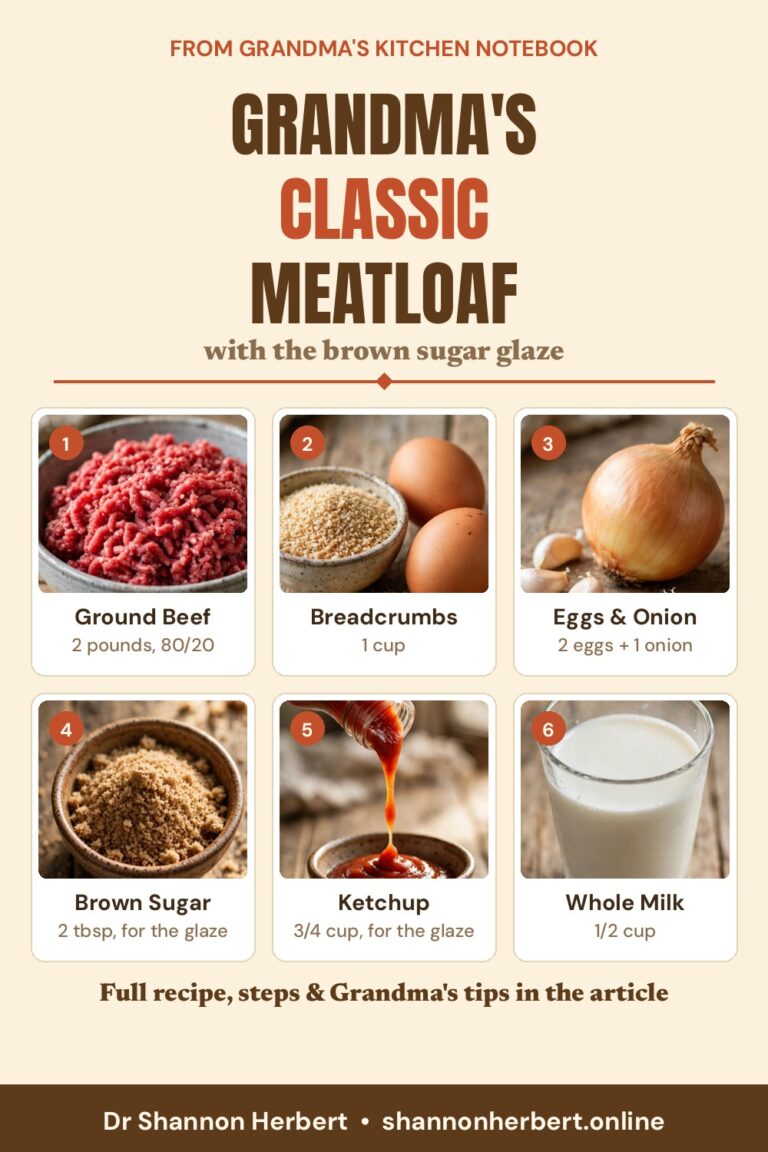
Beef stew, chicken soup base without noodles, meatloaf slices, banana bread, and unbaked biscuits all freeze very well. Apple pie freezes beautifully unbaked — bake from frozen, adding about fifteen minutes. Rice pudding and potato soup are best eaten fresh.
How do I know the old measurements, like “a moderate oven”?
Old cookbooks used hand-tested oven language: slow was about 300–325°F, moderate was 350–375°F, and hot was 400–450°F. Nearly everything here bakes at 350°F except the biscuits and cornbread, which like 425°F. When in doubt, moderate is the safe translation.
A Last Word from the Kitchen Door
Grandma’s recipes survived because they were never really about the recipes. They were about feeding people well with what was on hand, without waste and without fuss. Learn these twelve dishes and the techniques repeat: cold fat and a light hand, a hot pan, a patient simmer, seasoning in layers, and resting before you cut. Master those five habits and you can cook the way she did — from memory, with confidence.
Start with the biscuits. Everybody does.
This article is for general information only and is not medical advice.