12 Grandma’s Old Recipes That Never Go Out of Style
5. Chicken Noodle Soup from Scratch
What it is: Clear golden broth, egg noodles, shredded chicken, and sweet carrots and celery — the soup grandmothers have prescribed for colds, heartbreaks, and cold weather for generations.
Why grandmas made it this way: She started with a whole chicken and water, not a carton, because bones and patience make broth with real body. The vegetables went in near the end so they stayed sweet instead of dissolving.
Key ingredients: Whole chicken or bone-in parts, onion, carrots, celery, garlic, bay leaves, parsley and dill, wide egg noodles, salt, and pepper.
The one tip that makes it work: Cook the noodles separately — or add them only in the last ten minutes and serve right away. Noodles sitting in soup keep absorbing broth until they are bloated and the soup is gone.
Serving and storage: Serve steaming, with saltines or a biscuit for dunking. The broth and chicken keep four days refrigerated and the soup base freezes for three months.
6. Beef Stew with Root Vegetables
What it is: Beef chuck simmered low and slow with potatoes, carrots, onions, and parsnips in a dark, savory gravy until spoon-tender.
Why grandmas made it this way: Stew turned the toughest, cheapest cut into the best dinner of the week. Chuck needs time, not money — two to three hours of gentle heat melts its connective tissue into richness. Root vegetables were what the cellar held in winter.
Key ingredients: Beef chuck in large chunks, flour for dredging, onions, garlic, tomato paste, beef stock, red wine or a splash of vinegar, potatoes, carrots, parsnips, bay leaf, and thyme.
The one tip that makes it work: Brown the beef properly, in batches, without crowding the pan. That deep brown crust is where the stew’s flavor lives; gray, steamed meat gives you gray stew. Deglaze and scrape the browned bits into the pot.
Serving and storage: Serve in deep bowls with bread for the gravy. Stew is better the second day, keeps four days refrigerated, and freezes for three months, though potatoes soften slightly on thawing.
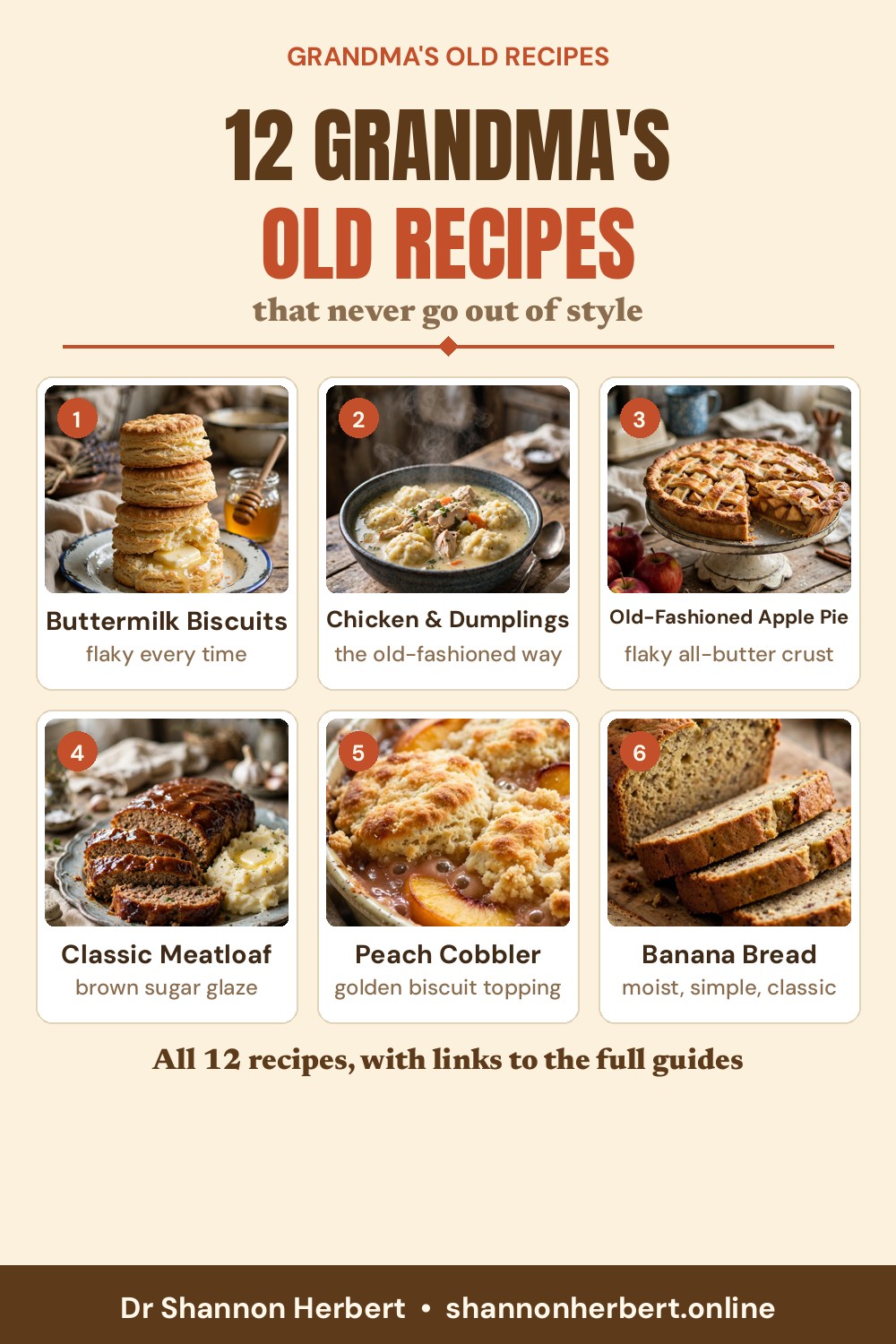
7. Banana Bread
What it is: A moist, tender quick bread with deep banana flavor and a crackly golden top — the standard fate of bananas that went speckled on the counter.
Why grandmas made it this way: Nothing in grandma’s kitchen was thrown away while it could still become food. Overripe bananas are sweeter and more fragrant than fresh ones, and their softness means the bread needs no mixer and little added fat to stay moist. This waste-nothing thinking fits right in with our simple food swaps approach.
Key ingredients: Very ripe bananas (black-spotted is perfect), flour, sugar or brown sugar, melted butter or oil, eggs, baking soda, salt, cinnamon, and optional chopped walnuts.
The one tip that makes it work: Do not overmix. Stir the wet and dry ingredients together until the flour just disappears; a few small lumps are fine. Overmixing develops gluten and turns a tender loaf tough and tunneled.
Serving and storage: Slice thick and serve plain, toasted with butter, or warm with cream cheese. The loaf keeps three days wrapped at room temperature and freezes whole or sliced for three months.
8. Peach Cobbler
What it is: Juicy baked peaches bubbling up through a golden biscuit or batter topping — summer in a baking dish, and easier than pie on purpose.
Why grandmas made it this way: Cobbler was the dessert for when the peaches all ripened at once and there was no time for rolling crusts. The topping goes on by the spoonful and the fruit makes its own syrup in the oven.
Key ingredients: Ripe peaches (fresh, frozen, or canned), sugar, a squeeze of lemon, flour, baking powder, butter, milk, and a pinch of cinnamon and salt.
The one tip that makes it work: Pour the batter in first and do not stir. Melted butter and batter go into the hot dish, sugared peaches go on top, and the batter rises around the fruit as it bakes. Stirring gives you cake with peaches at the bottom instead of cobbler.
Serving and storage: Serve warm, always, with vanilla ice cream or cold cream. Cobbler keeps two days at room temperature and three more refrigerated; reheat in the oven to crisp the topping.
9. Potato Soup
What it is: A thick, creamy soup of tender potatoes simmered in milk and broth, finished with butter and your favorite toppings.
Why grandmas made it this way: Potatoes were cheap, filling, and always in the bin, so this soup carried families through the leanest weeks of winter. Part of the potato is mashed right in the pot, thickening the soup without cream or roux.
Key ingredients: Russet or Yukon Gold potatoes, onion, celery, garlic, broth, milk or half-and-half, butter, salt, pepper, and toppings as you like: bacon, cheddar, chives, or scallions.
The one tip that makes it work: Mash only part of the potatoes — about a third, crushed against the side of the pot, the rest left in chunks. You get a soup that is creamy and hearty at once, instead of gluey or thin.
Serving and storage: Serve with toppings at the table. It keeps four days refrigerated; reheat slowly and do not boil once the milk is in. Freezing softens the texture, so eat it fresh within the week.
10. Cornbread in a Cast-Iron Skillet
What it is: Golden cornbread with a crisp, crunchy crust and a moist, tender middle, baked in a cast-iron skillet.
Why grandmas made it this way: Cornmeal was the grain of the South — cheap, local, and shelf-stable — and the cast-iron skillet could go from stovetop to oven and produce a shattering crust no baking pan can match. Bacon drippings were the traditional fat.
Key ingredients: Yellow cornmeal (stone-ground if you can find it), a smaller amount of flour, baking powder, salt, buttermilk, eggs, and melted butter or bacon drippings.
The one tip that makes it work: Preheat the skillet with the fat in it until properly hot, then pour the batter in — it should sizzle. That sizzle is the crust forming on contact. A cold pan gives you a pale, soft bottom every time.
Serving and storage: Cut in wedges and serve hot with butter and honey, or crumbled into a glass of cold buttermilk the old country way. It keeps two days wrapped at room temperature; stale pieces make excellent stuffing and croutons.