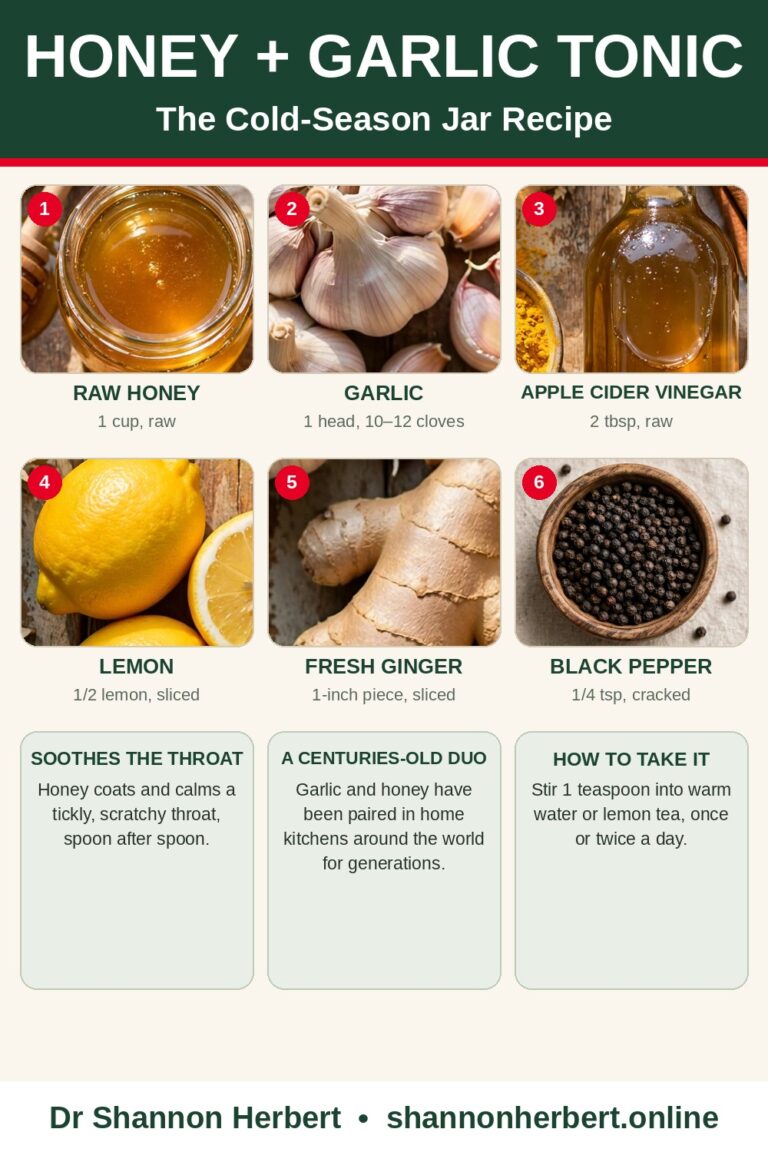
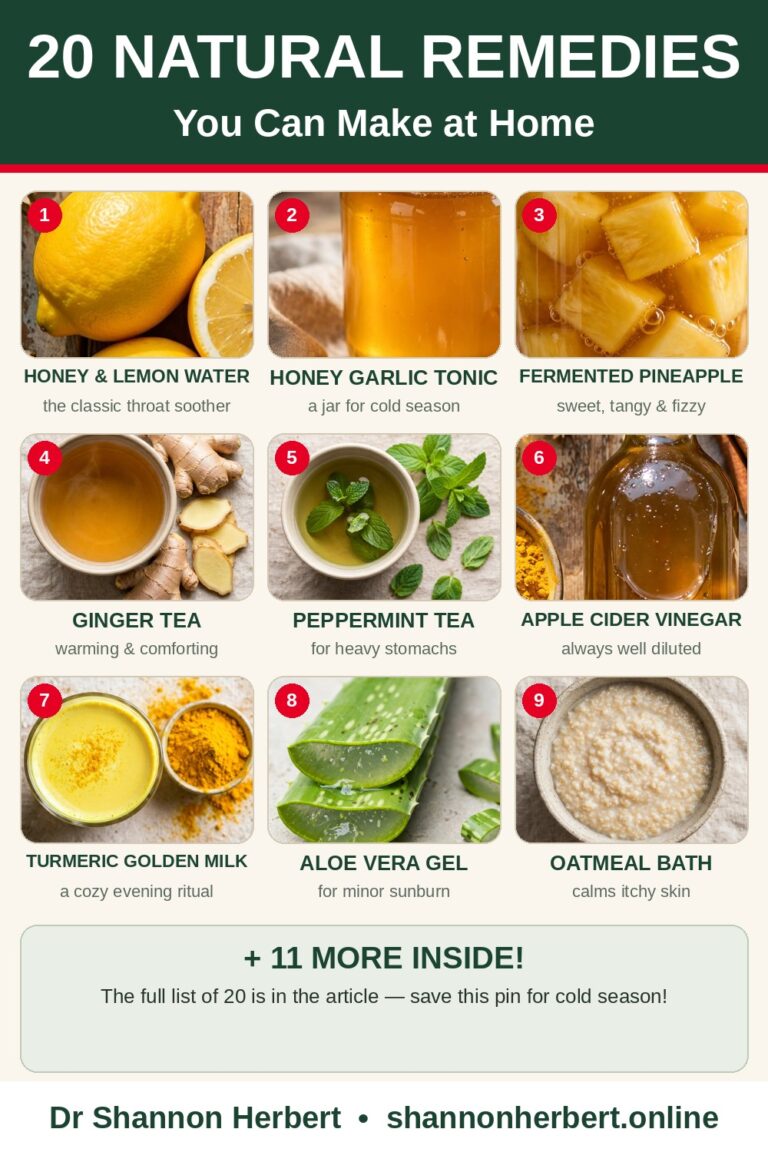
Fermented Pineapple Honey Remedy for Coughs and Colds
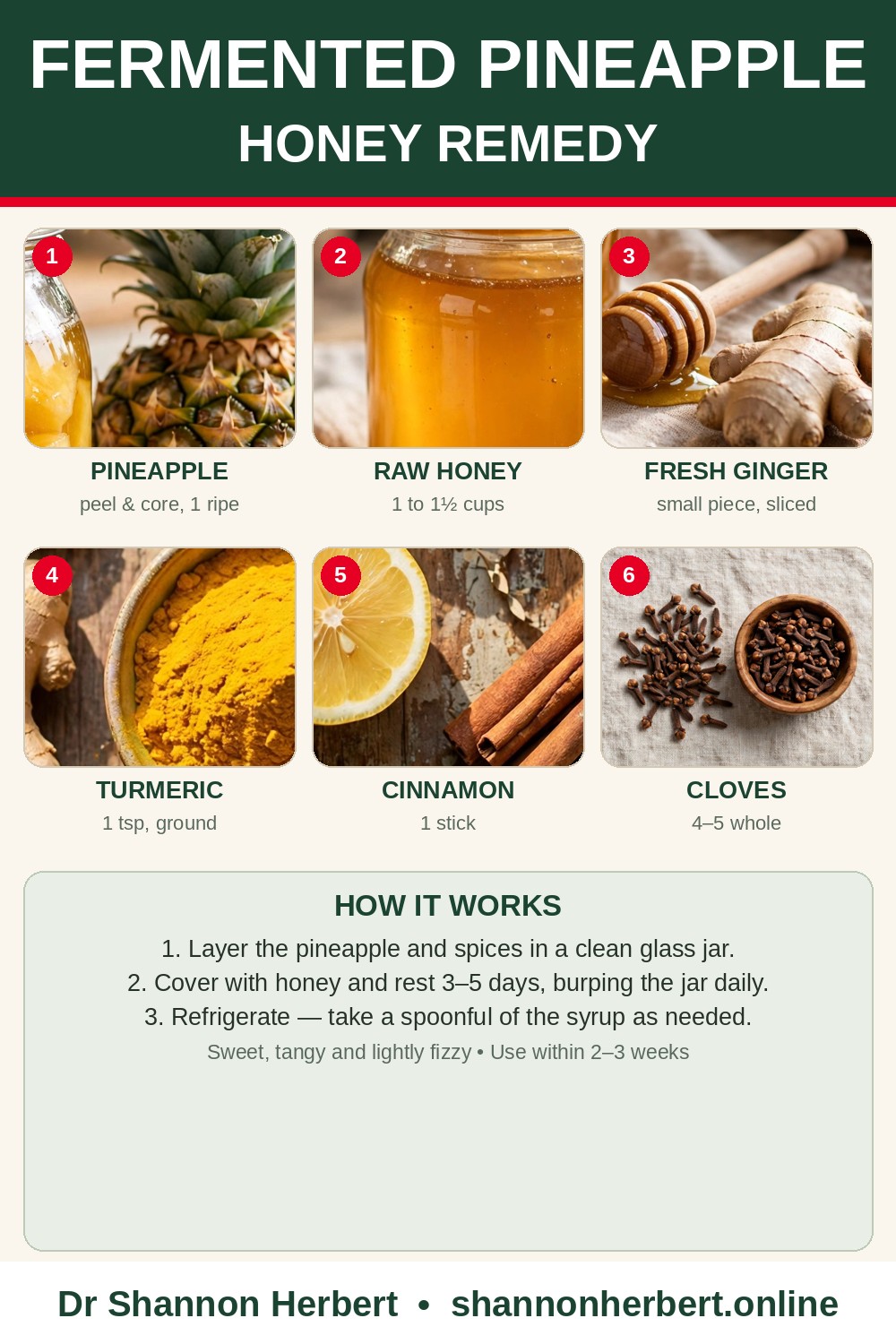
How to Make It, Step by Step
- Peel the pineapple and cut the flesh into small chunks. Discard the hard core or save it for smoothies.
- Fill the jar with the pineapple chunks (and ginger, if using).
- Pour honey over the fruit until it is almost covered. The pineapple will release juice and settle into the honey.
- Close the lid loosely, or cover with a clean cloth, and leave at room temperature for 3–5 days.
- Open the jar once a day to release gas and press the fruit down with a clean spoon.
- When it tastes pleasantly tangy and lightly fizzy, seal and refrigerate.
A few details help. First, leave headspace. Fill the jar only about three-quarters full. Pineapple releases a surprising amount of juice, and an overfilled jar is the one most likely to leak. Pour the honey slowly, let it seep between the chunks, and tap the jar gently on a folded towel to release air pockets. At first the fruit may not look fully covered — that is fine. Within a few hours the juice will rise.
Second, think about the lid. During the active days, gas needs somewhere to go. A lid screwed on loosely, or a clean cloth secured over the top, allows gas to escape. If you use a tight lid, open it once a day — often called “burping” the jar — to release pressure. Keep the jar out of direct sunlight, at a comfortable room temperature, where you will remember its daily check. A very cold room slows fermentation; a very hot room speeds it up and can push flavors too far.
Third, keep the fruit under the syrup as much as you can. Each day, press the chunks down gently and swirl the jar so honey coats everything. Fruit left exposed above the liquid is more likely to dry out or develop mold. This daily minute is the most important habit in the recipe.
Day by Day: What to Expect
No two jars move at exactly the same speed, because temperature, ripeness, and honey vary. Most jars follow this pattern:
- Day 0 — Jar day: Honey is thick, pineapple is firm, and there is little bubbling. Within a few hours, juice starts pooling and the honey begins to thin.
- Day 1: The syrup looks looser. A few tiny bubbles may appear. The smell is sweet and fruity, with nothing sharp about it.
- Day 2: Often the most active day. Expect more bubbles, a little foam, and fruit floating higher as gas lifts it. Press it back down. The flavor is sweet with the first hint of tang.
- Day 3: The pineapple looks softer, and the syrup tastes pleasantly tart-sweet. Many people refrigerate the jar now for a gentler flavor.
- Days 4–5: The flavor deepens and becomes more tangy, though bubbling often begins to calm. Do not push it longer at room temperature — once it tastes pleasantly tangy and lightly fizzy, refrigeration is the right next step.
- In the fridge: Cold slows fermentation to a crawl. Bubbles fade, flavors meld, and the pineapple becomes wonderfully soft, ready to enjoy over the next 2 to 3 weeks.
If your kitchen is cool and day 3 shows almost no bubbles, give it another day or two. If your kitchen is very warm and the jar tastes quite tart by day 2, refrigerate it early. Taste and observation matter more than the calendar.
How People Take It
A spoonful of the syrup, or a few soft pineapple chunks, 2–3 times a day when a cough or cold shows up. It is also lovely stirred into warm water as a sweet-tart drink.
Other pleasant ways to enjoy it:
- By the spoonful: The syrup as it is, or a few chunks along with it.
- In warm water or tea: Stir 1 to 2 teaspoons into warm, not boiling, water or mild herbal tea. Boiling water dulls the delicate flavor.
- Over yogurt or oatmeal: A bright, honeyed topping, in the same spirit as the balanced meals in Healthy Meals That Keep You Full.
- In a cold drink: A spoonful in sparkling water with ice, when your throat wants something cool.
Keep portions modest — a spoonful at a time is plenty. If you are watching your overall sugar intake, our Simple Nutrition Tips are a helpful reminder that small additions fit best inside an otherwise balanced pattern. If you enjoy pineapple’s lighter flavor in everyday cooking, you may also like how fruit fits into Foods That Help You Burn Fat, always as part of regular meals, not as a remedy.
Variations: Ginger, Turmeric, and Cinnamon
Add any of these at the start, along with the pineapple.
Fresh ginger — the classic addition. A 1-inch piece, peeled and thinly sliced, adds warmth and a gentle bite. Ginger is a traditional companion in cough-and-cold kitchen remedies, and here it keeps the sweetness from feeling flat. Start with less than you think you need.
Turmeric — golden and earthy. Add 1/2 teaspoon of ground turmeric or a small piece of fresh turmeric root, peeled and sliced. It gives a deeper golden color and a mild, earthy flavor, but it can stain spoons and counters. A tiny pinch of black pepper is sometimes added with turmeric in traditional drinks; here it is optional.
Cinnamon — warm and cozy. Half a cinnamon stick, rather than ground cinnamon, is the neatest choice. It perfumes the syrup without making it cloudy. Remove the stick when you refrigerate the jar, or leave it in for a stronger flavor. This version is especially popular in colder months.
You can combine ginger and cinnamon, or try a strip of lemon zest for brightness. Avoid adding extra water or juices, which make results less predictable. Change one thing at a time between batches so you learn what you like.