Dry Scalp and Dandruff in Winter: Home Remedies That Work
Remedy 4: Gentler Shampoo Habits
Sometimes the remedy is not something you add, but something you stop doing. These habits make every other remedy work better:
- Turn the water down. Wash with lukewarm water, not hot. Your scalp will keep more of its natural oils.
- Wash the scalp, condition the lengths. Shampoo is for the scalp and roots; conditioner belongs on the mid-lengths and ends. This cleans away flakes and oil where they build up without drying out your hair.
- Do not overwash — or underwash. For most people, washing every 2–3 days works well in winter. Very dry scalps may prefer less; oily, dandruff-prone scalps often do better with regular, thorough washing rather than less.
- Rinse really well. Leftover shampoo and conditioner residue can itself look like flakes and cause itching. Rinse until the water runs completely clear.
- Choose mild products. If your scalp is reactive, look for fragrance-free, gentle shampoos, and give any new anti-dandruff shampoo a fair trial of 3–4 weeks before judging it.
Remedy 5: Do Not Scratch — and Other Daily Habits
- Never scratch with your nails. Scratching breaks the skin, invites infection, and makes inflammation — and flaking — worse. If you itch, press or rub gently with your fingertip pads, or apply a little aloe.
- Brush gently before washing. A few strokes with a soft brush before your shower loosens flakes so they rinse away instead of landing on your shoulders.
- Use a humidifier in the bedroom. Aim for indoor humidity around 40–50%. Moist air helps your scalp, your skin, and your breathing all at once. Clean the humidifier regularly, following its instructions, so it does not blow mold or bacteria into the air.
- Rinse after hats and workouts. Sweat and warmth under a hat can irritate a sensitive scalp; a quick rinse or wash after heavy sweating keeps things calm.
- Look after the rest of your skin too. Winter rarely dries just one place. If your face and hands are suffering as well, our guide to dry winter skin remedies and these simple chapped lips remedies complete the set — winter skin care really is one connected routine.
Safety and Cautions
- Patch test everything. Oil, aloe, vinegar rinse — apply a little to a small patch of skin first and wait 24 hours, especially if your skin is sensitive.
- Vinegar must always be diluted and kept away from broken skin and eyes.
- Warm oil should be warm, never hot. Test it on your wrist before it goes near your scalp.
- Know when home care is not enough. Flakes are common and usually harmless, but some scalp conditions — eczema, psoriasis, fungal infections — need proper medical treatment, and no amount of home remedy will fix them.
When to See a Doctor or Dermatologist
Make an appointment if you notice any of the following:
- Thick crusts or scales on the scalp, especially if they are yellow, greasy, or hard to lift
- Bleeding, sores, or weeping patches
- Spreading redness, swelling, or pain
- Intense itching that keeps you awake or does not ease with gentle care
- Hair loss or bald patches alongside the flaking
- Flaking that spreads to the face, eyebrows, ears, or chest
- No improvement at all after 3–4 weeks of consistent home care
A doctor can tell dandruff apart from eczema, psoriasis, or a fungal infection, and can prescribe a medicated shampoo or treatment that settles things quickly. Going in is not a failure of home remedies — it is simply the right next step.
FAQs
Is dry scalp the same as dandruff?
No, although they look alike. Dry scalp flakes are small, white, and dry, and the rest of your skin is usually dry too. Dandruff flakes are larger, oilier, and often yellowish, and they are linked to a common skin yeast. Dry scalp needs moisture; dandruff often needs regular washing and anti-fungal care.
How long do home remedies take to work?
Give them time. With consistent care — weekly oil or aloe, gentle washing, no scratching — most people see clear improvement within 2–4 weeks. Scalp skin renews itself slowly, so a single treatment rarely changes much overnight.
Can coconut oil make dandruff worse?
It can, for some people. If your flaking is the oily, yeast-related dandruff type, oils may feed the yeast and increase flakes. If you notice that happening, stop the oil treatments and focus on regular gentle washing, the vinegar rinse, and a proper anti-dandruff shampoo.
Should the vinegar rinse sting?
No. Properly diluted, it should feel like water. Mild tingling on an itchy scalp can happen, but real stinging or burning means rinse it off straight away — your skin is either too sensitive for it or the mix was too strong. Never use it on broken skin.
How often should I wash my hair in winter?
There is no single right answer. Most people do well washing every 2–3 days. If your scalp is very dry, stretch it out a little; if it is oily and dandruff-prone, wash more regularly rather than less. The water temperature and gentleness of the shampoo matter as much as the frequency.
A Calmer Scalp by Spring
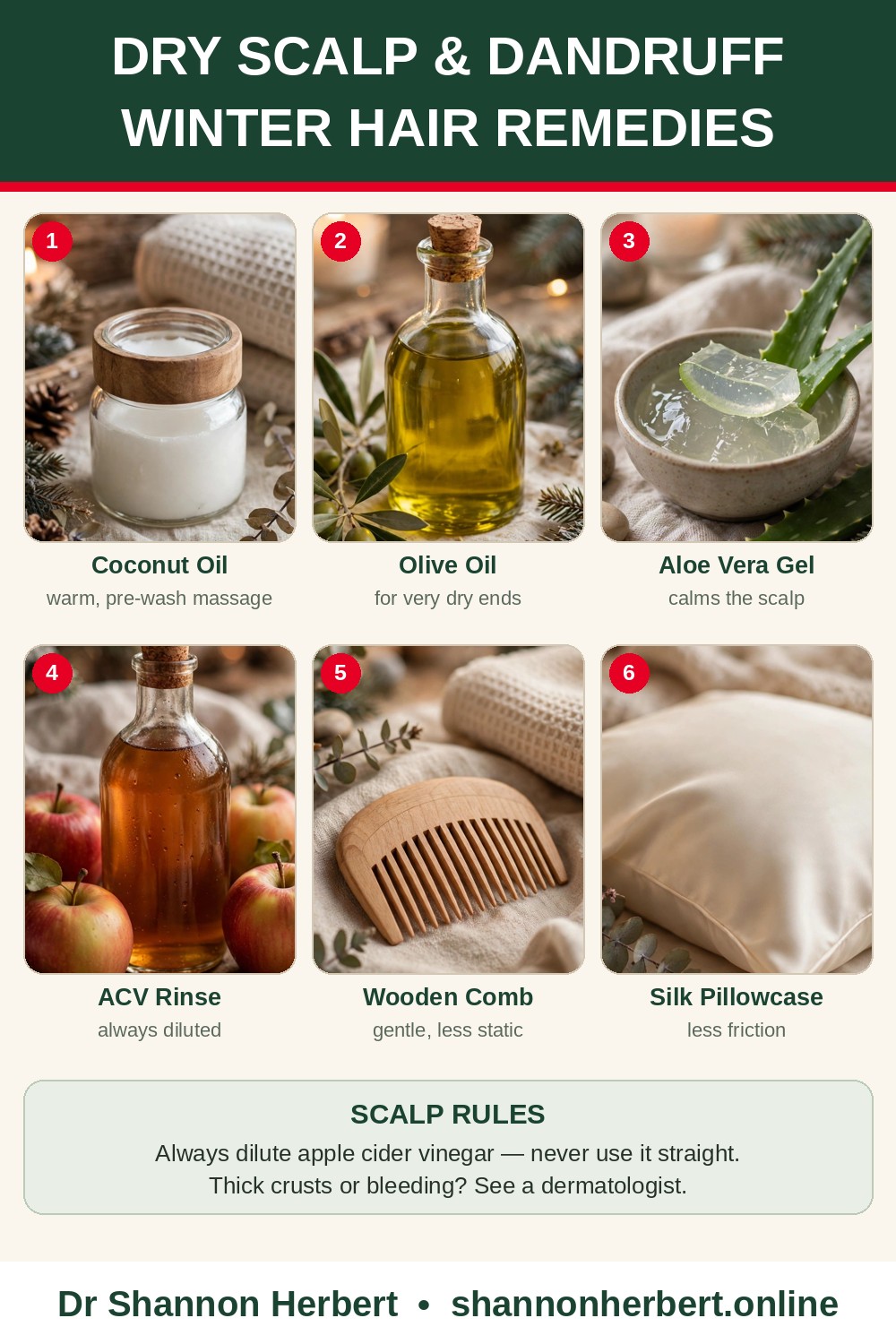
Winter flaking is annoying, but it is rarely a sign of anything serious, and it usually settles beautifully with steady, gentle care: warm oil for dryness, aloe for itch, a weekly vinegar rinse for dandruff-type flakes, lukewarm water, and hands that massage instead of scratch. Be consistent for a few weeks before you judge the results — your scalp needs a little time to catch up.
You will find more cold-season comfort in our full roundup of winter health problems and solutions, and for general winter wellness, many readers keep a jar of our Honey and Garlic Tonic ready for the cold months too. Here is to a flake-free sweater season.
This article is for general information only and is not medical advice.