Dry Scalp and Dandruff in Winter: Home Remedies That Work
Remedy 1: Warm Oil Massage
A warm oil massage is the oldest winter scalp remedy there is — generations of grandmothers treated it as a weekly ritual, and it still appears in roundups of old remedies that still work today. It moisturizes dry skin, loosens flakes so they wash away easily, and the massage itself relieves that tight, itchy feeling. This remedy suits dry scalp best.
You will need:
- 2–3 tablespoons coconut oil or olive oil
- 1 small heatproof bowl and a pan of warm water (to warm the oil)
- 1 towel for your shoulders
How to do it:
- Warm the oil gently by standing the bowl in warm water for a few minutes. It should feel comfortably warm on your inner wrist — never hot.
- Part your hair in sections and apply the oil directly to your scalp with your fingertips.
- Massage with the pads of your fingers (never your nails) in small circles for 5–10 minutes. Be thorough but gentle.
- Smooth any leftover oil through the lengths of your hair, then leave it on for at least 30 minutes — or overnight under a shower cap for a very dry scalp.
- Wash it out with a mild shampoo. You may need two gentle washes to remove the oil completely. Condition the ends as usual.
How often: Once or twice a week through the winter months.
Choosing and removing the oil: Coconut oil is the traditional favorite and smells wonderful, but it solidifies in a cold house — warm the jar in a bowl of warm water before measuring. Olive oil is just as good, always pourable, and often kinder to very sensitive scalps. Either way, use plain oil with nothing added. The washing-out trick that saves a lot of frustration: before you wet your hair, massage a little shampoo directly into the oiled scalp first, then add water and wash as usual. Oil lifts out far more easily this way, and one wash is often enough.
A note for dandruff-prone scalps: If your flakes are the oily, yellowish dandruff type and they seem worse after oil treatments, stop the oil — the yeast behind dandruff can feed on oils. Focus on the washing habits and vinegar rinse below instead, and consider a proper anti-dandruff shampoo.
Remedy 2: Aloe Vera Gel for Itch and Irritation
Aloe vera is cooling, lightly moisturizing, and famously soothing on irritated skin — including an itchy, flaky scalp. It suits both dry scalp and mild dandruff, and it is a good choice when your scalp feels hot, itchy, or sensitive.
You will need:
- 2–3 tablespoons pure aloe vera gel (from the plant, or a plain shop-bought gel with aloe as the first ingredient)
How to do it:
- Part your hair and apply the gel directly onto your scalp, section by section.
- Massage it in lightly with your fingertips.
- Leave it on for 20–30 minutes.
- Rinse with lukewarm water and wash with a mild shampoo if your hair feels coated.
How often: 2–3 times a week while the itch and flaking are active, then once a week to maintain.
Using fresh aloe: If you have an aloe plant on the windowsill, cut one thick outer leaf, let the yellowish sap drain away for a few minutes, then slice it open and scrape out the clear gel — that is the part you want. Blend it briefly if it is lumpy, and use it the same day. Shop-bought gel keeps things simpler; just read the label and choose one without strong fragrance or coloring, which add nothing for your scalp and can irritate sensitive skin.
Patch test first: Aloe is gentle for most people, but any new product can irritate sensitive skin. Test a small amount behind your ear or on your inner elbow and wait 24 hours before your first full application. This patch-test rule applies to every remedy in this article.
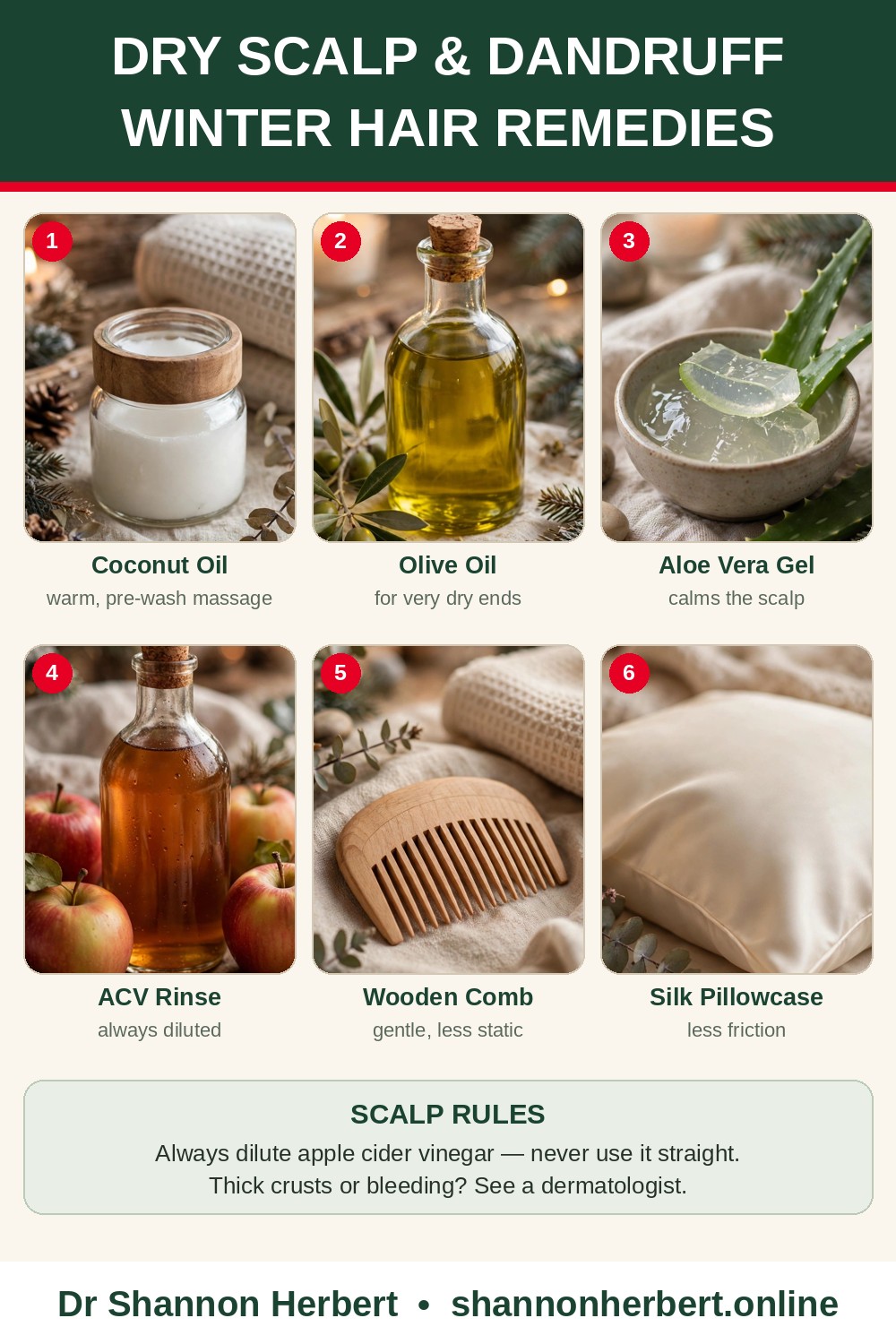
Remedy 3: Apple Cider Vinegar Rinse (Always Diluted)
An apple cider vinegar rinse is a classic for dandruff-type flaking. The mild acidity helps rebalance the scalp’s surface, discourages the yeast involved in dandruff, loosens flaky build-up, and leaves hair noticeably shinier as a bonus.
You will need:
- 2 tablespoons apple cider vinegar
- 1 cup (240 ml) cool or lukewarm water
- 1 jug or large cup for mixing and pouring
How to do it:
- Mix the vinegar and water in the jug. Never apply vinegar to your scalp undiluted — it is far too strong and can burn the skin.
- Shampoo your hair as usual and rinse.
- Slowly pour the vinegar rinse over your scalp, massaging it in gently with your fingertips.
- Leave it on for 1–2 minutes.
- Rinse thoroughly with lukewarm water. The vinegar smell fades completely as your hair dries.
How often: Once a week is enough for most people. Twice a week at most, and stop if you notice stinging or increased dryness.
Who should be careful: If your hair is color-treated, a vinegar rinse is generally fine once a week, but skip it in the first few days after coloring. Fine, straight hair usually loves the shine it gives; very dry or coarse hair may prefer it every other week instead. And if your scalp has been badly scratched or is broken anywhere, wait until the skin has healed before using any rinse — even a properly diluted one will sting damaged skin.
Cautions: Always dilute, always patch test first, and never use a vinegar rinse on broken, scratched, or bleeding skin — it will sting badly and slow healing. Keep it out of your eyes.