Winter Coughs and Colds: Soothing Home Remedies
Remedy 5: Warm Soups and Broths
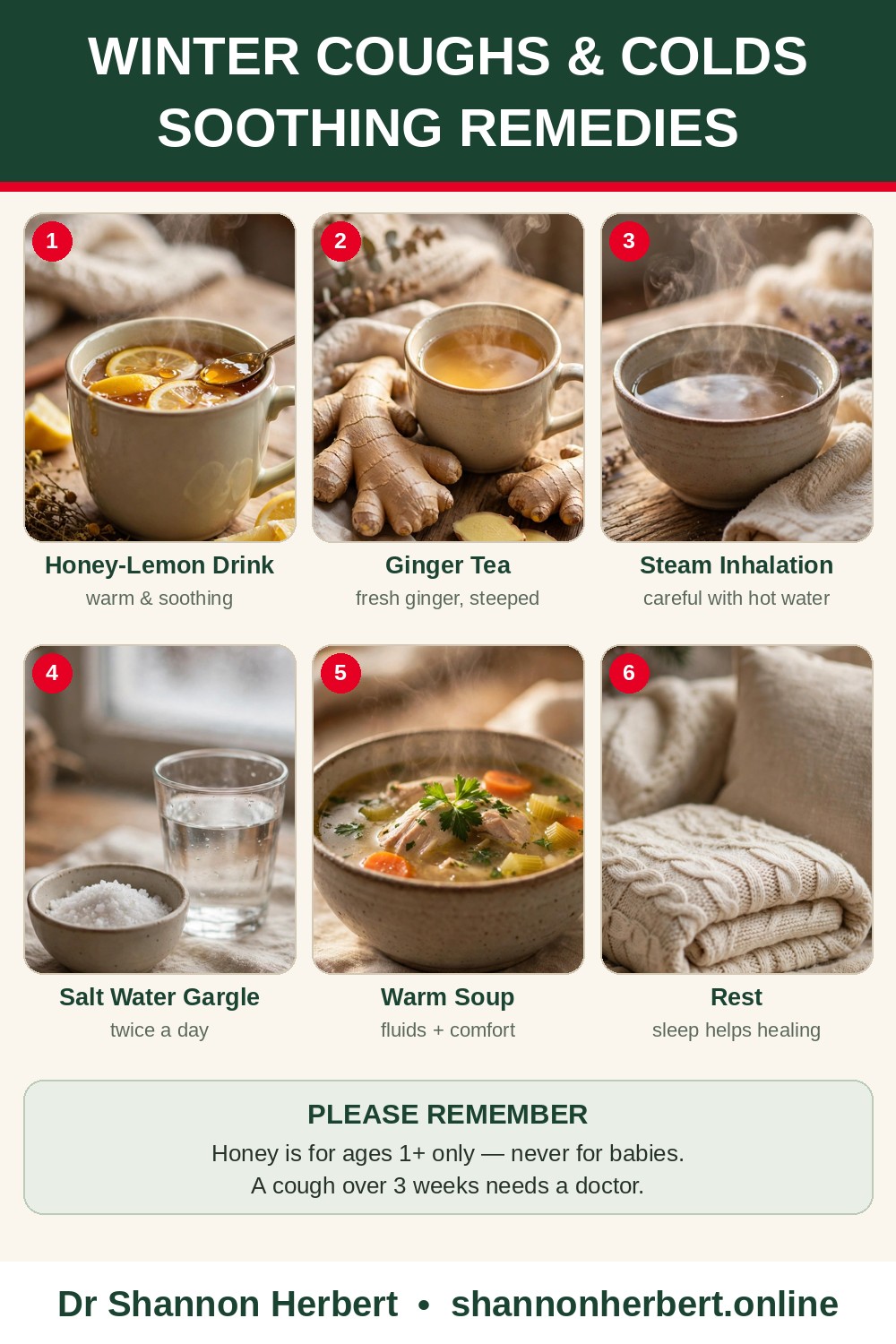
There is good sense behind the tradition of chicken soup for a cold. Warm broth keeps you hydrated, the steam rises into your nose as you eat, the salt and warmth soothe your throat, and a simple soup delivers gentle nourishment at a time when you may not feel like eating much. Vegetable broth, bone broth, or a simple noodle soup all work — the warmth and fluid matter more than any single ingredient.
Try to have at least one or two warm, soupy meals a day while you are unwell, and keep a glass of water nearby the rest of the time.
Remedy 6: Rest, Fluids, and Simple Comforts
The least glamorous remedy is the most important one: rest. Your immune system does its best work when you sleep, so give in to the tiredness a cold brings. Aim for early nights, nap if you need to, and skip strenuous exercise until the cough settles — gentle walks in fresh air are fine if you feel up to them.
Keep fluids steady through the day: water, warm herbal teas, broths, and diluted juice all count. A good guide is to drink enough that your urine stays pale yellow. A few more comforts that help:
- Raise your head at night with an extra pillow to ease coughing and congestion.
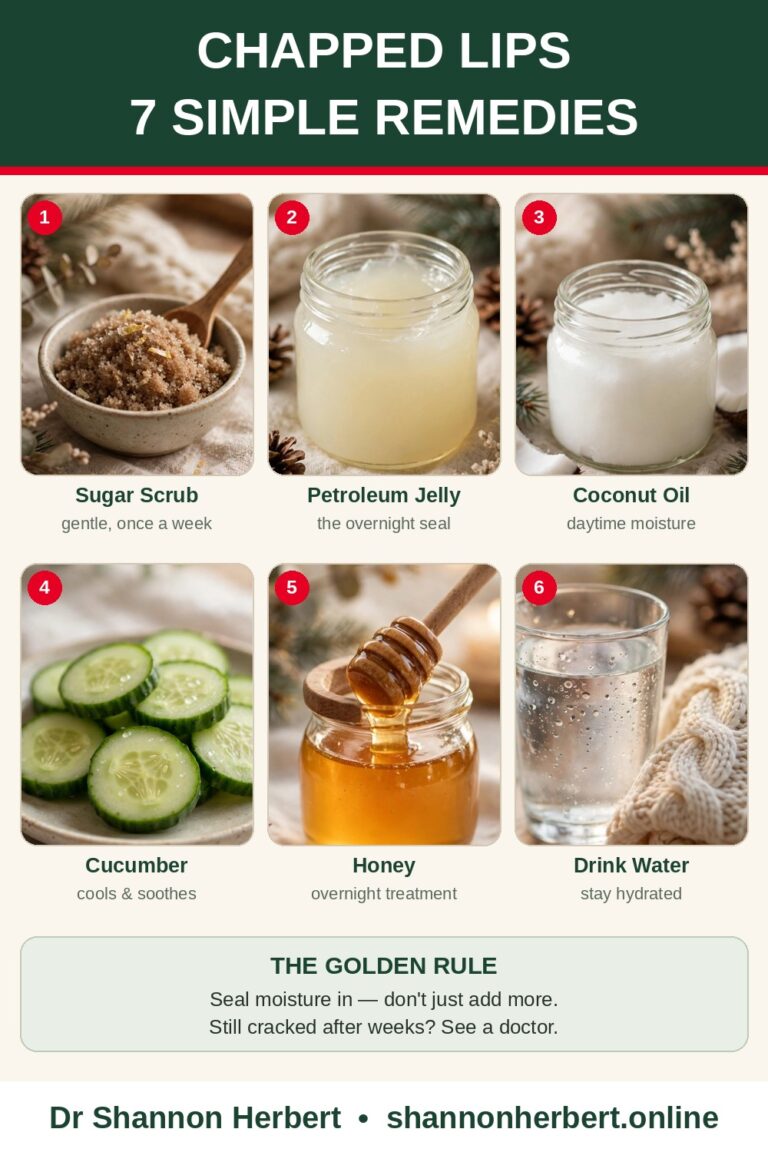
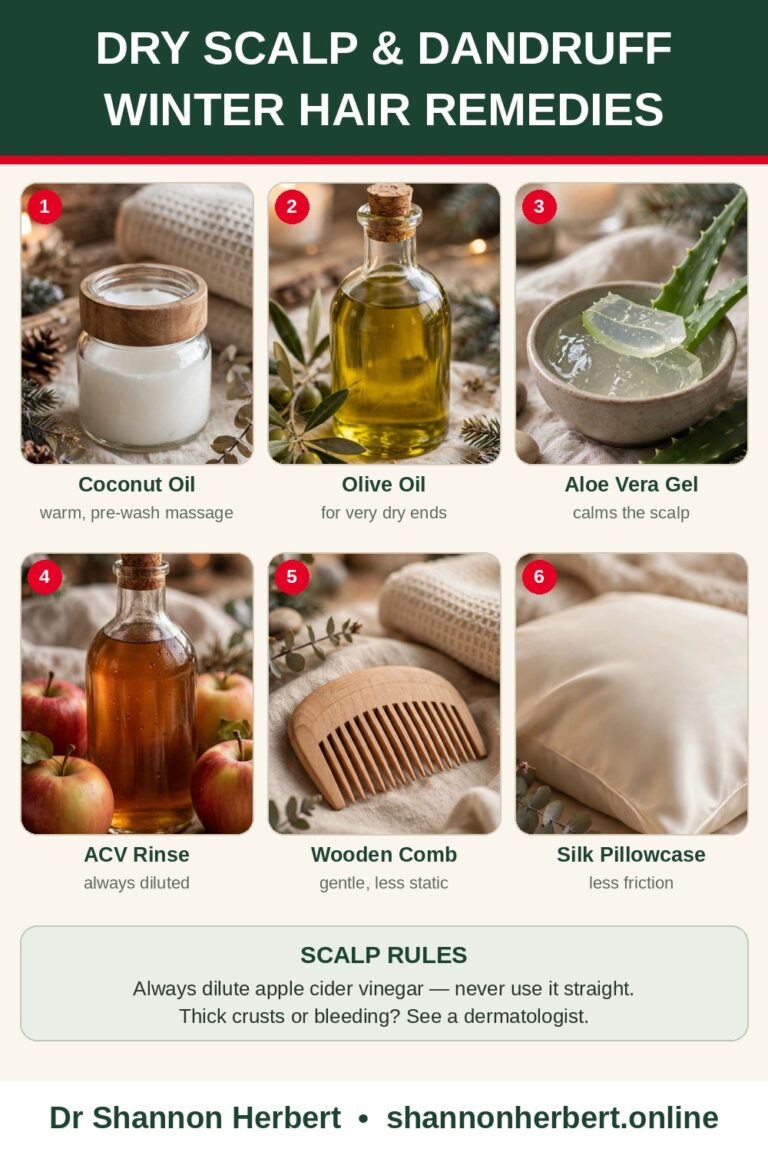
- Run a humidifier in the bedroom, or place a bowl of water near a radiator, to keep the air less dry. That same dry winter air is hard on skin and lips too — see our guides to dry winter skin remedies and simple chapped lips remedies if winter is drying you out from head to toe.
- Try a chest rub at night. A warming balm on the chest can make breathing feel easier and help you settle. Our Homemade Chest Rub shows how to make a gentle version at home.
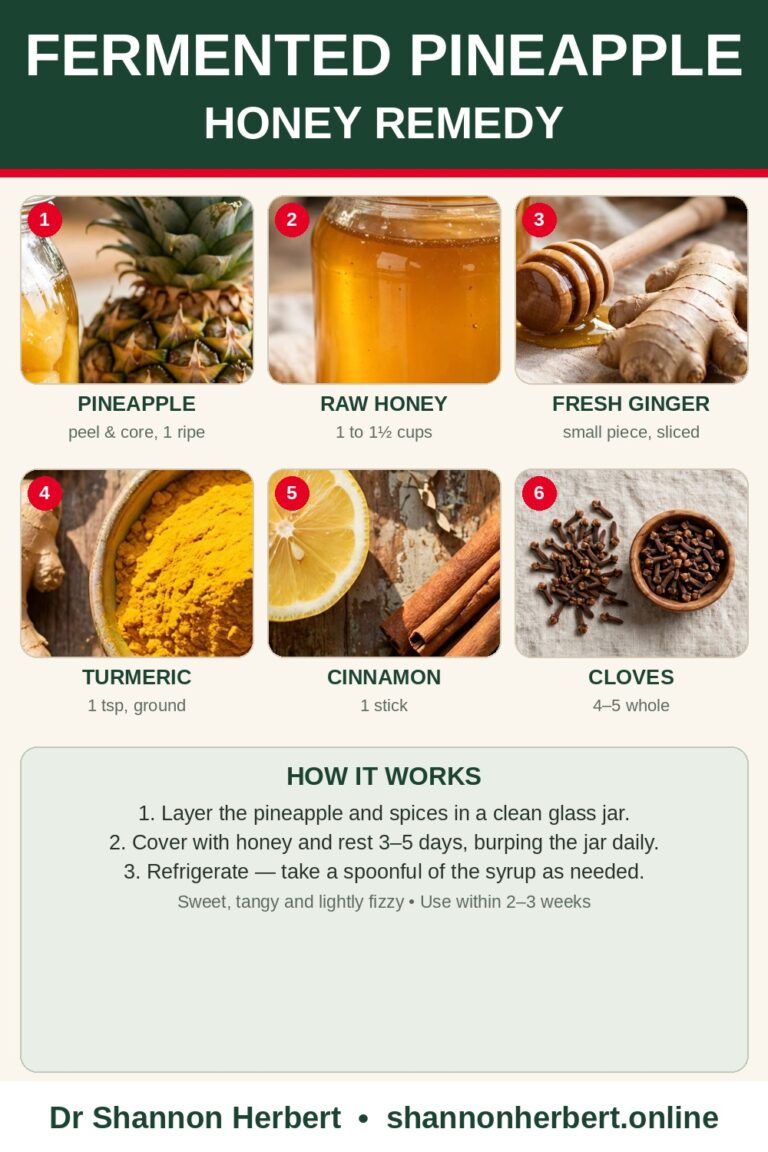
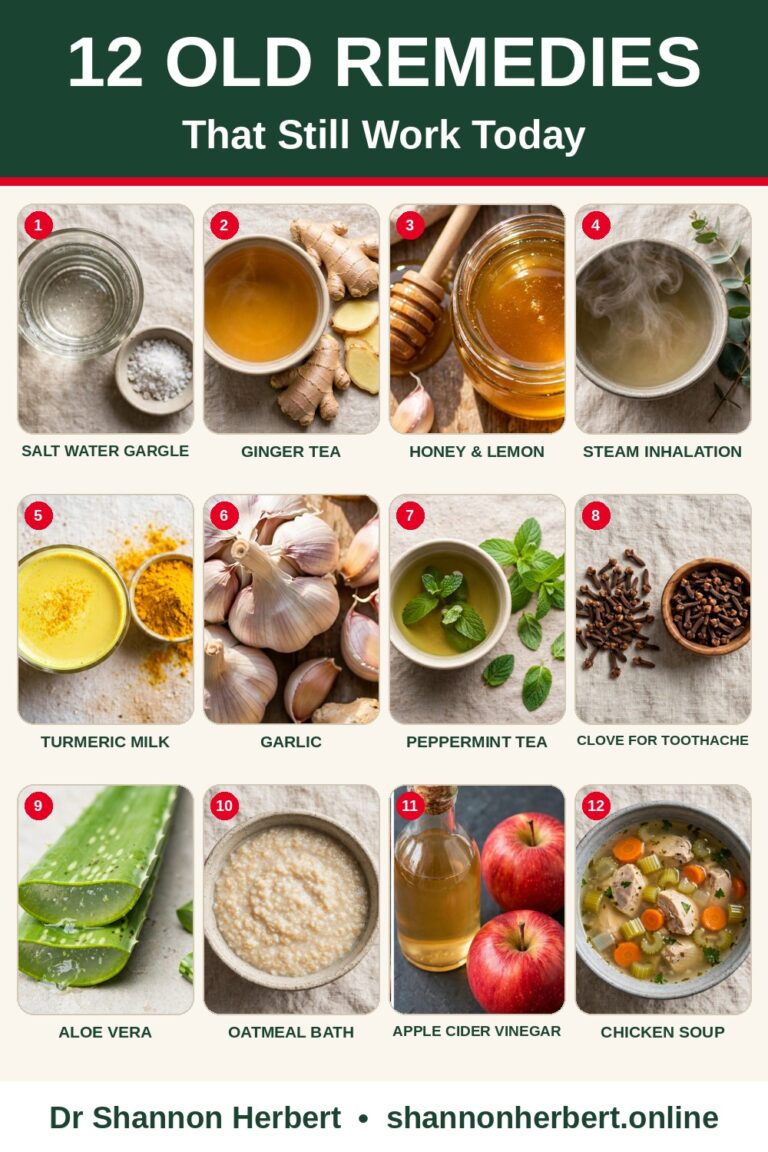
- Consider a traditional tonic. Readers who like something a little different swear by the Fermented Pineapple Honey Remedy during cough season — it is sweet, tangy, and very much in the old-fashioned spirit of this article.
Safety and Cautions
Home remedies are gentle, but gentle does not mean “no rules.” Please keep these points in mind:
- Honey is never for babies under 12 months — not in drinks, not on a pacifier, not in any form.
- Steam needs respect. Hot water scalds quickly. Keep a safe distance, keep bowls stable, and never leave children near them.
- Check before you concentrate. Occasional cups of ginger tea are fine for most adults, but if you are pregnant, take regular medication (especially blood thinners), or manage a long-term condition, ask your doctor or pharmacist before using strong herbal preparations daily.
- Do not share cups, towels, or pillows while you are ill, and wash hands often — it protects everyone else in the house.
- Antibiotics do not treat colds. Colds are caused by viruses, so antibiotics will not help and should only be taken when a doctor prescribes them for a bacterial infection.
When to See a Doctor
Most winter coughs and colds settle on their own, but some symptoms deserve prompt medical care. Contact a doctor promptly if you or your child has:
- A cough lasting more than 3 weeks, or one that goes away and comes back
- Coughing up blood, or rusty-colored mucus
- Breathlessness, wheezing, noisy breathing, or chest pain
- A high fever that lasts more than 3 days, or any fever in a baby under 3 months old
- Symptoms that start to improve and then suddenly get worse
- A severe headache, ear pain, or pain in the face and forehead that does not ease
- A weakened immune system, or a long-term condition such as asthma, diabetes, or heart disease, and your cold is not following its usual pattern
Trust your instincts: if something feels wrong or different from your usual colds, get checked. That is never a waste of a doctor’s time.
FAQs
How long does a winter cold usually last?
Most colds improve within 7–10 days. A mild cough can linger for 2–3 weeks after the other symptoms have gone, because the airways stay sensitive for a while. If a cough passes the 3-week mark, see the doctor list above.
Does honey really help a cough?
Honey coats the throat and calms the cough reflex, and research in children over one year old and in adults suggests it can ease night-time coughing as well as some shop-bought syrups. It is a soother, not a cure — and it is never safe for babies under 12 months.
Is it a cold or the flu?
Colds usually build gradually: a scratchy throat, sneezing, a blocked nose, then a cough. Flu tends to arrive suddenly with fever, aching muscles, headache, and real exhaustion. Flu can be more serious, especially for older adults and people with long-term conditions, so seek medical advice early if you suspect it.
Can I exercise with a cold?
Light movement, like a gentle walk, is fine if your symptoms are all “above the neck” — a runny nose and mild sore throat. If you have a chesty cough, fever, or body aches, rest instead and let your body spend its energy on healing.
Should I take vitamin C or other supplements?
A normal, balanced diet gives most people what they need. Vitamin C does not prevent colds for most people, though taking it regularly may shorten a cold slightly. Warm drinks, soup, and sleep will do more for how you feel than any supplement shelf.
A Gentler Winter
A winter cold is miserable, but it is also your body’s ordinary, healthy response doing its job. Warm honey and lemon, a bowl of soup, a little steam, and proper rest will not banish the virus overnight — nothing can — but they can carry you through the week in far greater comfort. Keep the kettle on, keep the tissues handy, and be patient with yourself.
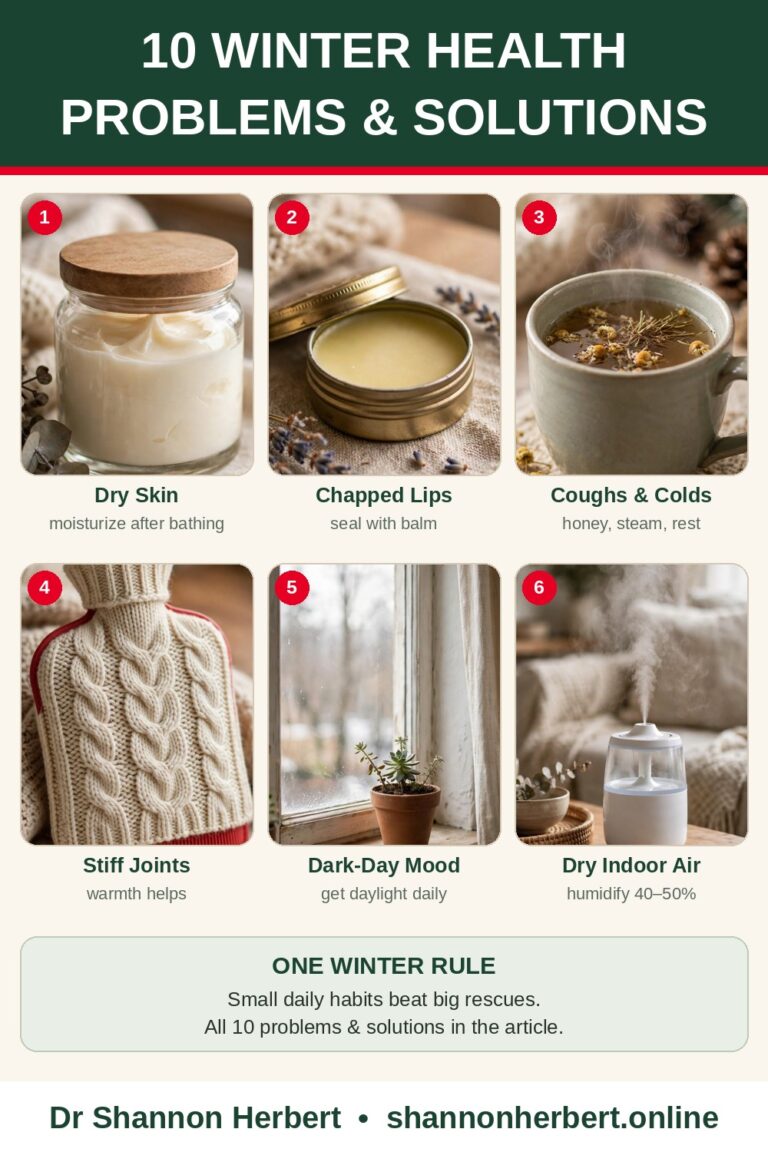
For a bigger picture of the season, our roundup of winter health problems and solutions covers the other cold-weather complaints — dry skin, chapped lips, flaky scalps, and more — and you will find plenty of other kitchen-cupboard ideas in our guide to natural remedies you can make at home.
This article is for general information only and is not medical advice.