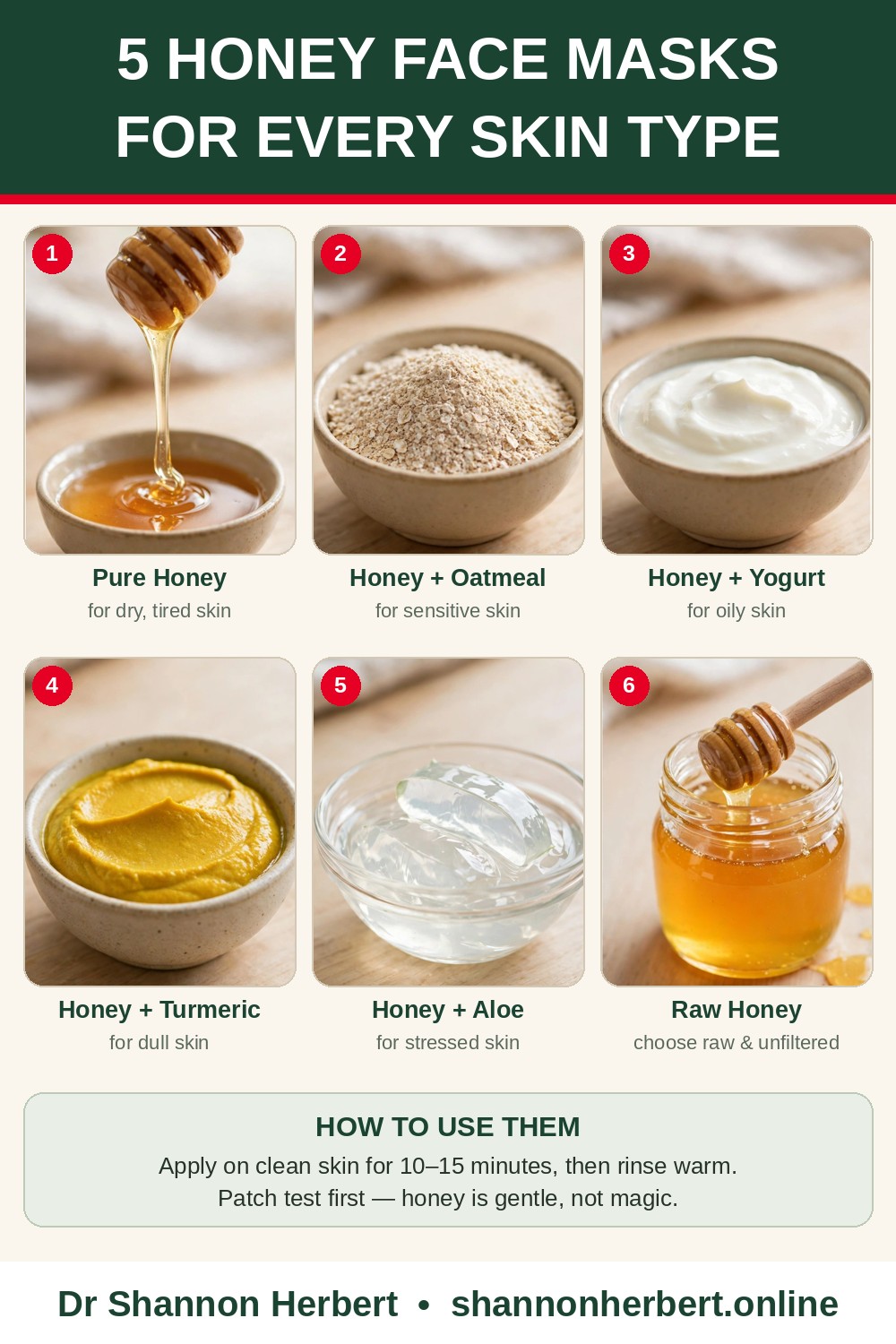
5 Honey Face Mask Recipes for Every Skin Type
Safety and Cautions
- Patch test first, every time you try a new mixture. Skin reactions are uncommon with honey but possible, especially if you have a bee, pollen, or propolis allergy. If you know you are allergic to bee products, skip honey masks entirely.
- Stop if irritation occurs. Burning, itching, hives, or swelling means rinse immediately and do not repeat.
- Avoid citrus add-ins in the daytime. Some internet recipes add lemon juice to honey masks. Lemon can make skin sun-sensitive and can irritate. If you experiment with it at all, do it at night only, wash thoroughly, and avoid sun exposure afterwards — or simply leave it out. These five recipes work beautifully without it.
- Do not use on broken skin. Keep masks away from cuts, open sores, and skin that looks infected.
- Turmeric stains (Recipe 3): expect a temporary tint and protect your towels and clothing.
- Eyes: keep all masks out of the eye area, and rinse with clean water if any gets in.
Natural remedies do not replace a dermatologist for ongoing skin conditions such as eczema, rosacea, persistent acne, or unexplained rashes. Honey can be a kind part of your week; it is not a diagnosis or a cure.
When to See a Doctor or Dermatologist
Book an appointment if you notice:
- A reaction after a mask that does not calm down within a day, or that involves swelling or blistering
- Acne that is deep, painful, scarring, or unchanged after a few months of gentle care
- Dry, itchy patches that crack, weep, or keep returning in the same places
- Any new or changing spot, mole, or patch of discoloration
- Skin that stays red and reactive no matter how gentle your routine becomes
Professional advice early on usually means simpler treatment and faster relief.
Frequently Asked Questions
Raw honey or regular honey — does it matter?
Raw honey is the traditional choice because it is the least processed. Regular pure honey still makes a good moisturizing mask. Avoid “honey syrups” with added sweeteners; check the label says 100% honey.
Can I leave a honey mask on overnight?
It is not recommended. Honey stays sticky, will end up on your pillow, and offers no extra benefit after 15 to 20 minutes. Rinse it off and moisturize instead.
Will honey help with acne?
Many people with blemish-prone skin enjoy honey masks because they are gentle and non-drying, and skin that is calm often looks clearer. Honey also will not strip the skin the way harsh cleansers can, and over-stripping is a common reason oily skin rebels with even more oil and more breakouts. That said, honey is not an acne treatment, and persistent or severe acne deserves a dermatologist’s care. If breakouts are your main concern, use honey as the gentle comfort step in your routine — not as the whole plan — and keep the rest of your routine simple while you give it a fair few weeks.
Can I store leftover mixed mask?
Fresh is best. Mixtures containing yogurt, milk, or aloe should be used right away and any leftovers thrown out. Pure honey on its own keeps indefinitely in the jar.
Can I use a honey mask if I have a beard or stubble?
Yes, though honey in a beard is an adventure. Apply to the skin areas you can reach, keep times to the shorter end, and rinse extra carefully. Many men simply mask the forehead, nose, and cheeks and skip the beard zone.
My skin felt warm after the mask. Is that normal?
A brief feeling of warmth or slight pinkness after rinsing is common and usually fades within the hour. Burning, itching, or swelling is not normal — rinse, stop, and let your skin rest.
A Sweet, Simple Routine
Five recipes, one jar. Whether your skin is dry, sensitive, oily, dull, or just tired from the sun, there is a honey mask here that fits. Start with the one that matches your skin today, patch test, take your fifteen quiet minutes, and enjoy how simple good care can be. If you find a favorite, write the recipe on a card and tape it inside the bathroom cabinet — the best routine is the one you do not have to look up. And when your jar runs low, replace it with the same plain, honest honey you would stir into tea. Your skin and your kitchen will both be happy with that standard. For even more ideas, our roundup of natural skin remedies collects twelve kitchen remedies in one place.
This article is for general information only and is not medical advice.