5 Honey Face Mask Recipes for Every Skin Type
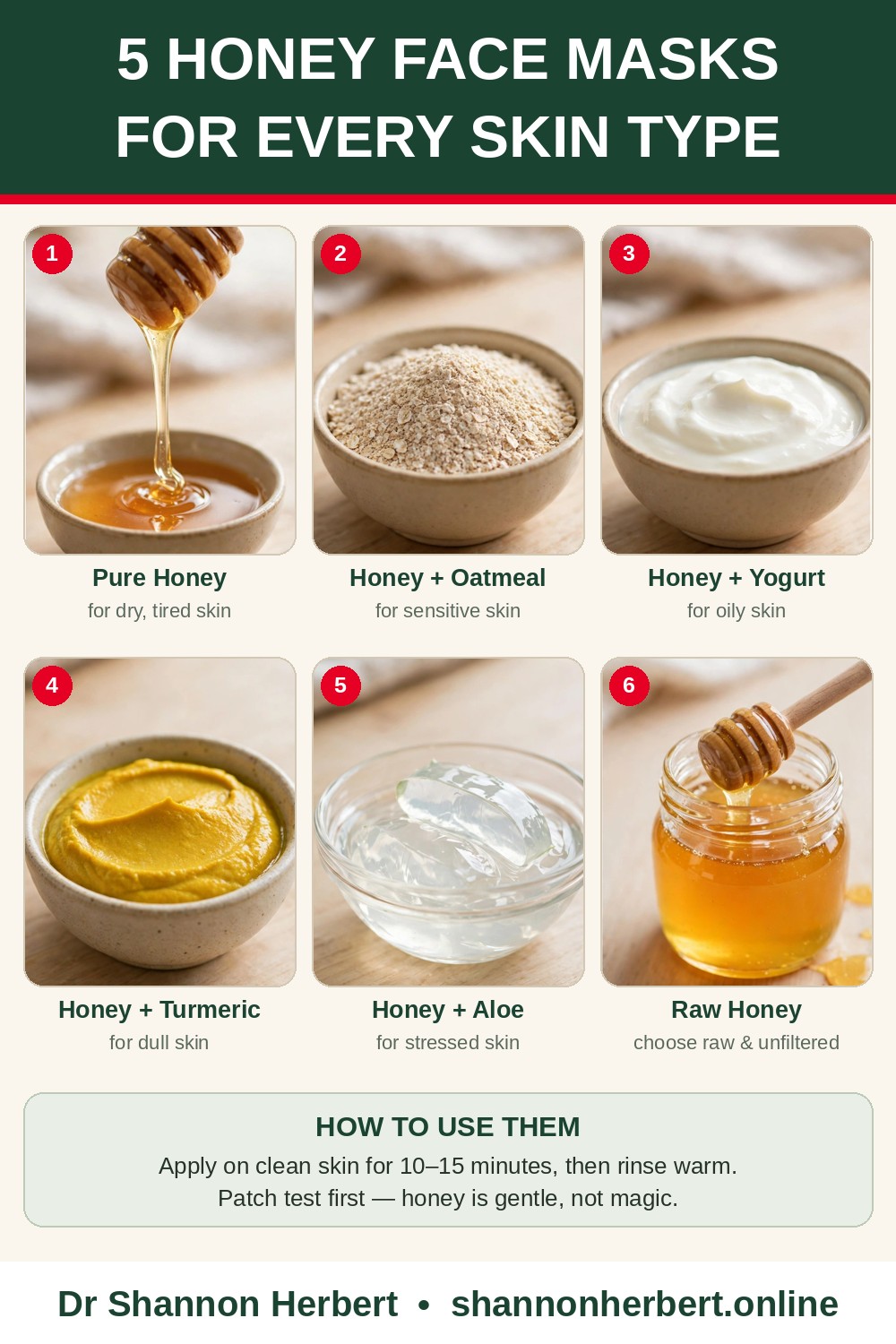
Recipe 3: Honey and Turmeric Mask — For Dull Skin That Wants Glow
This recipe borrows from our full turmeric face mask guide and softens it with honey, which makes it kinder and easier to rinse.
Ingredients:
- 1 tablespoon raw honey
- ½ teaspoon turmeric powder
- 1 teaspoon milk or rose water, optional, for a thinner texture
How to:
- Stir the turmeric into the honey until the color is even.
- Apply a thin layer to clean skin, avoiding eyes, eyebrows, and lips.
- Leave for 10 minutes only — turmeric does not need long.
- Rinse well with lukewarm water, then cleanse gently if a light tint remains.
- Moisturize as usual.
Remember that turmeric can stain fabric and tint skin temporarily, so use an old towel and make this an evening ritual.
Recipe 4: Honey and Yogurt Mask — For Oily and Combination Skin
If your skin leans oily, pure honey can feel a bit rich. Yogurt lightens the texture and adds a fresh, cooling feel.
Ingredients:
- 1 tablespoon raw honey
- 1 tablespoon plain yogurt (unsweetened, no flavorings)
- ½ teaspoon chickpea flour (besan), optional, to absorb extra oil
How to:
- Whisk the honey and yogurt together until smooth.
- Apply an even layer to clean skin.
- Leave for 10 to 15 minutes; the mask will feel cooler and lighter than pure honey.
- Rinse with lukewarm water.
- Pat dry and use a light moisturizer if your skin wants one.
Combination skin — oily in the T-zone, normal elsewhere — usually does well with this balance. Once a week is enough; twice a week in humid summer weather is fine for many people.
Recipe 5: Honey and Aloe Vera Mask — For Hot, Stressed, or Sun-Tired Skin
After a long day outdoors, skin can feel hot and tight. Aloe vera is the classic cooling ingredient, and honey keeps it in place.
Ingredients:
- 1 tablespoon raw honey
- 1 tablespoon aloe vera gel (from the leaf or a plain store-bought gel)
- A few drops of rose water, optional
How to:
- Mix honey and aloe into a smooth gel.
- Apply a comfortable layer to clean skin.
- Rest for 10 to 15 minutes.
- Rinse with cool or lukewarm water.
- Pat dry; many people find they need only a very light moisturizer after this one.
This is the mask many people reach for in summer. It feels like a cool drink of water for the face. Note that aloe does not replace sunscreen and is not a treatment for sunburn — if skin is blistered, peeling badly, or very painful, that needs medical care, not a mask.
Make It a Ritual, Not a Chore
Whichever recipe you choose, the setting matters more than people expect. Put your phone in another room. Warm a soft towel. Give yourself the full fifteen minutes without multitasking, and the mask becomes rest, not just skincare. Many readers tell us the habit stuck precisely because of those quiet minutes — the glowing skin was almost a side effect. If evenings are hectic, a slow weekend morning works just as well. What counts is that the routine is pleasant enough to repeat, because repetition, not intensity, is what gentle remedies run on.
How Often Should You Use Honey Masks?
Most skin types do well with a honey mask once or twice a week. Because honey is gentle, some people with very dry skin use the pure honey version up to three times a week, but there is rarely a need for more. Your everyday routine — gentle cleansing, moisturizer, and sun protection — does the heavy lifting; masks are the pleasant extra.
It also helps to think about skin from the inside out. Hydration, sleep, and balanced meals support your skin every single day, which is why we pair remedy guides with everyday advice like our simple nutrition tips. A mask can refresh the surface; habits refresh everything.
If you are new to masks entirely, begin with once a week for the first month. That slow start lets you learn how your skin responds, keeps the ritual feeling like a treat instead of a task, and makes it easy to notice the small improvements — softer mornings, less tightness after washing — that tell you the routine is working.
Common Mistakes With Honey Masks
Applying honey to a dry face. Honey glides on best over slightly damp skin. On bone-dry skin it drags and goes on unevenly, and you end up using twice as much.
Making the layer too thick. A thin, even film is enough. Thick layers drip with body heat, waste good honey, and end up on your collar.
Rushing the rinse. Honey dissolves in warm water, but give it a moment. Splash, wait a few seconds, then massage gently. Cold water makes honey stubborn; very hot water is unkind to skin. Lukewarm is the friend of every recipe in this guide.
Adding too many extras. The internet loves ten-ingredient masks. Skin usually does not. Each addition is another chance for irritation, and you will never know which ingredient caused a reaction. These five recipes keep additions to one or two for a reason — the same reason our old remedies that still work have survived: simplicity.
Expecting masks to replace basics. If your cleanser is harsh, your moisturizer is skipped, and sunscreen is forgotten, no weekly mask can compensate. Honey masks reward a decent basic routine; they cannot substitute for one.