Chapped Lips in Winter: 7 Simple Home Remedies
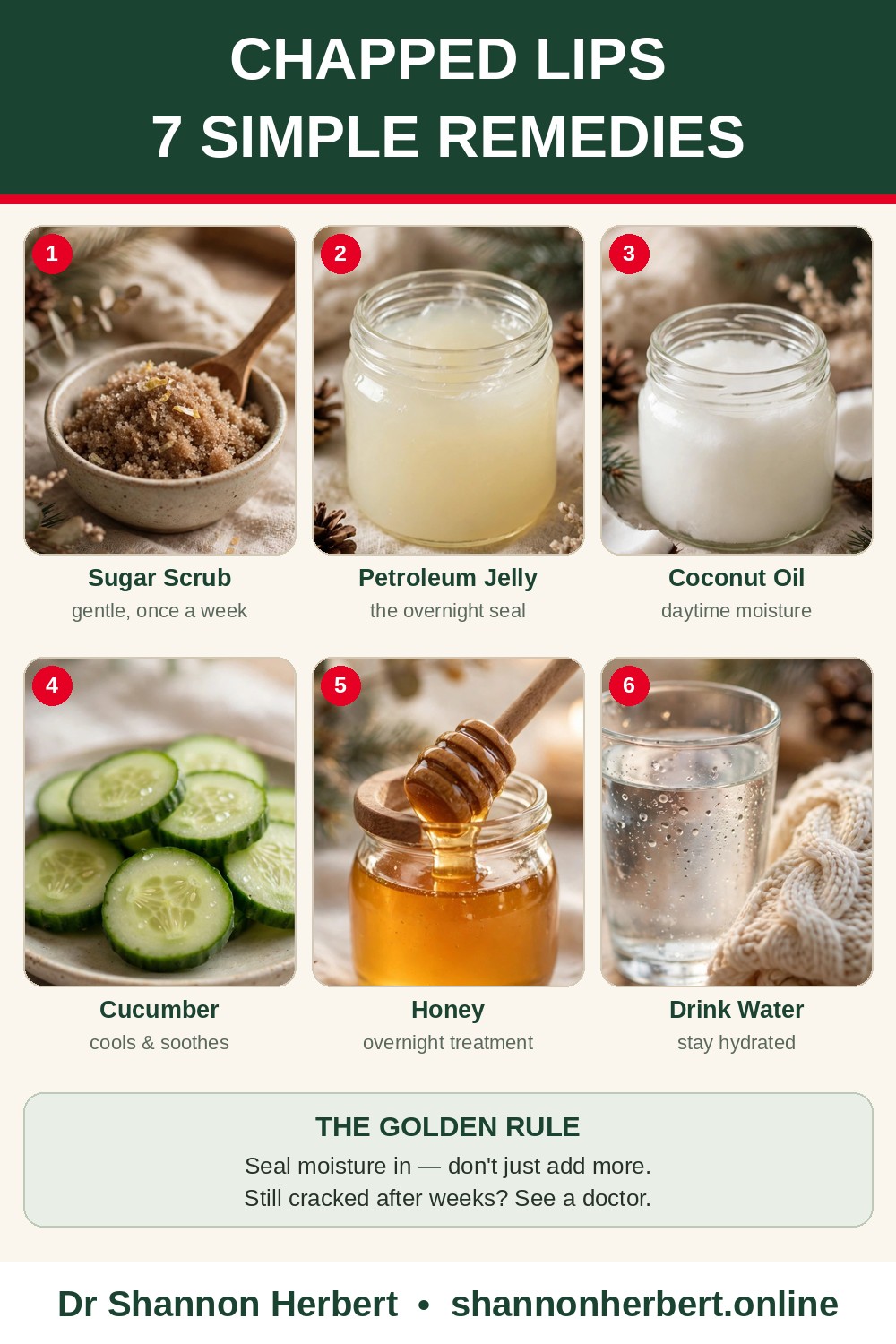
Remedy 2: Plain Petroleum Jelly — The Boring Remedy That Works Best
If you buy only one lip product in your life, make it plain petroleum jelly. It is not glamorous, it has no flavor and no tingle, and dermatologists recommend it constantly because it does the one job chapped lips need most: it seals water in and keeps wind, cold, and saliva out, for hours at a time.
How to use it:
- Apply a visible, generous layer — not a whisper. On damaged lips, more is genuinely better.
- Reapply after eating, drinking, brushing your teeth, and whenever your lips feel bare.
- Apply a thick layer before bed; this overnight application does more than all your daytime applications combined, because it sits undisturbed for hours while you sleep.
- Apply before going outside, especially in wind.
- You can also put it over a drop of water: dampen your lips with plain water first, then seal with jelly. You are trapping that water in, which is exactly the point.
Why plain matters: many scented, flavored, or “medicated-feeling” balms contain ingredients like menthol, camphor, eucalyptus, salicylic acid, or strong fragrances that feel active but irritate damaged lips and can keep them chapped in a loop. If your current balm makes your lips tingle or burn, that sensation is not healing — consider switching to plain for two weeks and comparing.
Remedy 3: Coconut Oil for Daytime Comfort
Coconut oil is lighter and more pleasant-feeling than petroleum jelly, melts on contact, and makes a good daytime option when you want something that feels less heavy. It does not seal as powerfully or as long as jelly, so think of it as the comfortable daytime layer and jelly as the heavy-duty overnight one.
How to use it:
- With a clean fingertip, smooth a thin layer of virgin coconut oil over your lips. It will melt instantly.
- Reapply often — every hour or two, and after eating or drinking — since it wears off faster than jelly.
- A tiny dedicated pot or tube just for lips keeps things hygienic; do not double-dip a finger you have used elsewhere.
Some people prefer a food-grade oil they already have — a drop of olive oil works similarly. What matters is plain, single-ingredient, and fragrance-free. Patch test first if your skin tends to react to coconut.
Another old-fashioned option worth knowing is lanolin — the natural oil from sheep’s wool, sold in pharmacies as a thick, sticky ointment. It sits between coconut oil and petroleum jelly in staying power, clings to lips for hours, and has a long track record with cracked lips and sore skin. Use a pea-sized amount, warm it between your fingers, and press it on rather than rubbing. Skip it if you have a wool allergy, and patch test first, as always.
Remedy 4: A Cool Cucumber Slice for Sore, Hot Lips
This is an old kitchen remedy for lips that feel sore, hot, and irritated rather than merely dry — the kind of discomfort you get after a windy day outdoors or when a crack is stinging.
How to do it:
- Cut a thick slice of fresh cucumber from the fridge.
- Sit back and hold it gently against your lips for 5 to 10 minutes. The coolness calms the stinging, and cucumber is mostly water, so it lightly hydrates the surface.
- Pat dry and seal immediately with petroleum jelly, so the moisture you just added stays put.
It is a small remedy, but a kind one, and it is also a good way to give yourself ten minutes of not touching, licking, or picking at your lips — which is sometimes the real treatment.
Protecting Your Lips Outdoors
Prevention beats repair, and outdoors is where winter lips take most of their damage. A few habits make a real difference:
- Balm before you go out, not after you come in. A layer of petroleum jelly applied at the door is a wind shield; applied afterward at home, it is repair work. Seal first.
- Cover your mouth in real wind. A scarf or neck gaiter pulled over your mouth on a bitter, windy day protects lips better than any product can. It also warms the air you breathe, which your throat will thank you for.
- Remember winter sun. Lips have almost no natural sun protection, and snow reflects ultraviolet light strongly — skiers and winter hikers burn their lips without noticing. If you will be outside for hours, especially in snow or at altitude, use a plain lip product with SPF 30 during the day, and switch back to plain petroleum jelly at night.
- Do not lick against the wind. Cold air makes lips feel dry instantly, and licking in wind is the fastest route to a split lip. Balm, scarf, and patience instead.
None of this requires special equipment — just putting the seal on before the weather gets its turn.
Remedy 5: Stay Hydrated from the Inside
Dehydration shows up on lips early, because lips cannot compensate with their own oil. In winter, thirst signals get lazy, heated rooms dry you out overnight, and many people simply drink far less than they did in July.
Simple habits that help:
- Keep a glass or bottle of water where you spend your time, and finish it more than once a day.
- Drink a glass of water with every meal, plus one before bed if overnight dryness is your pattern.
- Warm drinks count fully toward hydration. Herbal tea, warm water with lemon, and brothy soups all help, and they are easier to enjoy in winter. A soothing warm drink also pairs well with the throat remedies in our fermented pineapple honey remedy guide during cold season.
- Watch alcohol and very salty foods in the evening; both leave you drier by morning.
Honesty matters here: if your fluid intake is already decent, drinking heroic amounts of extra water will not fix lips that are being stripped by wind and licking. Hydration is the foundation; the seal on top (Remedy 2) is the cure. You need both, in that order.