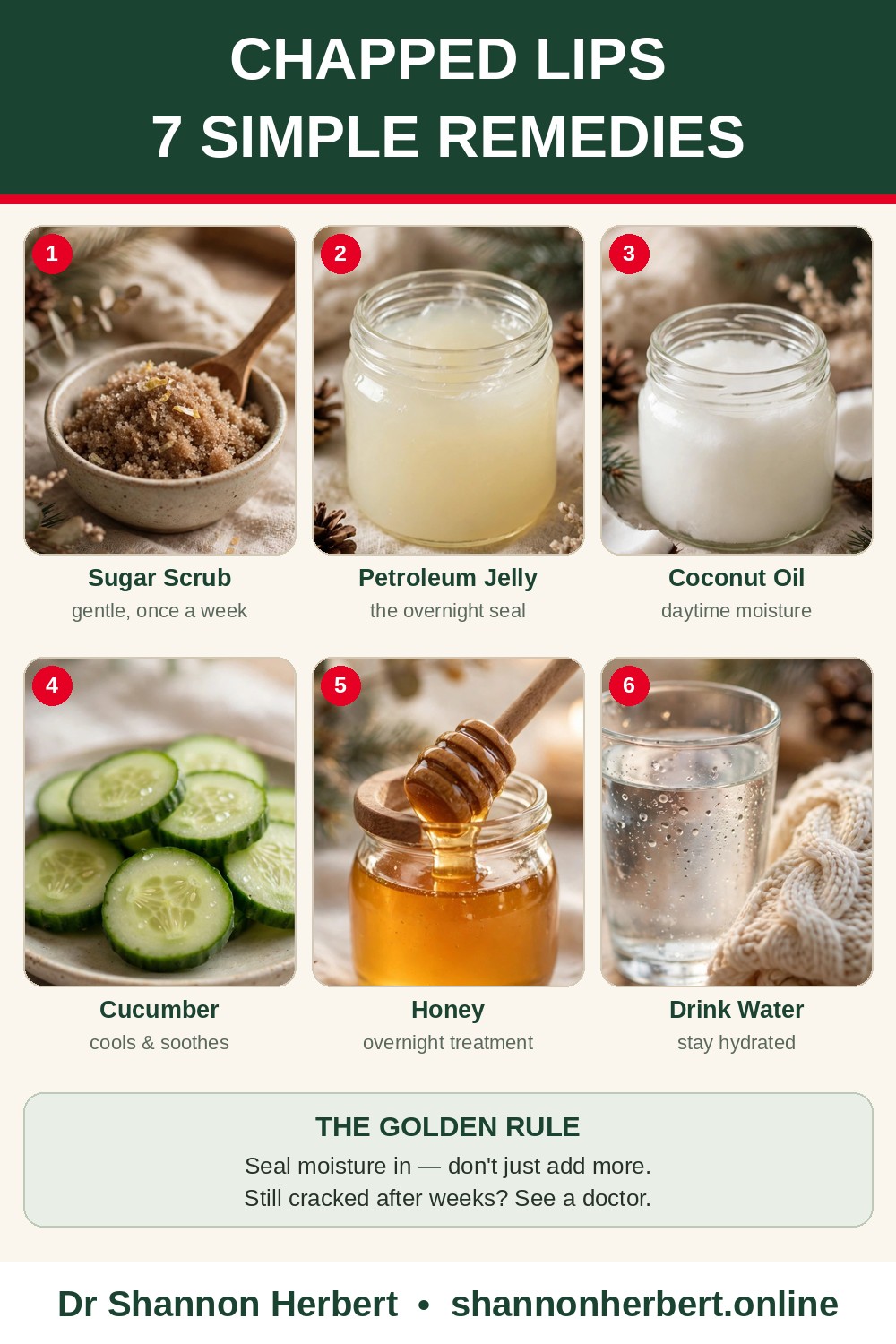
Chapped Lips in Winter: 7 Simple Home Remedies
Remedy 6: Stop Licking Your Lips — and Break the Other Habits That Undo You
This remedy is free, instant, and for many people the single biggest difference-maker. Licking feels like relief for about ten seconds. Then the saliva evaporates, your lips are drier than before, the enzymes in saliva irritate the exposed skin, and the urge to lick again gets stronger. It is a perfect little trap.
How to break the loop:
- Catch the trigger. Most licking happens unconsciously — while reading, driving, working. Every time you notice it, apply balm instead. Keep balm in every pocket, bag, and desk drawer so the substitute is always closer than the habit.
- Balm before the risky moments: before going outside, before a long meeting, before bed.
- Do not pick or peel. If a flake is hanging, soften it with a warm damp cloth and jelly; it will let go on its own when the skin beneath is ready.
- Breathe through your nose when you can. If winter congestion forces mouth breathing, treat the congestion — fluids, steam, and patience — and put an extra-thick layer of jelly on before sleep.
- Check your toothpaste and balms. If your lips have been chapped for months despite good care, a strongly flavored toothpaste or a fragranced balm is a common hidden culprit. Switch both to plain versions for a few weeks and see.
Remedy 7: The Overnight Treatment
Night is when lips heal. You are not eating, talking, licking, or facing the wind for six to eight hours — if you give your lips the right setup, you will see a visible difference by morning.
The routine:
- In the evening, gently clean your lips with lukewarm water. If they are flaky but not cracked, this is the moment for the once-a-week scrub (Remedy 1); otherwise skip it.
- While lips are still slightly damp, smooth on a thin layer of coconut oil or plain cream.
- Seal it with a thick layer of petroleum jelly — visibly thick, more than feels elegant.
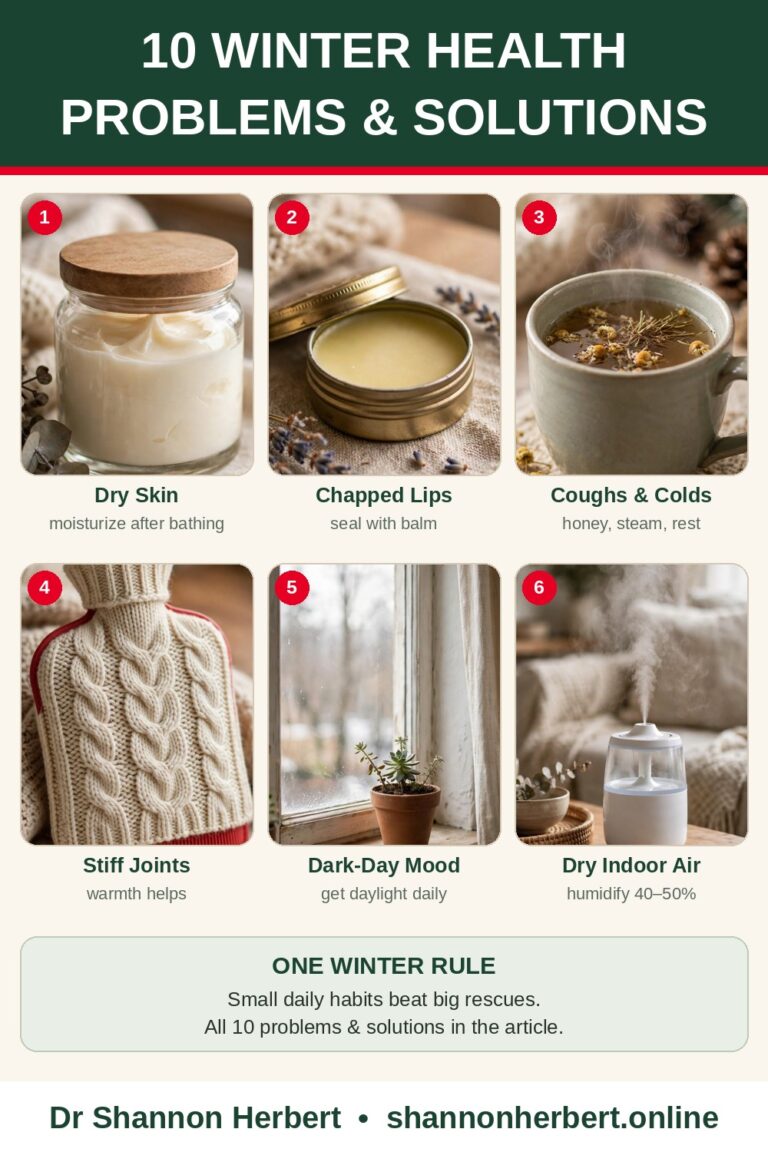
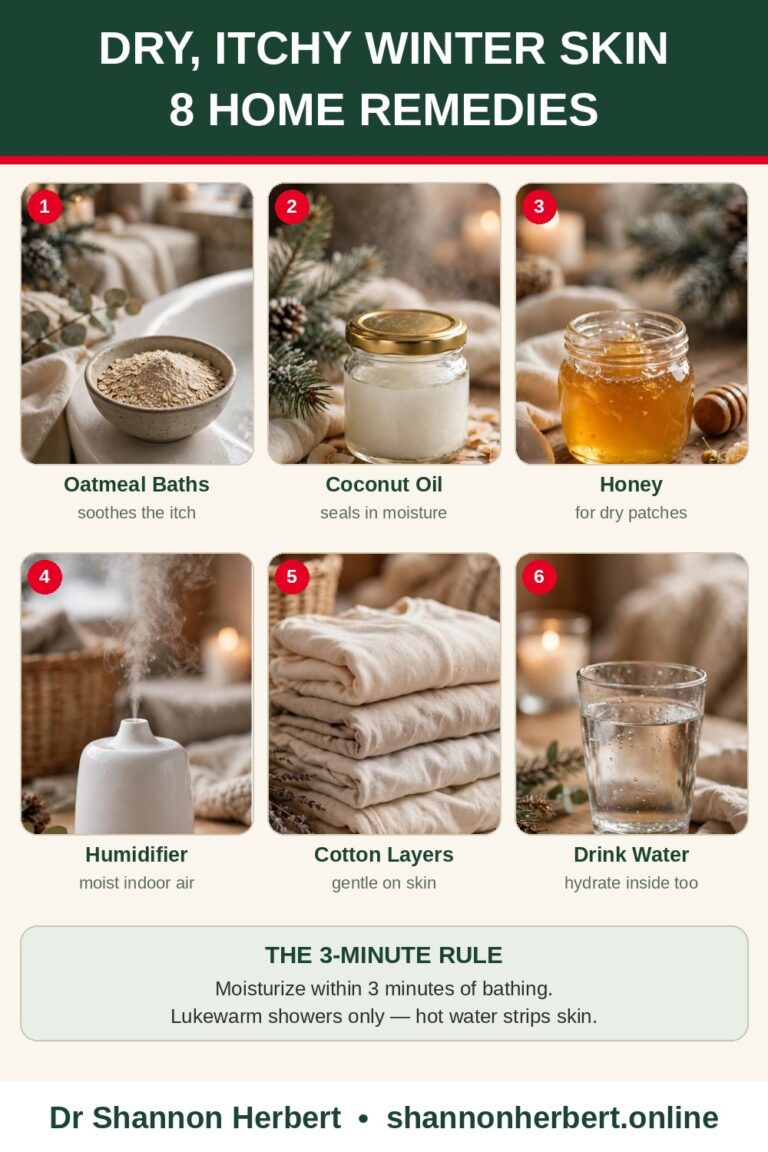
- If your bedroom air is very dry, run a humidifier; overnight heated air undoes a lot of good work. (Our winter dry skin remedies guide covers humidifier use and cleaning in detail.)
- Sleep, and in the morning just wipe away any excess. Do not scrub the softened skin off.
Three or four nights of this routine rescue most winter lips. If you wake with the jelly completely gone, you are probably mouth-breathing or rubbing your face in the pillow — apply even more, and it still does hours of good before it wears away.
When Chapped Lips Need a Doctor
Most chapped lips are a nuisance, not a medical problem. But see a doctor, dermatologist, or dentist if:
- Your lips stay cracked, split, or bleeding for more than two to three weeks despite consistent, gentle care.
- You see sores, blisters, crusting, or swelling, especially recurring sores at the corners of the mouth — cracked corners can be a fungal or bacterial infection (angular cheilitis) or a sign of a vitamin deficiency, and it needs specific treatment, not more balm.
- There is pain, oozing, yellow crusts, or spreading redness — signs of infection.
- A single spot, patch, or sore on the lip does not heal over several weeks. Any non-healing lip lesion deserves an in-person look.
- Chapping comes with other symptoms — persistent rash around the mouth, swelling of the lips or tongue, or trouble breathing (that last one is an emergency, not a wait-and-see).
- A child has severely cracked lips, a spreading rash, or will not drink because their mouth hurts.
Cold sores, allergies to lip products, sun damage, and a handful of medical conditions can all wear the disguise of “just chapped lips.” If the simple remedies above have honestly been given two to three weeks and nothing is improving, that is useful information — bring it to a professional.
Frequently Asked Questions
Why do my lips get worse even though I use lip balm all day?
Often the balm itself is the problem. Tingling, flavored, or medicated-feeling balms can irritate damaged lips and create a cycle: irritation, more balm, more irritation. Switch to plain petroleum jelly for two weeks, applied thickly and especially at night, and compare honestly.
Is licking my lips really that bad?
Yes. Saliva evaporates and leaves lips drier, and its enzymes irritate exposed lip skin. It is the most common reason home care “doesn’t work.” Replacing the lick with balm, every time, is the turning point for most people.
How often should I exfoliate my lips?
Once a week at most, gently, and only when lips are flaky but not cracked or bleeding. More than that damages the thin lip skin and slows healing.
Can I use the same petroleum jelly I use for my skin?
Yes — plain petroleum jelly is plain petroleum jelly. Use clean fingers or a cotton swab to apply it to lips, and keep a separate small pot if you prefer.
Why are my lips always worst in the morning?
Overnight you spend hours in heated, dry bedroom air, often mouth-breathing because of a stuffy winter nose, with no balm reapplication. The thick overnight layer of jelly, plus a humidifier if the air is very dry, fixes most morning misery within days.
The Whole Cure, on an Index Card
Dampen, seal, repeat. Plain petroleum jelly, thick at night. Gentle scrub once a week if flaky. No licking, no picking, no tingling balms. Water on your desk, balm in your pocket. Winter lips are not a character flaw or a product deficiency — they are thin skin in dry air, and they heal quickly once you stop stripping them and start sealing them.
This article is for general information only and is not medical advice.