Chapped Lips in Winter: 7 Simple Home Remedies
Of all the small miseries of winter, chapped lips might be the most universal. The wind picks up, the heating comes on, and within a week your lips feel tight, rough, and flaky. Then they crack. Then — if you are like most people — you lick them, pick at them, and apply a strongly flavored balm that tingles, and somehow they end up worse than when you started.
Chapped lips are almost never a sign of anything serious, and they respond beautifully to simple care. But lips are not like the skin on the rest of your body, and understanding that difference is what makes the remedies below work when random balms have not. This guide explains why lips suffer so much in winter, seven gentle remedies that actually help, and the signs that mean it is time to have a doctor or dentist take a look.
If winter is getting to more than your lips — tight skin, dry air, scratchy throats — you will find the bigger picture in our roundup of winter health problems and simple home solutions, and targeted help for the skin side of things in our guide to winter dry skin remedies.
Why Lips Chap So Easily in Winter
Your lips are built differently from the rest of your skin, in three ways that all work against you in winter.
First, lip skin is much thinner, with fewer protective layers, so it loses water far faster. Second — and this is the big one — your lips have no oil glands of their own. The skin on your face and body can re-grease itself after washing or cold exposure; your lips cannot produce a drop of their own oil. Everything that protects them has to be put there by you. Third, lips have no melanin to speak of and sit fully exposed to wind, cold, and sun all day.
Now add winter itself. Cold outdoor air carries almost no moisture and pulls water from the thin lip surface constantly. Wind strips away what little protection is there. Indoor heating dries the air further, so your lips lose moisture indoors too, all night long if your bedroom is heated. Mouth breathing — very common when winter colds block your nose — runs a constant stream of air over your lips as you sleep.
And then there is the habit nearly everyone has: licking. It feels like moisture, but saliva evaporates quickly, taking more water with it, and the digestive enzymes in saliva irritate bare lip skin. Each lick makes the next hour drier. Breaking that loop is half the cure.
A Quick Patch-Test Note
Lips are sensitive, and chapped lips are already damaged skin. Before trying any scrub or new oil, test a tiny amount at the corner of your mouth or on your inner wrist and wait a few hours. If it burns, stings sharply, or makes things redder, wash it off and skip it. Gentle is the entire strategy here — anything that hurts is not helping.
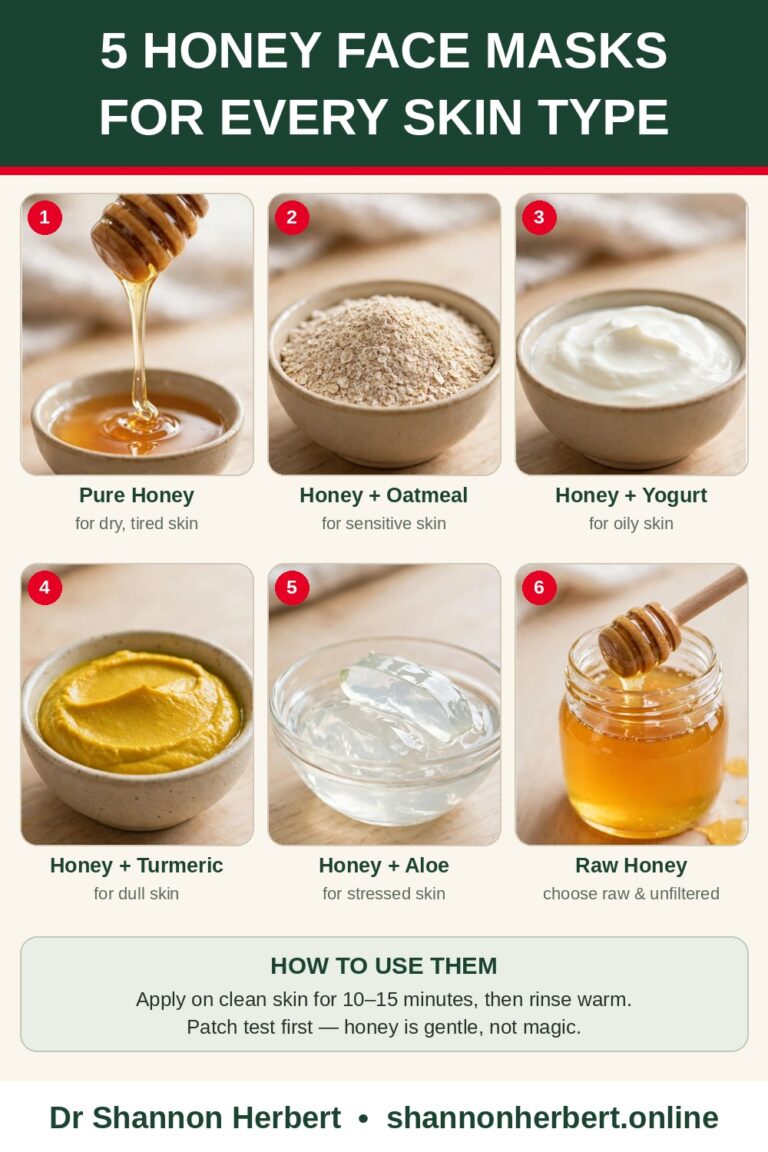
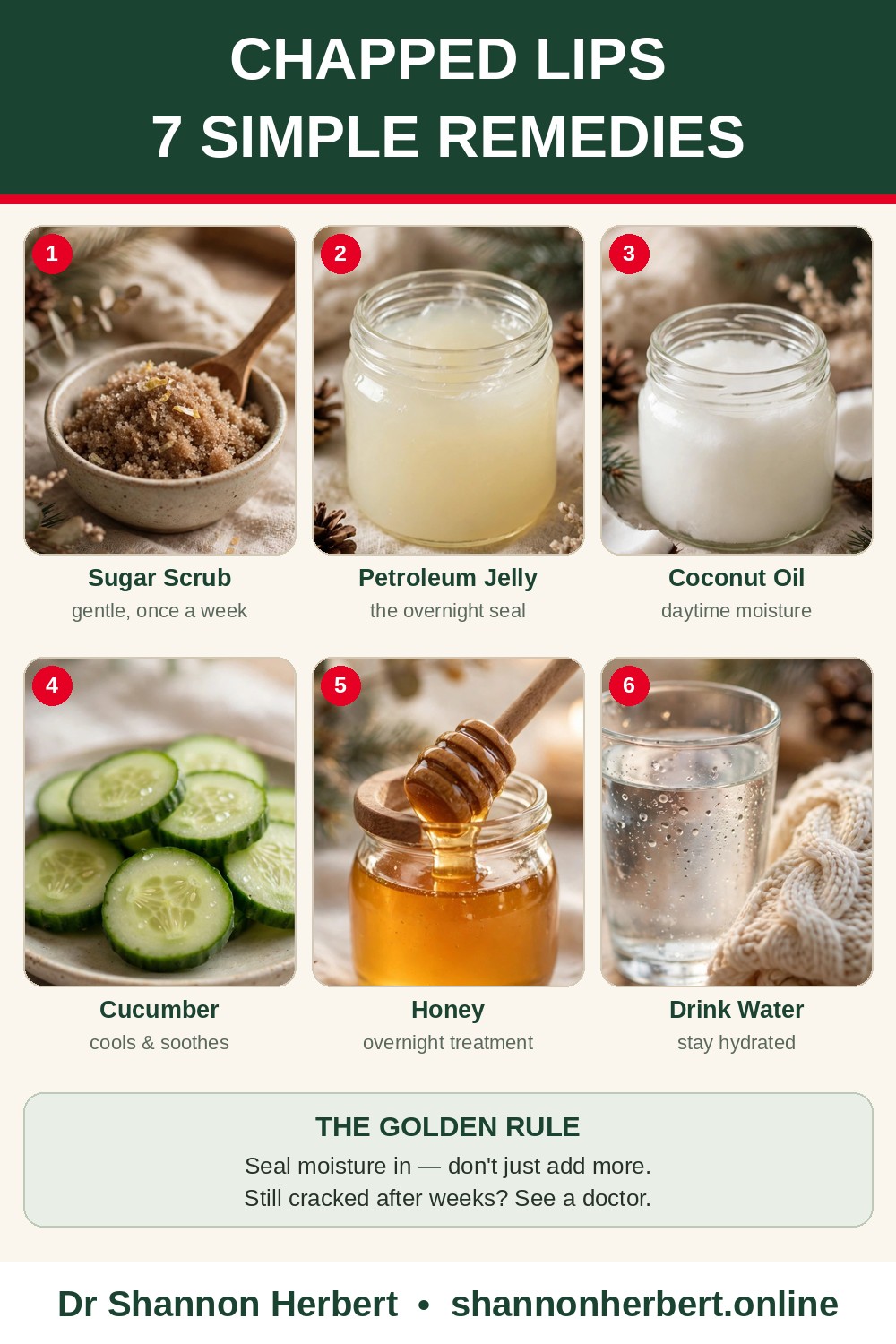
Remedy 1: A Gentle Sugar and Honey Scrub (Once a Week, No More)
Flaky lips tempt everyone to scrub hard or peel the flakes off. Both cause tiny tears and bleeding. But a very gentle scrub, done correctly and rarely, removes loose dead skin so that balms can actually reach the living skin underneath.
You will need:
- 1 teaspoon of fine white or soft brown sugar (fine grains only — coarse sugar is too rough)
- 1 teaspoon of raw honey
- A soft, damp cloth
How to do it:
- Mix the sugar and honey into a soft paste. Honey cushions the grains and adds moisture while you work.
- With a clean fingertip, apply a small amount to your lips and rub in tiny, slow circles for 20 to 30 seconds — no pressing, no scouring. It should feel like almost nothing.
- Leave the honey on for another minute or two if you like; it is doing good there.
- Wipe away gently with the warm, damp cloth. Do not rinse with hot water.
- Immediately apply plain petroleum jelly or another plain balm (Remedy 2). Exfoliated lips without a seal over them dry out faster than before.
Do this once a week at most, and skip it entirely if your lips are cracked, split, or bleeding — scrubs are for flaky-but-intact lips only. And never, ever peel or bite off flakes with your teeth or fingers; a torn lip takes days longer to heal than a flaky one would have. Note the standing rule for honey in the home: it must never be fed to babies under 12 months. This scrub is an adult, external treatment only.