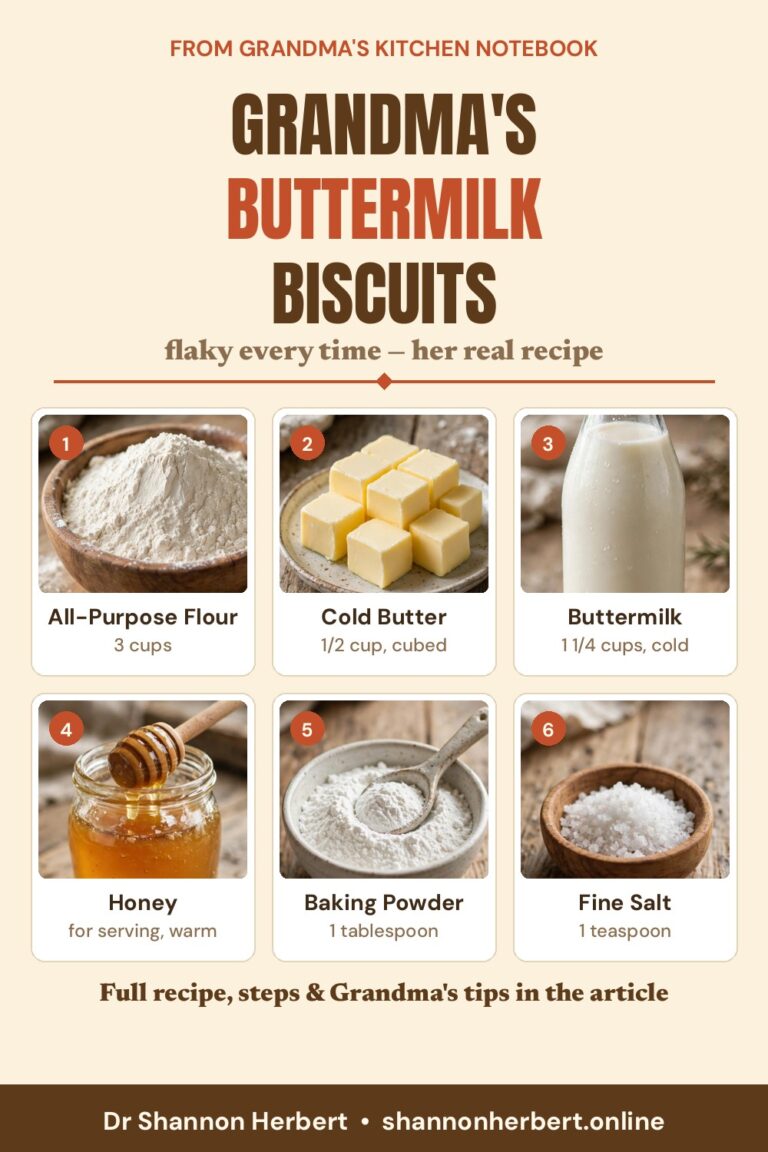
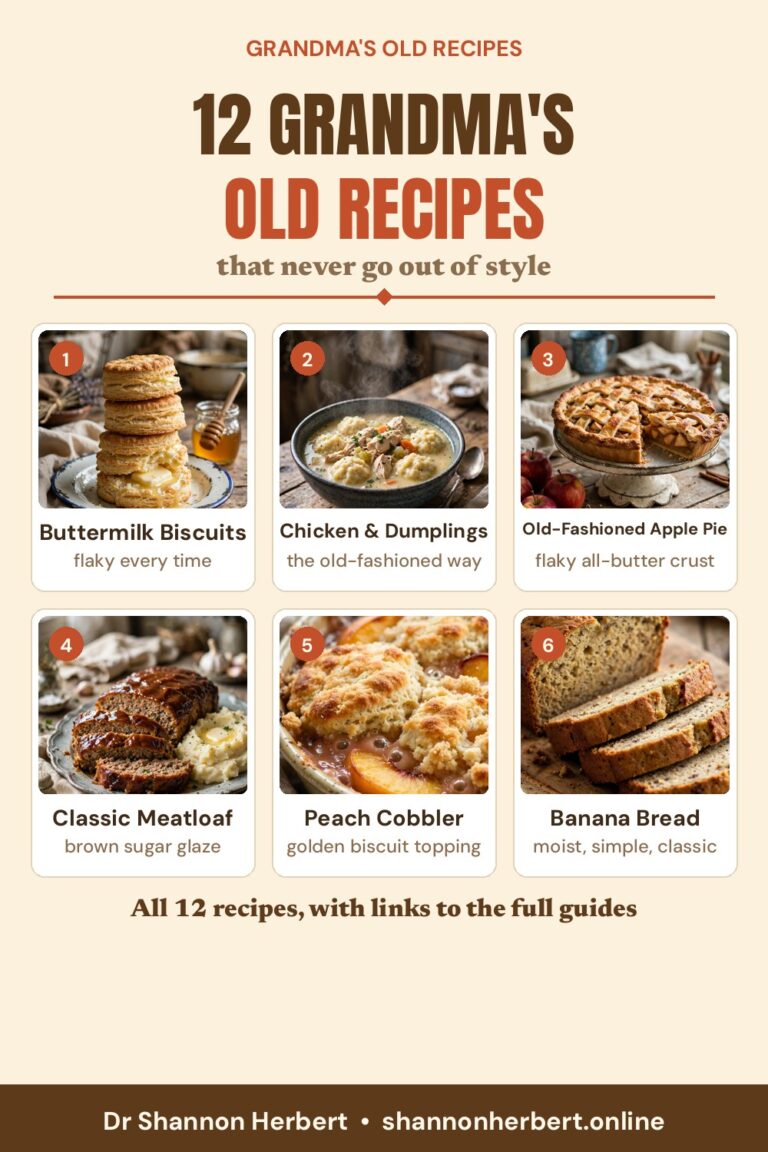
Grandma’s Classic Meatloaf with Brown Sugar Glaze
In my grandmother’s house, meatloaf was not a fallback dinner. It was Tuesday. It came out of the oven in its battered loaf pan with the glaze shining like polished wood, and it was sliced thick, never thin, because Grandma believed a thin slice of meatloaf was a sign of a worried cook. There were always mashed potatoes, always something green, and always the quiet understanding that tomorrow’s lunch — a cold meatloaf sandwich on white bread with a smear of ketchup — might be even better than tonight’s supper.
Meatloaf has a reputation as the plain cousin of the dinner table, and that reputation comes from dry, dense, gray loaves that nobody remembers fondly. Grandma’s was none of those things. It was moist, tender, and deeply savory, with soft edges, a gentle sweetness from onion, and a tangy brown sugar glaze that caramelized at the corners. The difference was not a secret ingredient. It was a handful of small techniques, and every one of them is in this recipe.
This is comfort food the old way: economical, generous, and built to feed a family without fuss. If your past meatloaves have come out tough or crumbly, give this one a fair chance. Mix it gently, glaze it twice, and let it rest before slicing, and you will understand why this recipe never left Grandma’s rotation.
It is also a kind recipe for the cook. The ingredients are the sort that wait patiently in any pantry and refrigerator, the preparation takes about fifteen unhurried minutes, and the oven does the rest of the work while you get on with the evening. Grandma fed a farmhouse full of people with food like this, after full days of work, and she was not interested in recipes that needed watching. Neither are we.
Why This Recipe Works
A tender meatloaf depends on three things: a panade, a light hand, and a thermometer. The panade is the mixture of breadcrumbs and milk that gets stirred into the meat before anything else. As the loaf bakes, that soaked crumb holds onto moisture and keeps the meat proteins from squeezing themselves into a tight, dry brick. It is the same trick behind tender meatballs, and it is the single biggest difference between a loaf that slices like cake and one that bounces.
The light hand matters just as much. Ground meat that is overmixed turns dense and springy, more like sausage than supper. Mixing just until the ingredients are combined — and stopping the moment they are — keeps the texture soft and sliceable.
Finally, the thermometer takes the guessing out of doneness. Ground beef must be cooked to an internal temperature of 160°F to be safe, and pulling the loaf at exactly that point, rather than baking it “a little extra to be sure,” is what keeps it juicy. The glaze, brushed on in two layers, does the rest: the first layer bakes into the surface, and the second stays glossy and bright on top.
The resting time at the end is part of the recipe, not a courtesy. A meatloaf is a network of meat, crumb, and juice that needs a few quiet minutes to set. Slice it straight from the oven and the juices run onto the board, the slices crumble, and the loaf seems drier than it really is. Give it ten minutes under a loose tent of foil and it slices like a cake. Nearly every meatloaf disappointment traces back to one of these four things — no panade, hard mixing, overbaking, or no rest — and every one of them is easy to fix.
Ingredients
For the meatloaf:
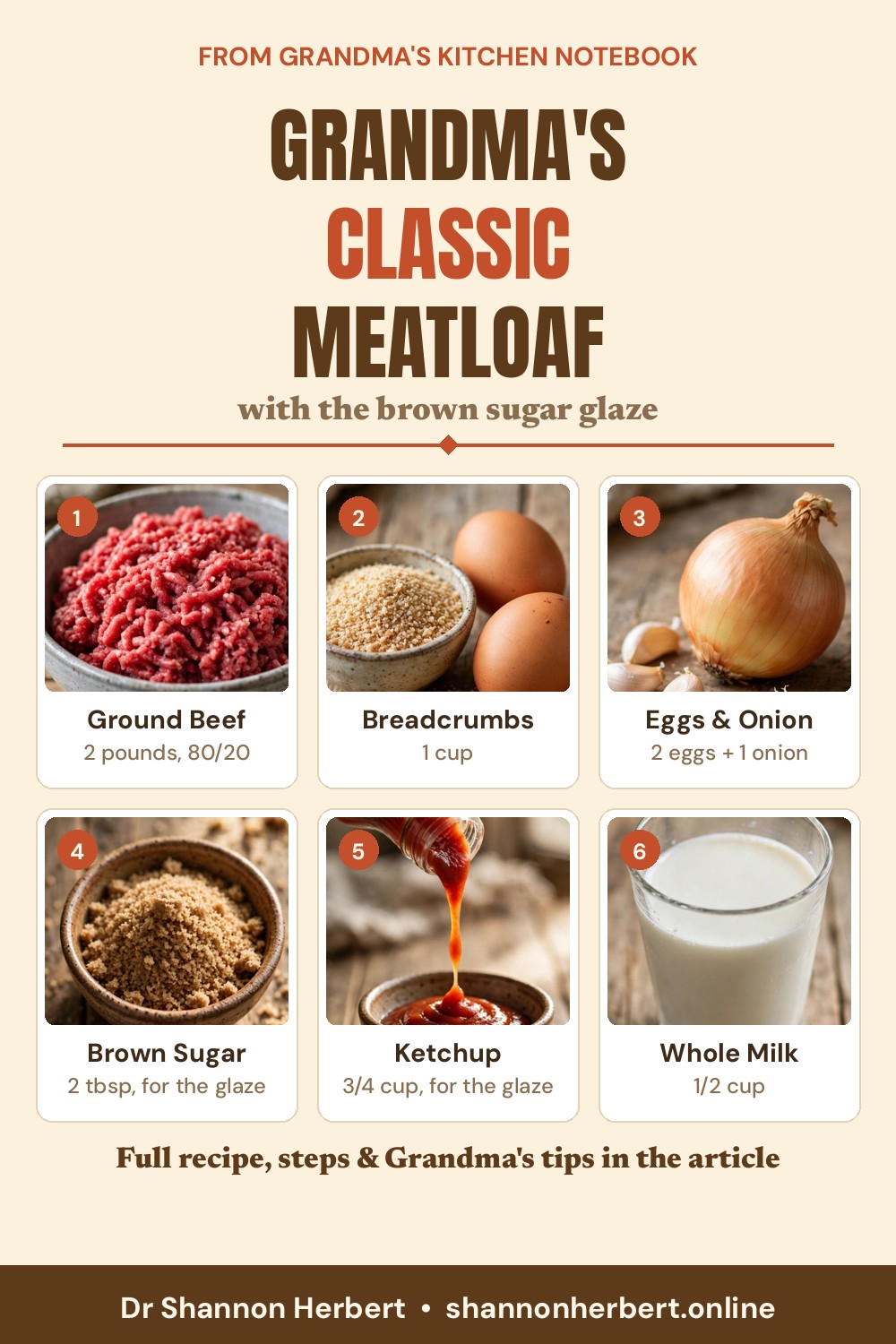
- 2 pounds ground beef (80/20 is ideal for flavor and moisture)
- 1 cup plain breadcrumbs (or finely crushed saltine crackers, Grandma’s original choice)
- 1/2 cup whole milk
- 1 medium yellow onion, finely diced (about 1 cup)
- 2 cloves garlic, minced
- 2 large eggs, lightly beaten
- 2 tablespoons ketchup
- 1 tablespoon Worcestershire sauce
- 1 teaspoon fine salt
- 1/2 teaspoon black pepper
- 1 teaspoon dried parsley (or 2 tablespoons fresh, finely chopped)
- 1/2 teaspoon paprika (optional, for color and warmth)
For the brown sugar glaze:
- 3/4 cup ketchup
- 2 tablespoons packed brown sugar
- 1 teaspoon yellow mustard
- 1 teaspoon apple cider vinegar
You will need a standard 9-by-5-inch loaf pan. If you do not have one, the method below includes Grandma’s free-form alternative on a rimmed baking sheet.
Method
1. Heat the oven and prepare the pan. Set the oven to 350°F. Lightly grease the loaf pan, or line a rimmed baking sheet with foil if you are shaping the loaf free-form. Put everything you need within reach; once your hands are in the meat, you will not want to go opening drawers.
2. Make the panade. In a large mixing bowl, stir the breadcrumbs and milk together and let the mixture sit for about 5 minutes, until the crumbs have absorbed the milk and look like a soft paste. This short wait is doing real work — dry crumbs added straight to meat will steal moisture from the loaf instead of holding it in.