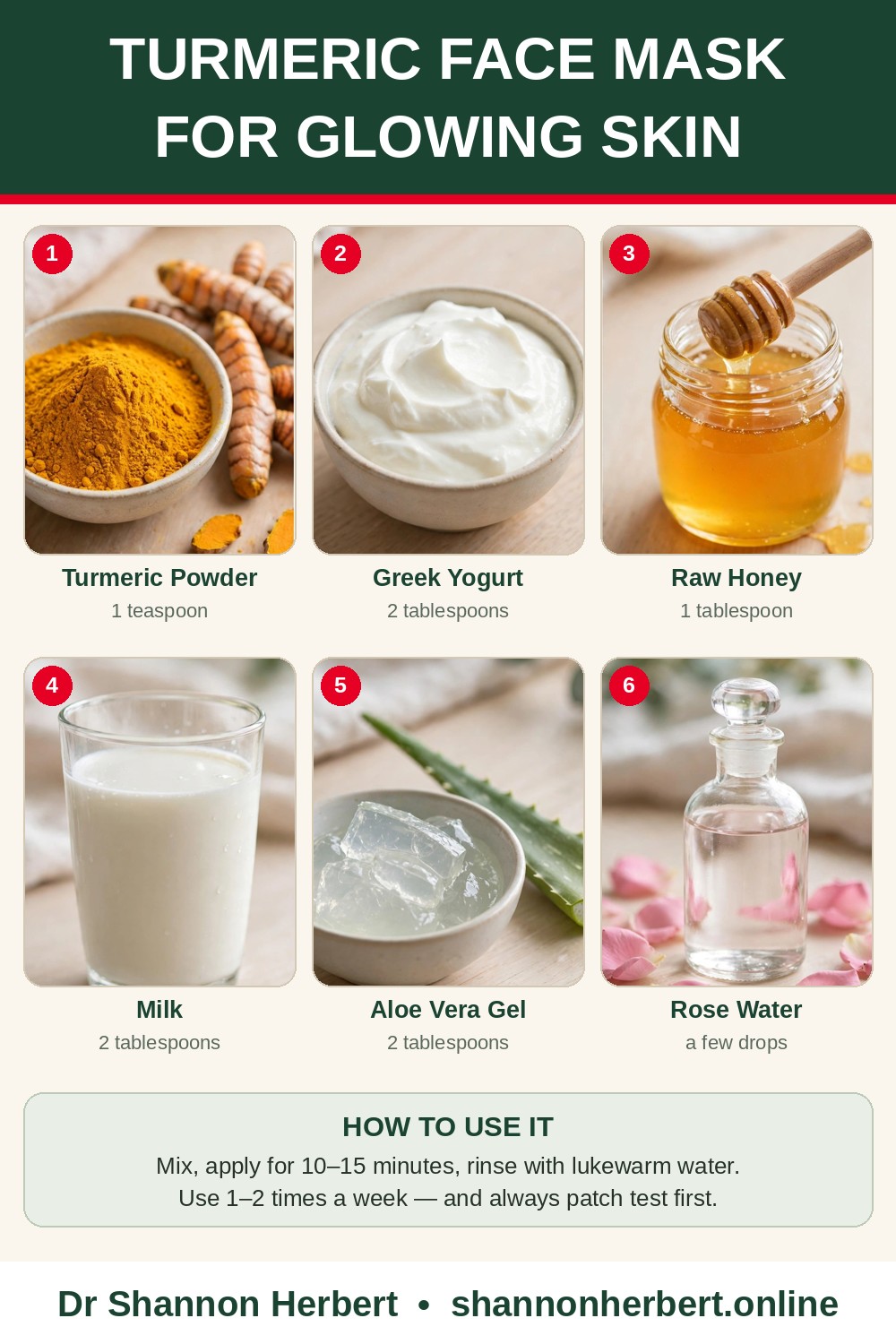
Turmeric Face Mask for Glowing Skin
How Often Should You Use It?
For most people, once or twice a week is plenty. A turmeric mask is a supporting player in your routine, not the whole routine. Daily use is unnecessary and increases the chance of irritation and stubborn staining on towels and pillowcases.
Think of it the way you would think about any steady health habit: small, regular, gentle steps tend to work better than one big effort. The same idea runs through our simple nutrition tips — consistency beats intensity, whether you are caring for your skin or your plate.
Give any new remedy at least three to four weeks of regular use before you judge it. Skin renews itself slowly, and honest remedies work at that same slow pace. Take a photo in the same light on day one and again after a month if you want a fair comparison.
One more timing tip: make mask time evening time. Your skin gets hours of rest afterwards, there is no rush to apply makeup over freshly masked skin, and if a faint tint lingers, it has all night to fade. Many people fold the ritual into an existing evening habit — mask on while the bath runs, rinse, moisturize, done. Habits that attach to other habits are the ones that survive busy weeks, which is why this small scheduling trick quietly matters more than any single ingredient.
Simple Variations to Try
Once you are comfortable with the basic mask, you can adjust it to your skin’s mood:
For dry skin: Mix turmeric with honey and a teaspoon of milk cream or a few drops of almond oil. This version feels richer and rinses off leaving skin soft.
For oily skin: Use yogurt and chickpea flour as the base. The flour helps absorb shine, and the mask dries to a firmer finish that many oily-skinned people prefer.
For dull, tired skin: Add a teaspoon of finely ground oatmeal. Oatmeal is famously soothing and gives the mask a very gentle polishing feel as you rinse.
For sensitive skin: Use aloe vera gel as the base and cut the turmeric to half a teaspoon. Keep the time to 10 minutes.
If masks are your favorite kind of remedy, our roundup of natural skin remedies has twelve more kitchen-based ideas, and the companion guide to honey face masks shows how one simple ingredient can be adapted for every skin type.
Choosing and Storing Your Turmeric
Not all turmeric powders are equal, and the one you choose matters for your skin. Look for plain ground turmeric from the spice aisle — the same kind you would cook with. The ingredient list should say one word: turmeric. Avoid bright orange-yellow blends sold cheaply in unmarked packaging, and be wary of “beauty turmeric” products that do not list their ingredients clearly. Poorly regulated powders have occasionally been found to contain added colorants, and some low-quality turmeric from unreliable sources has been adulterated with lead chromate to boost its color — the opposite of what you want anywhere near your face.
Fresh turmeric root is another option. It looks like small ginger, stains even more enthusiastically, and can be grated finely and mixed into your base. Most beginners find powder easier: it measures cleanly, blends smoothly, and keeps for months. Store your powder in a sealed jar away from sunlight and steam, and replace it if it loses its warm, earthy smell. If the spice is fresh enough to flavor a curry, it is fresh enough for a mask.
One more practical tip: keep a separate small spoon and bowl for your mask-making if you can. Turmeric will tint wooden spoons and plastic containers permanently, and designating “mask tools” saves your good kitchenware from turning golden.
Common Mistakes to Avoid
A few small habits make the difference between a pleasant ritual and a frustrating one:
Using too much turmeric. More spice does not mean more glow. It means a deeper tint, a stronger smell, and a longer rinse. A teaspoon is the ceiling for most faces; half a teaspoon is plenty for beginners and fair skin.
Leaving the mask on too long. Thirty or forty minutes will not double the benefit. It will dry the mask hard, make removal a scrubbing session, and increase staining. Ten to fifteen minutes is the sweet spot.
Scrubbing the mask off. Rubbing hard to remove the color irritates skin and defeats the purpose of a gentle remedy. Soak, soften, and rinse patiently instead, and let a gentle cleanser or a milk-soaked cotton pad lift the last of the tint.
Skipping the moisturizer afterwards. A mask is a middle step, not the last one. Skin that has just been cleansed and masked drinks in moisturizer best in the few minutes right after rinsing.
Expecting a one-time transformation. A single mask can leave skin feeling fresh, but lasting evenness and glow come from weeks of steady care, sun protection, sleep, and hydration. Treat the mask as one kind habit among several, the same way the recipes in our natural skin remedies roundup work best as a small, regular routine rather than an occasional rescue.