Honey and Garlic Tonic: The Simple Cold-Season Recipe Everyone Swears By
When the weather turns cold, one humble jar shows up in kitchens everywhere: honey and garlic tonic. It is one of the oldest home recipes in the world — just two pantry ingredients, a little patience, and you have a spoonable tonic that generations have reached for during cough and cold season.
This is not a medicine and it does not replace one. Think of it as a traditional kitchen remedy: soothing honey, pungent garlic, and a flavor that mellows beautifully over time. People do not keep making it because it is trendy. They keep making it because it is simple, inexpensive, comforting, and surprisingly pleasant once the garlic softens in the honey and loses its raw bite.
If this is your first time, this guide walks you through everything: choosing ingredients, making the tonic step by step, storing it safely, how people use it day to day, what can go wrong, and who should skip it altogether.
Why People Love This Tonic
- It uses only 2 main ingredients you probably already own.
- Honey coats the throat and makes the sharp garlic taste gentle.
- Garlic has been valued in traditional cooking and folk remedies for centuries.
- One small jar lasts for weeks in the fridge.
- It needs no cooking, no special equipment, and only a few minutes of hands-on work.
- The flavor keeps improving, so a jar made in early fall can carry you through the chilliest weeks.
There is also something reassuring about making it yourself. You see exactly what goes in, you control the quality of the honey and the freshness of the garlic, and there are no added colors, preservatives, or long ingredient lists to decode.
A Little History Behind Honey and Garlic
Honey was treasured in ancient Egypt, Greece, and China, not only as a sweetener but as a soothing food for sore throats and coughs. In many cultures, a spoonful of honey in warm water or tea remains the first comfort people reach for when their throat feels scratchy.
Garlic has an equally long story. It was prized in traditional Chinese and Ayurvedic practices and in European folk traditions, valued by cooks for flavor and by households as part of the winter pantry. Modern research has looked at garlic’s natural sulfur compounds — especially allicin, which forms when a clove is crushed — with interest, but that research does not turn a kitchen tonic into a cure. The honest, traditional view is simpler: garlic is a pungent, warming food with a long history of everyday use, and honey makes it far easier to take by the spoonful. Garlic brings strength and character; honey brings smoothness, sweetness, and that coating quality people love for a dry, tickly throat.
How the Two Ingredients Work Together
Raw garlic, eaten straight, is intense. It can burn the tongue, upset an empty stomach, and leave a strong smell that lingers. Resting garlic in honey changes all of that.
Over days and weeks, the honey draws moisture out of the cloves. The honey becomes thinner and more syrupy, while the cloves become softer, milder, and almost candied. What is left is a sweet-savory spoonful that is much easier to take, stir into a drink, or spread on toast. This slow mellowing is sometimes loosely called fermentation, and you may notice tiny bubbles in the first few days. That is normal, which is why the daily lid-loosening step matters.
None of this makes the tonic a treatment for an infection or illness. It is a comforting food tradition — something soothing to have on hand alongside rest, fluids, warm meals, and proper medical care when you need it.
What You Need
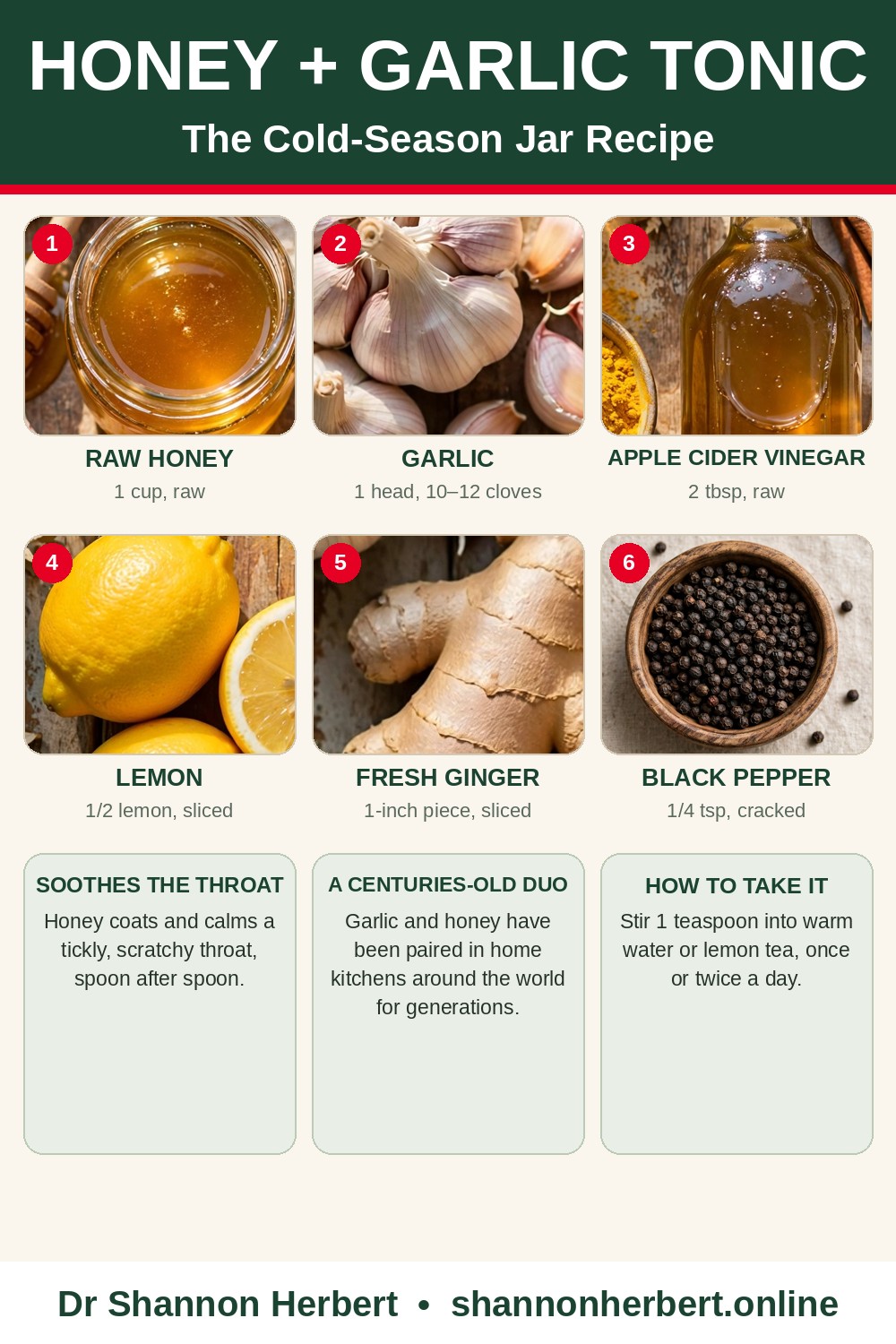
- 1 whole head of garlic (about 10–12 cloves)
- 1 cup (340 g) raw honey
- A clean glass jar with a lid
- Optional: a pinch of cinnamon, a few black peppercorns, or a strip of lemon zest — the same additions used in many viral homemade tonic recipes
That short list is the whole recipe, but small choices here make a real difference to flavor, texture, and how well the jar keeps.
Choosing Your Garlic
Look for a firm, heavy head of garlic with tight, papery skin. The cloves should feel hard when you squeeze them gently. Avoid heads with soft spots, dark patches, green sprouts that have grown long, or a musty smell. Fresh garlic will give you the cleanest flavor and the most satisfying texture after it softens.
Ordinary white garlic from any grocery store works fine — freshness matters more than variety. If your cloves are very small, use a head and a half; if they are large, one head may be plenty. You want the honey to cover the garlic completely, with a little room at the top of the jar.
Choosing Your Honey
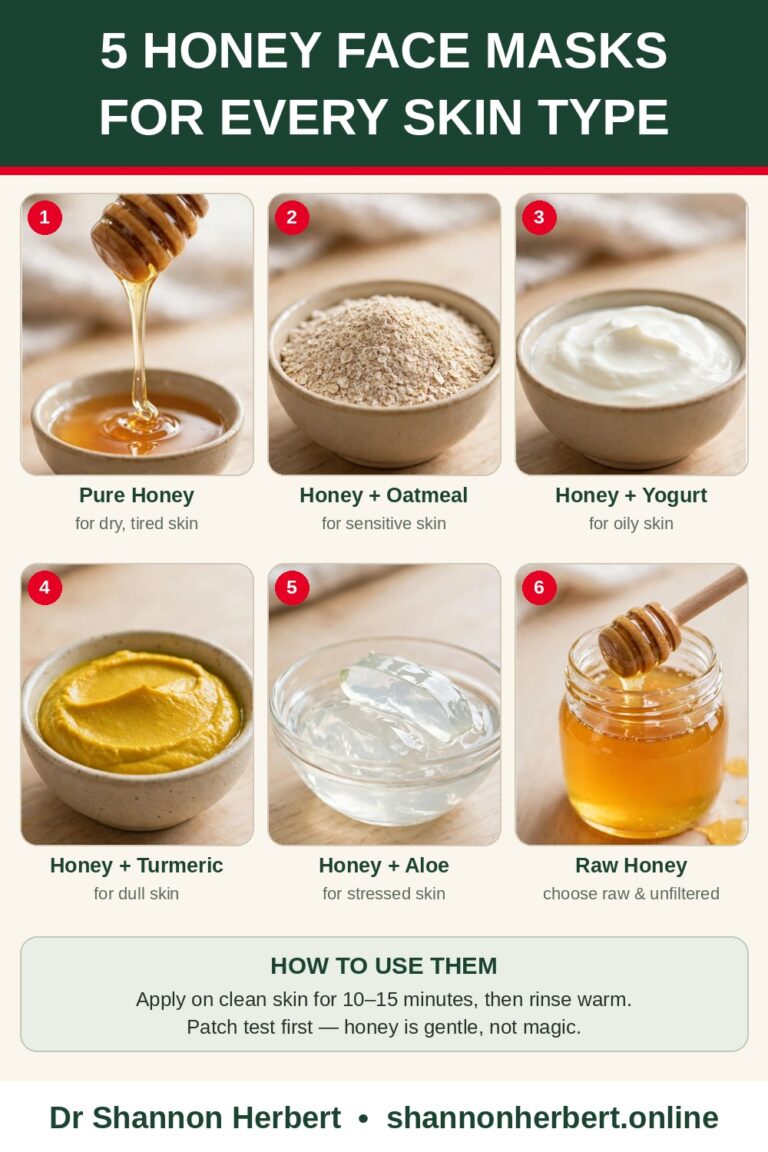
Raw honey is the traditional choice. It has not been heated heavily, so it keeps its natural flavor and thick, coating texture. It may look cloudy or crystallize over time — both are normal and harmless.
Plain, good-quality store honey will still make a tasty tonic if raw honey is unavailable. Wildflower honey gives a classic, rounded sweetness; clover honey is lighter and more delicate; orange blossom adds a gentle floral note that pairs well with lemon zest. Buckwheat honey is dark and strong — some love it in winter, others find it overpowering with garlic. For your first jar, mild wildflower or clover is the safest bet. Avoid blends with added syrups, and check the label so you know you are buying actual honey.
Choosing Your Jar and Equipment
A wide-mouth glass jar is easiest, because you can fit the cloves in, pour without a mess, and fish out a clove later with a clean spoon. A 12- to 16-ounce jar is ideal. Wash the jar and lid in hot, soapy water, rinse well, and dry completely — extra water can thin the honey and shorten how well the mixture keeps. Add a label with the date you made it; two weeks later, you will be glad you did.