Winter Coughs and Colds: Soothing Home Remedies
The first frosty morning arrives, the heating clicks on, the windows stay shut — and within a week or two, the whole household seems to be sniffling, coughing, and reaching for the tissues. If that sounds familiar, you are not imagining it. Winter really is cough and cold season across the United States and Europe, and almost everyone catches at least one cold between November and March.
Here is the reassuring part first: the ordinary winter cold is caused by viruses, and in most healthy adults it clears up on its own within about seven to ten days. There is no home remedy — and no medicine — that can switch a cold off overnight. What gentle home remedies can do is make those days much more comfortable. They soothe a scratchy throat, loosen congestion, calm a tickly cough, and help you rest, which is exactly what your body needs to do the healing itself.
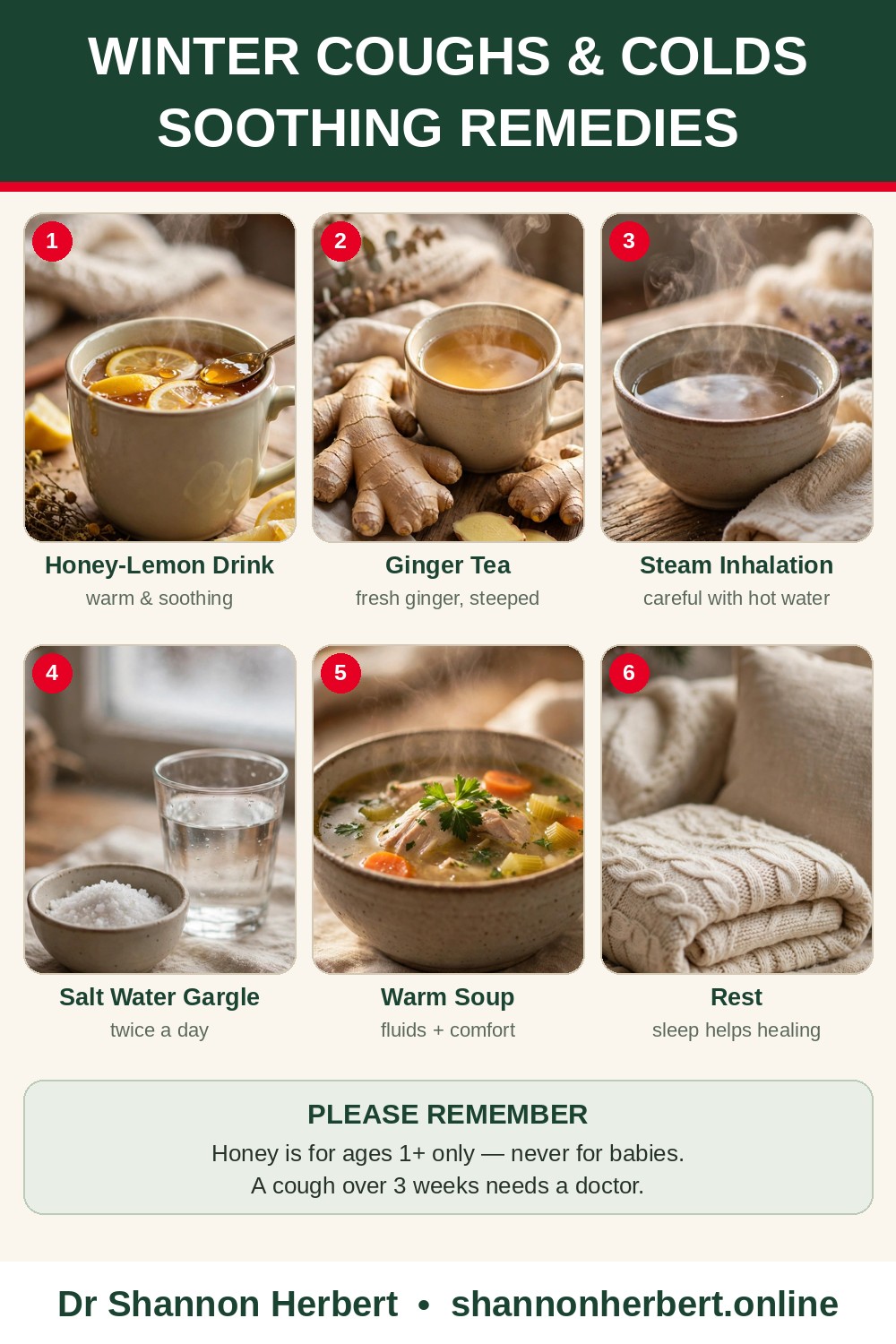
The remedies in this article are the simple, old-fashioned kind: warm drinks, steam, salt water, soup, and rest. Many of them are the same ones grandmothers relied on long before pharmacies existed, and several appear in our collection of old remedies that still work. Used with a little common sense, they are safe, inexpensive, and genuinely comforting. Let us look at why colds love winter so much, and then go through each remedy step by step.
Why Coughs and Colds Spread So Easily in Winter
Understanding the season helps you fight it better. A few things happen at once in winter:
- Cold, dry air dries out your airways. The lining of your nose and throat works best when it is moist. Dry air — outdoors in the cold, and indoors from central heating — dries that lining out, making it easier for viruses to get a foothold and making your throat feel raw and tickly.
- We spend more time indoors, close together. Viruses spread through the air and on surfaces. Crowded trains, offices, classrooms, and family gatherings in closed, heated rooms give them plenty of chances to move from person to person.
- Coughs linger in dry air. A dry throat and thick mucus are harder to clear, which is why a winter cough often hangs around long after the worst of the cold has passed.
- We get less daylight and fresh air. Shorter days, less time outdoors, and poorer sleep can all leave the immune system a little less resilient than in summer.
None of this means a cold is inevitable, and simple habits — washing hands, airing rooms for a few minutes a day, and keeping your throat and airways moist — really do help. But when a cold does arrive, here is how to soothe it.
First, the Habits That Help You Catch Fewer Colds
Remedies matter once you are ill, but a few unglamorous habits lower your chances of catching the next cold going around the office or the family:
- Wash your hands properly with soap and water, especially after being out, before eating, and after blowing your nose. Twenty seconds is enough.
- Air your rooms. Even five minutes with a window open once or twice a day refreshes stale, virus-laden indoor air — a habit people in colder parts of Europe swear by in winter.
- Catch coughs and sneezes in a tissue or your elbow, bin tissues straight away, and try not to touch your face with unwashed hands.
- Sleep and eat normally. Run-down bodies catch everything going. Regular meals, enough sleep, and a daily walk in daylight are quiet immune-system maintenance.
None of this is foolproof — winter colds are persistent little things — but together these habits genuinely reduce how often they land on you.
Remedy 1: Warm Honey and Lemon Drink
This is the classic for a reason. Warm liquid soothes a sore throat, honey coats and calms the tickle that triggers coughing, and lemon adds a fresh taste and a little vitamin C. It is the drink most people reach for first, and it earns its place.
You will need:
- 1 cup (240 ml) warm water — hot, but not boiling
- 1–2 teaspoons honey
- 1 tablespoon fresh lemon juice
- Optional: 1 small pinch of ground cinnamon or a thin slice of fresh ginger
How to make it:
- Heat the water until it is steaming but not boiling. Boiling water can dull the honey’s delicate flavor, so let it cool for a minute if needed.
- Pour it into a mug and stir in the honey until it dissolves completely.
- Add the lemon juice and the cinnamon or ginger, if using.
- Sip it slowly while it is warm, breathing in the steam as you drink.
How often: Enjoy 2–3 cups a day while symptoms last. Many people find a cup just before bed especially helpful for calming a night-time cough.
Important: Honey must never be given to babies under 12 months old, because of the risk of infant botulism. For children over one year and adults, honey used this way is considered safe.
Make it your own: Once you have the basic cup, small changes keep it interesting through a long week of colds. Add a pinch of turmeric for a golden version, swap the lemon for orange juice when throats are very raw and citrus stings, or drop in a couple of whole cloves while the water heats and fish them out before drinking. For children over one year, make the drink warm rather than hot, and a little milder. The exact recipe matters far less than the warmth, the fluid, and the few quiet minutes of sitting down with it.