Dry, Itchy Winter Skin: 8 Home Remedies That Actually Help
Remedy 2: Soak in an Oatmeal Bath
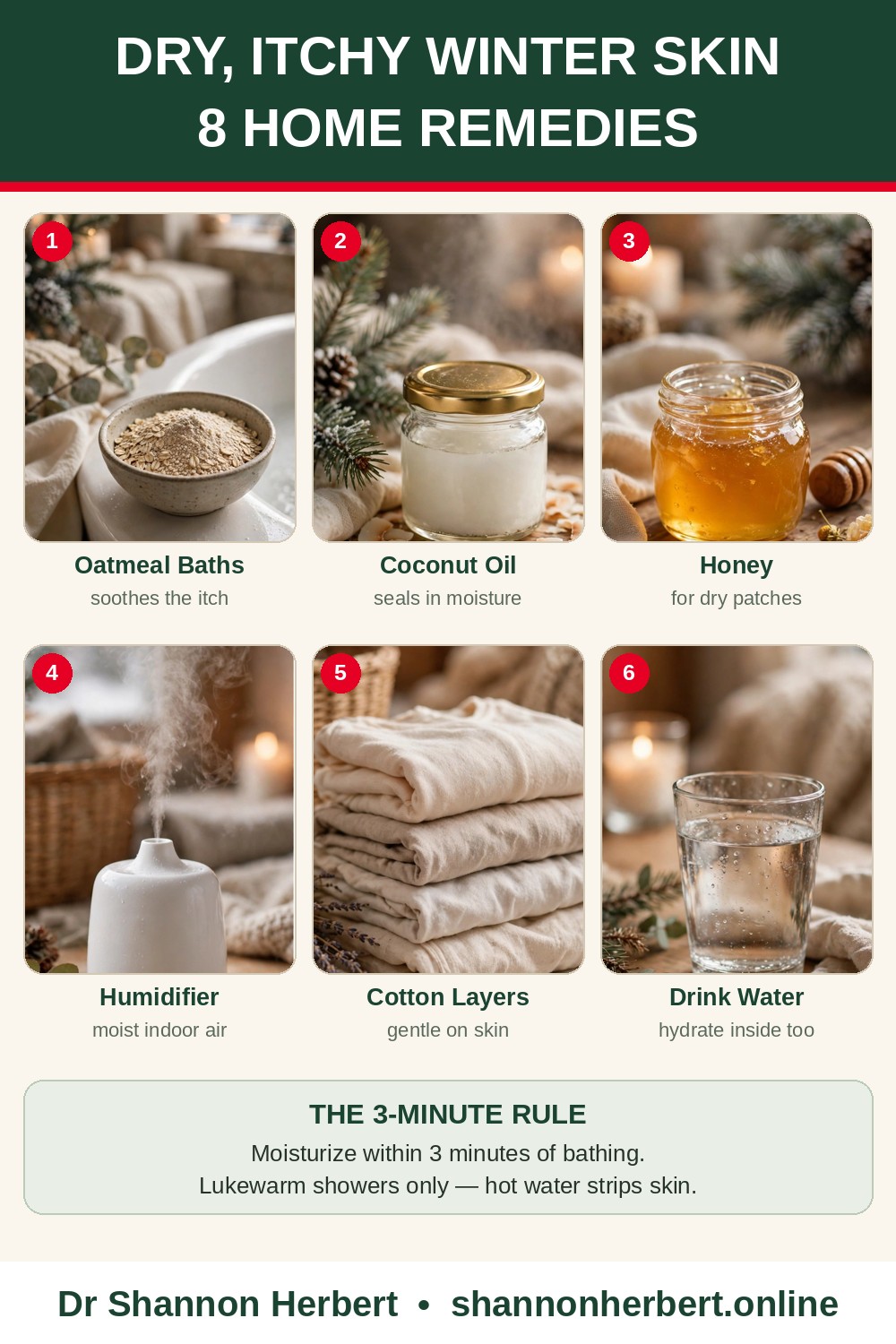
Oatmeal baths are an old remedy that dermatologists still recommend, because finely ground oatmeal (called colloidal oatmeal) calms itching, softens the skin, and helps the barrier hold moisture. It is especially helpful for all-over dryness and itching on the legs, back, and arms.
You will need:
- 1 cup of plain, unflavored oatmeal (rolled or instant both work; no sugar, no flavorings)
- A blender, food processor, or coffee grinder
- Lukewarm bath water
How to do it:
- Grind the oatmeal into a very fine powder. It is ready when a spoonful stirred into a glass of water turns the water milky and silky, with no gritty bits sinking.
- Fill the tub with lukewarm water — not hot — and sprinkle the powder in as it fills, stirring with your hand so it disperses instead of clumping.
- Soak for 10 to 15 minutes. Gently scoop the milky water over your shoulders, arms, and any itchy areas outside the water.
- Get out carefully — oatmeal makes the tub slippery — and pat dry, leaving skin slightly damp.
- Moisturize immediately (Remedy 3).
You can do this two or three times a week during the worst of winter, or daily during a bad flare of itchiness. Pre-ground colloidal oatmeal is sold in pharmacies if you do not want to grind your own. This is also one of the gentlest options for children with dry, itchy skin — just keep the water lukewarm and the soak short, and never leave a child unattended in the tub.
Remedy 3: Moisturize Within Three Minutes of Bathing
Timing matters almost as much as the product. Moisturizer does not add much water to skin by itself; its real job is to trap the water that is already there. That is why the minutes right after a bath or shower — while your skin is still damp — are the best moment of the day to apply it. Many dermatologists call it the three-minute rule.
How to do it:
- After bathing, pat dry and apply moisturizer within about 3 minutes, while skin is still slightly damp.
- Choose a thick cream or ointment over a thin lotion for winter. Lotions are mostly water and evaporate quickly; creams and ointments contain more oil and seal far better. If it comes in a jar or you squeeze it from a tube and it holds its shape, it is probably thick enough.
- Look for simple, fragrance-free products. Ingredients like petroleum jelly, ceramides, glycerin, and shea butter are all barrier-friendly.
- Apply a generous layer — most people use far too little. Your skin should feel coated, not barely kissed.
- Reapply to hands after every handwashing, and do a second full application before bed during very dry weeks.
Plain petroleum jelly deserves a special mention: it is inexpensive, rarely causes reactions, and is one of the most effective moisture sealers known. A thin layer over your usual cream on the driest spots — heels, knuckles, elbows, around the nose — can transform them within a few nights. If the greasy feel bothers you during the day, use it at night and wear cotton socks or gloves over it.
Remedy 4: Use Coconut Oil or Olive Oil as a Simple Skin Oil
For centuries, plain kitchen oils were the moisturizer. They still work well for many people, particularly on the body — legs, arms, elbows, feet — where skin is thicker and less prone to breakouts.
How to use coconut oil:
- Start with 1 teaspoon of virgin coconut oil. It melts at skin temperature, so warm it between your palms.
- Massage it into slightly damp skin after bathing. A thin film is enough; more just transfers onto clothes.
- It is especially good on legs, feet, and elbows.
How to use olive oil:
- Use a few drops to 1 teaspoon of extra-virgin olive oil, warmed in your palms, and massage into damp skin.
- Olive oil suits people who find coconut oil too heavy or whose skin reacts to it.
A few honest cautions. Oils are sealers, not water — they work best over damp skin, not bone-dry skin. Coconut oil can clog pores on the face and back for some people, so keep it to the body if you are breakout-prone, and patch test first. And if your skin is cracked, oozing, or you have eczema that is flaring, oils alone are not treatment — see the doctor section below. For more simple kitchen-based skin and home care, our collection of natural remedies you can make at home has plenty of gentle starting points.
Remedy 5: Try a Honey Mask for Dry Patches
Raw honey is naturally humectant, which means it attracts and holds water, and it has a long history in skin care for dry, rough patches on the cheeks, around the mouth, and on the backs of the hands. It is sticky, a little old-fashioned, and surprisingly pleasant.
You will need:
- 1 tablespoon of raw honey
- Clean, damp skin
- A warm, damp cloth for removal
How to do it:
- Wash your face or the dry area with lukewarm water and pat mostly dry, leaving the skin damp.
- Spread a thin layer of honey over the dry patches. Avoid the eye area.
- Leave it on for 15 to 20 minutes. It will not dry hard like a clay mask; it stays soft.
- Lay a warm, damp cloth over the area for a few seconds to loosen the honey, then rinse gently with lukewarm water.
- Pat dry and moisturize right away.
Use it two or three times a week. Your skin should feel softer immediately, and rough patches usually improve over a couple of weeks of regular use. One firm rule: honey is for skin only here — and as with any honey use in the home, honey must never be given to babies under 12 months to eat, because of the risk of infant botulism. Patch test first, as with everything in this article, and skip honey if you have a known bee or pollen allergy.
Dry, cracked lips often arrive in the same weeks as dry facial skin — if that is you too, our guide to chapped lips remedies covers the same gentle approach for lips.