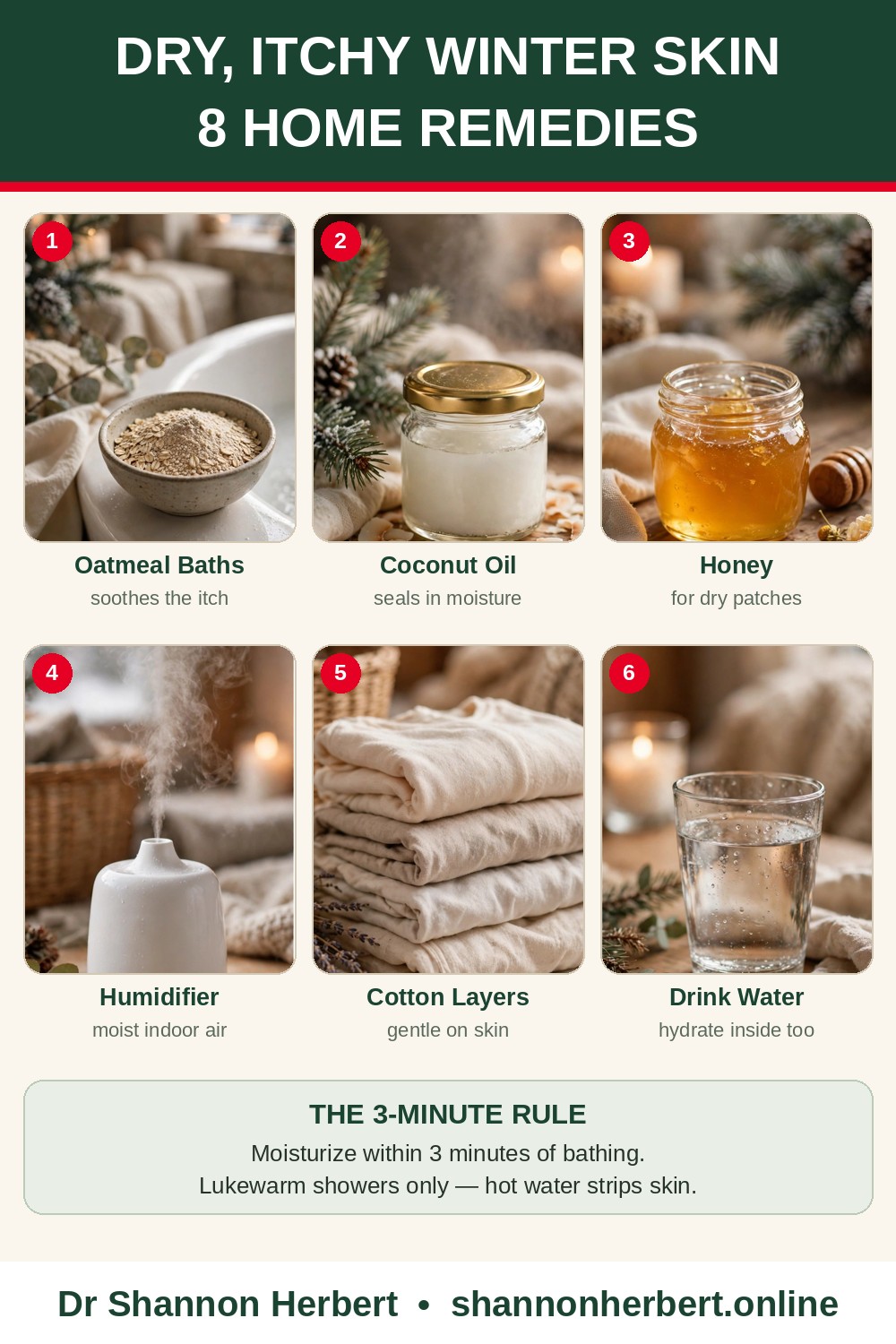
Dry, Itchy Winter Skin: 8 Home Remedies That Actually Help
If your skin feels fine in October and turns tight, flaky, and itchy by January, you are not imagining it — and you are not doing anything wrong. Winter dry skin is one of the most common seasonal complaints in the United States and Europe, and it happens to people with every skin type, even people who never think about their skin at all in the summer.
The good news is that most winter dryness responds well to simple, gentle home care. You usually do not need expensive products or a complicated routine. You need to understand why winter is so hard on your skin, stop the few habits that quietly make it worse, and give your skin back two things it is losing all season long: water and oil.
This guide walks through eight remedies that genuinely help, how to do each one properly, and the warning signs that mean dry skin has become something a doctor should look at. For more seasonal problems and their home solutions, see our roundup of winter health problems and simple home solutions — winter dryness rarely travels alone, and chapped lips, dry air, and stiff joints often show up in the same weeks.
Why Winter Air Dries Your Skin Out
Your skin is not just a covering; it is a barrier. The outermost layer works like a brick wall — skin cells are the bricks, and natural oils are the mortar holding them together. That wall keeps water inside your body and keeps irritants out. Winter attacks both the bricks and the mortar.
First, cold outdoor air holds very little moisture. Air that is cold is physically able to carry far less water vapor than warm air, so on a freezing day the air around you is genuinely dry, even when it is snowing. Every hour you spend outside, that dry air pulls water out of the surface of your skin.
Second, indoor heating makes things worse. When cold air is heated up inside a home, office, or car, its relative humidity drops even further — often below 20 percent, which is drier than many deserts. You spend most of a winter day in that heated, thirsty air, and it steadily draws moisture from your skin.
Third, hot water strips your natural oils. A long, steaming shower feels wonderful when you come in from the cold, but hot water dissolves the oily mortar of your skin barrier much faster than lukewarm water does. Add soap — especially strong, heavily scented soap — and you wash away even more of the oils your skin needs to hold water in.
Finally, most of us drink less water in winter, wash our hands more often during cold and flu season, and wear scratchy wool layers directly against the skin. None of these alone ruins your skin, but together they explain why hands crack, shins itch, cheeks flake, and elbows turn rough every single winter.
Once you see the pattern — dry air outside, drier air inside, hot water stripping oil, and a barrier that cannot hold water — the remedies below stop looking like random tips. Every one of them either adds water back, seals water in, or stops you from stripping it away.
Before You Start: One Rule for All Skin Remedies
Anything you put on your skin — including natural oils and honey — deserves a quick patch test first, especially if your skin is sensitive or you have eczema or allergies. Put a small amount on the inside of your wrist or elbow, wait 24 hours, and check for redness, burning, or itching. If the spot reacts, skip that remedy and try another. Natural does not automatically mean gentle for everyone, and winter skin that is already cracked and irritated reacts more easily than healthy summer skin.
Remedy 1: Take Short, Lukewarm Showers
This is the single most effective change for most people, and it costs nothing. Hot water feels like relief, but it is one of the main reasons your skin leaves the bathroom drier than it went in.
How to do it:
- Keep showers to 5 to 10 minutes.
- Use lukewarm water — warm enough to be comfortable, never steaming or hot enough to turn your skin pink.
- Use a gentle, fragrance-free cleanser, and only where you actually need it. Most days, your arms, legs, and back do fine with water alone.
- Skip rough scrubbing, stiff brushes, and gritty exfoliants on dry, itchy areas. Friction damages an already weak barrier.
- When you get out, pat your skin dry with a soft towel instead of rubbing, and leave it slightly damp — the next remedy depends on that dampness.
If you love baths, keep them lukewarm and short too, and consider adding the oatmeal soak from Remedy 2. What you should avoid all winter is the long, very hot soak, however good it feels in the moment. Skin that goes into hot water tight and comes out tighter is telling you the water was too hot.